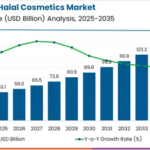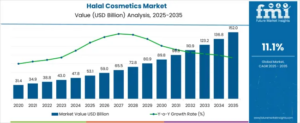


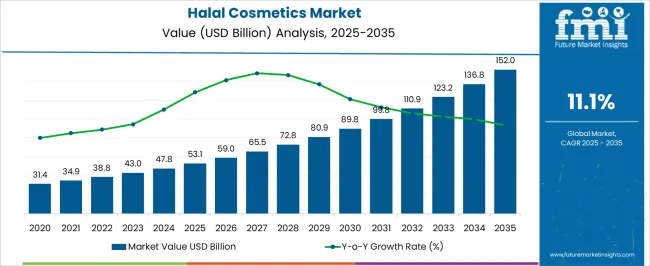
NEWARK, Del. — The global halal cosmetics market is estimated at USD 53.1 billion in 2025 and is projected to reach USD 152.0 billion by 2035, expanding at a CAGR of 11.1% during the forecast period, according to Future Market Insights (FMI). Demand is being supported by growing consumer awareness of ingredient transparency, ethical beauty, sustainability, and certified halal formulations.
The market is also benefiting from rising disposable incomes, changing grooming preferences, and broader interest in clean-label, natural, vegan, and cruelty-free cosmetics. FMI identifies opportunities across digital retail, product diversification, certification, and brand positioning aimed at consumers seeking ethical and culturally inclusive beauty products.
Get Detailed Market Forecasts, Competitive Benchmarking, and Pricing Trends
Key Market Highlights at a Glance
- 2025 Market Size: USD 53.1 billion
- 2035 Market Forecast: USD 152.0 billion
- CAGR, 2025–2035: 11.1%
- Leading Product Type: Skin care, with 38.6% revenue share in 2025
- Leading Sales Channel: Hypermarkets and supermarkets, with 36.2% share in 2025
- Men End User Share: 22.9% in 2025
- Key Growth Region: Asia Pacific
- Report Coverage: North America, Latin America, Europe, South Asia, East Asia, Middle East & Africa, and Oceania
Skin Care Maintains a Leading Position
Skin care is projected to account for 38.6% of halal cosmetics revenue in 2025, making it the leading product type in the FMI analysis. Demand is being supported by consumer interest in natural, chemical-free and certified halal formulations, alongside growing attention to skin health, preventive care and anti-aging products.
Cosmetic manufacturers are expanding halal-certified offerings across moisturizers, cleansers, sunscreens and other skin care products. The combination of halal certification with natural, organic and vegan positioning is also broadening the category’s consumer base.
Men’s Grooming Creates Additional Demand
The men’s segment is expected to contribute 22.9% of total halal cosmetics revenue in 2025. FMI links this development to changing grooming habits, increasing acceptance of personal care products among men, and the introduction of specialized halal grooming lines.
Brands are increasingly addressing male consumers alongside traditional female-focused cosmetics categories. This creates opportunities for halal-certified products spanning skin care, grooming and personal care applications.
Hypermarkets and Supermarkets Lead Distribution
Hypermarkets and supermarkets are projected to represent 36.2% of market revenue in 2025, making the channel the leading sales route in the current FMI forecast. Wide product availability, one-stop shopping and strong shelf visibility are supporting consumer adoption.
At the same time, e-commerce is expanding the reach of halal cosmetics. Online platforms provide brands with additional routes to engage consumers, gather feedback and introduce specialized products to markets where physical distribution remains limited.
Asia Pacific Remains a Major Growth Center
FMI projects Asia Pacific to dominate the global halal cosmetics sector by 2035, supported by the expanding Muslim population in Southeast Asia. India, Indonesia and Malaysia are identified as important markets, with increased spending and growing awareness of animal welfare, veganism and ethical beauty supporting demand.
The United States represents an additional opportunity in North America, where demand for vegan beauty and body products is creating scope for halal brands positioned around cruelty-free and natural formulations.
Europe is also seeing gradual market development. Germany has growing interest in halal cosmetics, although FMI identifies limited awareness, restricted sales channels and lower understanding of halal labeling as challenges for market participants.
Key Growth Drivers
Rising Interest in Ethical and Transparent Beauty
Consumers are paying greater attention to the ingredients and production practices behind personal care products. Halal certification can address ingredient and processing requirements while also aligning with broader interest in ethical and transparent cosmetics.
Expansion of Natural and Plant-Based Formulations
FMI identifies rising demand for natural and plant-based products as an important factor supporting halal cosmetics adoption. Brands are increasingly combining halal certification with vegan, natural and cruelty-free positioning to reach consumers beyond the core Muslim market.
Growing Digital Retail
E-commerce is widening market access and enabling brands to reach consumers across geographic markets. Digital platforms also give companies additional opportunities to communicate certification, ingredients and product attributes directly to customers.
Certification and Market Expansion Challenges
One of the key challenges identified by FMI is the lack of standardized halal certification guidelines across markets. Certification requirements can differ between countries, creating additional complexity for cosmetics companies seeking international expansion.
Consumer awareness also remains uneven. FMI’s analysis indicates that companies may need to educate consumers about halal formulations and certification while establishing clear product positioning. In Europe, limited awareness and consumer understanding of halal labeling remain barriers to broader adoption.
Competitive Landscape
The halal cosmetics market includes established cosmetics manufacturers, regional specialists and emerging halal-focused brands. FMI identifies the following companies among key players:
- Iba Cosmetics
- Martha Tilaar Group
- Clara International
- Kao Corporation
- Andalou Naturals
- Ivy Beauty Corporation Sdn Bhd
- Nature’s Dream
- Prolab Cosmetics
- Inglot Cosmetics
- One Pure
- Talent Cosmetics
Companies are pursuing product innovation, brand building, strategic alliances, partnerships and mergers and acquisitions to strengthen market reach and capabilities.
Recent Market Developments
FMI highlights several developments in the halal cosmetics sector:
- August 2024: Two former L’Oréal employees established Shade Beauty in Dubai and launched 15 halal-certified matte liquid lipsticks positioned as clean, vegan, cruelty-free and PETA-approved.
- August 2024: Kao Corporation worked with Lion Corporation to develop recyclable packaging as part of efforts to reduce plastic use.
Market Outlook
The halal cosmetics industry is moving beyond a narrowly defined religious-product category as brands increasingly combine halal certification with natural, organic, vegan, cruelty-free and sustainability-oriented positioning. FMI identifies product innovation, regulatory harmonization, digital marketing, partnerships with Islamic organizations and expansion into non-Muslim-majority markets as areas shaping the 2025–2035 outlook.
The market’s projected expansion from USD 53.1 billion in 2025 to USD 152.0 billion by 2035 reflects growing demand for certified formulations alongside wider consumer interest in ethical and transparent beauty products.
Report Scope
Halal Cosmetics Market
- Market Size, 2025: USD 53.1 billion
- Projected Market Size, 2035: USD 152.0 billion
- CAGR: 11.1% from 2025 to 2035
- Leading Product Type: Skin Care — 38.6% share in 2025
- Leading End User Share: Men — 22.9% in 2025
- Leading Sales Channel: Hypermarkets/Supermarkets — 36.2% share in 2025
- Regions Covered: North America, Latin America, Europe, South Asia, East Asia, Middle East & Africa, and Oceania
- Report Price: Starting at US$5,000
About Future Market Insights
Future Market Insights (FMI) is a leading provider of market research and consulting services, offering syndicated and customized research across industries including consumer products, healthcare, chemicals and materials, and other global markets.
Related Reports:
- https://www.openpr.com/news/4641455/hospital-logistics-delivery-robots-market-to-reach-usd-6-99
- https://www.openpr.com/news/4641463/paralysis-treatment-innovation-market-to-reach-usd-7-3-billion
- https://www.openpr.com/news/4641468/precision-transplant-medicine-market-to-reach-usd-2-018-0
About Future Market Insights (FMI)
Future Market Insights (FMI) is a global market intelligence and consulting firm providing comprehensive market research, competitive intelligence, and strategic business insights across industries. The firm delivers detailed forecasts, technology analysis, and data-driven recommendations that support informed decision-making for manufacturers, investors, distributors, and policymakers worldwide.
For Press & Corporate Inquiries
Rahul Singh
AVP – Marketing and Growth Strategy
Future Market Insights, Inc.
+91 8600020075
For Sales – sales@futuremarketinsights.com
For Media – Rahul.singh@futuremarketinsights.com
For Web – https://www.futuremarketinsights.com