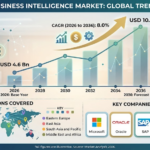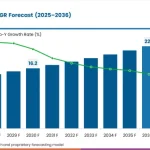


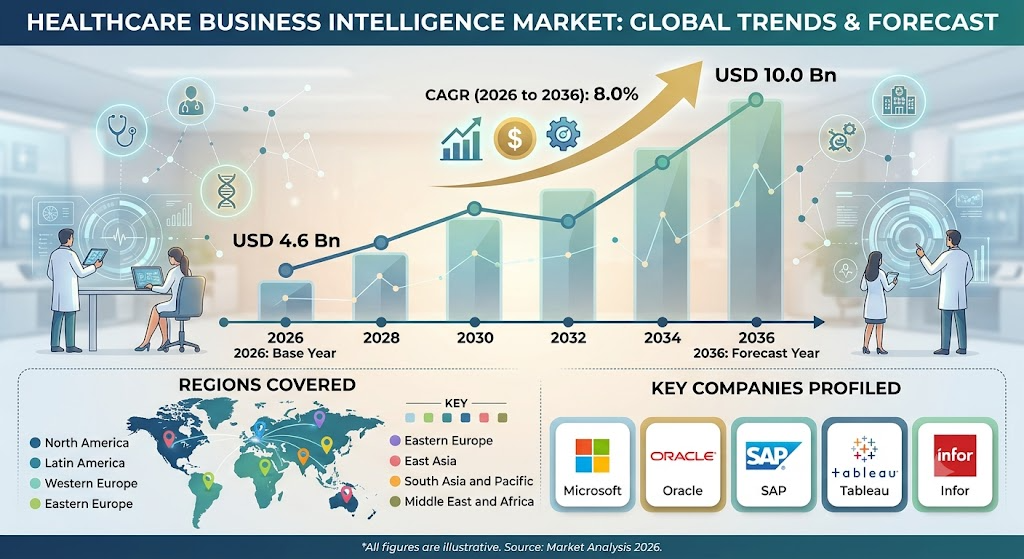
The global healthcare business intelligence market is projected to grow from USD 4.64 billion in 2026 to USD 10.02 billion by 2036, registering a compound annual growth rate (CAGR) of 8.0%, according to Future Market Insights (FMI). The market is expected to add approximately USD 5.38 billion in revenue over the forecast period, supported by increasing demand for healthcare data analytics, performance monitoring, clinical reporting, and data-driven decision-making across hospitals, healthcare networks, and other medical institutions.
Healthcare organizations are increasingly investing in business intelligence platforms to convert clinical, financial, and operational records into actionable insights. These solutions help healthcare administrators monitor service performance, evaluate resource utilization, identify operational inefficiencies, and support planning across multiple facilities.
FMI estimates that clinical analytics will account for 44.7% of functional demand in 2026. Cloud-based deployment is projected to capture 57.9% of deployment demand, reflecting the growing importance of accessible analytical environments and integrated reporting systems across healthcare organizations.
👉 Get Detailed Market Forecasts, Competitive Benchmarking, and Pricing Trends:
https://www.futuremarketinsights.com/reports/sample/rep-gb-14442
The United Kingdom is projected to record the fastest growth among the six profiled countries, with an 8.3% CAGR from 2026 to 2036. The United States, France, Australia, and India are each forecast to grow at 8.0%, while Germany is expected to register a 7.8% CAGR.
The expansion reflects increasing requirements for consistent healthcare reporting, connected information systems, and analytical platforms that enable healthcare professionals and administrators to make informed decisions. As healthcare networks expand and reporting requirements become more complex, demand for scalable analytics solutions and reliable data integration is expected to strengthen.
Key Market Highlights
- Market size in 2026: USD 4.64 billion
- Market size in 2025: USD 4.3 billion
- Forecast market size in 2036: USD 10.02 billion
- Forecast CAGR, 2026–2036:0%
- Incremental revenue opportunity: USD 5.38 billion
- Market expansion:16 times between 2026 and 2036
- Leading functional segment: Clinical analytics, with a 44.7% share in 2026
- Leading deployment segment: Cloud-based solutions, with a 57.9% share in 2026
- Fastest-growing profiled country: United Kingdom, at 8.3% CAGR
- Key companies profiled: Microsoft, Oracle, SAP, Tableau, and Infor
Country-Level Growth Outlook, 2026–2036
FMI’s country forecasts indicate that the United Kingdom will lead the healthcare business intelligence market’s expansion, followed by the United States, France, Australia, and India. Germany is expected to record comparatively moderate growth.
- United Kingdom: 8.3% CAGR
The United Kingdom is projected to record the fastest growth among the profiled countries, with an 8.3% CAGR through 2036. FMI identifies reporting requirements across integrated care boards as an important factor supporting demand for healthcare business intelligence solutions.
The development of health-inequalities reporting tools by NHS Midlands and Lancashire demonstrates how healthcare analytics can support institutional planning and resource allocation. Suppliers offering solutions that maintain consistent reporting definitions and connect population-level information with service planning may benefit from this demand.
- United States: 8.0% CAGR
The United States healthcare business intelligence market is forecast to expand at an 8.0% CAGR. FMI highlights the established healthcare IT data environment, including federal dashboards, research products, and downloadable datasets, as relevant factors supporting analytical adoption.
Healthcare providers increasingly require integrated reporting systems to compare operational performance across facilities while maintaining consistent data definitions. Solutions that simplify data integration and improve reporting accuracy are expected to remain important purchasing considerations.
- France: 8.0% CAGR
France is projected to record an 8.0% CAGR through 2036. Healthcare organizations managing information across clinical and administrative systems require common reporting definitions to compare institutional performance effectively.
FMI identifies opportunities for business intelligence providers that support capacity planning, financial analysis, and clinical performance monitoring through integrated analytical environments.
- Australia: 8.0% CAGR
Australia is forecast to grow at an 8.0% CAGR. The country’s public hospital reporting environment provides an established foundation for structured healthcare performance analysis.
The Australian Institute of Health and Welfare’s hospital dashboards demonstrate how comparable service indicators can support repeated performance assessments. Healthcare providers are likely to seek solutions that connect internal records across facilities and maintain consistent analytical measures.
- India: 8.0% CAGR
India is projected to register an 8.0% CAGR through 2036. Expanding hospital networks and multi-location healthcare providers require business intelligence systems capable of connecting patient activity, staffing, billing, and service-capacity information.
FMI highlights data integration and standardized reporting definitions as important requirements for healthcare organizations expanding across locations. Vendors that provide scalable platforms and implementation support may find opportunities among growing healthcare networks.
- Germany: 7.8% CAGR
Germany is expected to record a 7.8% CAGR. Hospitals require consistent analytical measures when clinical, financial, and operational records originate from different software applications.
FMI identifies data preparation, integration, and standardized reporting as important factors influencing purchasing decisions. Solutions that allow healthcare administrators to examine the underlying records behind performance indicators may strengthen their market position.
Competitive Landscape and Industry Developments
The healthcare business intelligence market combines enterprise analytics providers, database and data management companies, visualization software developers, and healthcare application specialists.
FMI identifies the following companies among the key participants profiled in its report:
- Microsoft
- Oracle
- SAP
- Tableau
- Infor
Competition is shaped by analytical capabilities, data integration, visualization functionality, deployment flexibility, and compatibility with existing healthcare information systems.
Microsoft participates through enterprise analytics technology, while Oracle provides enterprise data and analytics systems. SAP offers enterprise analytics software, Tableau specializes in data visualization, and Infor connects healthcare and enterprise applications with operational reporting requirements.
As healthcare providers increasingly manage information across multiple departments and facilities, vendors that support reliable data preparation, standardized indicators, and continuing system administration may gain a competitive advantage.
Technology, Data Integration, and Market Opportunities
Cloud-based deployment is expected to remain an important part of the healthcare business intelligence landscape, accounting for 57.9% of deployment demand in 2026.
Cloud environments allow healthcare organizations to access shared analytical applications across multiple locations. This can support coordinated reporting and improve access to performance information, provided that underlying data systems remain properly integrated and maintained.
Clinical analytics represents another major opportunity, with an estimated 44.7% share of functional demand in 2026. Healthcare institutions use clinical analytics to review patient activity, care delivery, and service outcomes.
However, inconsistent data definitions, fragmented information systems, and unclear responsibility for maintaining records can limit the effectiveness of analytical platforms. Vendors that combine software capabilities with implementation, integration, and data-management services are positioned to address these challenges.
The growing adoption of healthcare artificial intelligence may also create opportunities for predictive functions within business intelligence applications, provided that analytical models and their intended applications are appropriately evaluated.
Access the Full Report: https://www.futuremarketinsights.com/reports/healthcare-business-intelligence-market
Analyst Perspective
Anurag Sharma, Principal Consultant for Healthcare at Future Market Insights, states:
“Healthcare intelligence is useful when a manager can relate the displayed information to a decision about services or resources.”
The assessment emphasizes that successful healthcare business intelligence adoption extends beyond dashboards and visualization tools. Healthcare organizations must establish reliable data sources, consistent reporting definitions, and connections between analytical outputs and operational decisions.
As the market expands, vendors that combine scalable technology with implementation expertise, dependable data integration, and practical reporting capabilities may strengthen their competitive positioning.
Frequently Asked Questions
- What is the size of the healthcare business intelligence market in 2026?
FMI estimates the global market at USD 4.64 billion in 2026.
- What is the projected market value in 2036?
The market is forecast to reach USD 10.02 billion by 2036.
- What is the expected CAGR from 2026 to 2036?
The healthcare business intelligence market is projected to grow at a CAGR of 8.0%.
- Which functional segment leads the market?
Clinical analytics is projected to account for 44.7% of functional demand in 2026.
- Which deployment segment dominates the market?
Cloud-based deployment is expected to hold a 57.9% share in 2026.
- Which country is expected to grow fastest?
The United Kingdom is projected to record the fastest growth, with an 8.3% CAGR through 2036.
- What are the major factors driving market growth?
Increasing healthcare data volumes, demand for operational efficiency, clinical performance monitoring, and integrated reporting systems are supporting market expansion.
- What challenges affect market adoption?
Key challenges include fragmented healthcare information systems, inconsistent data definitions, integration costs, data quality, and ongoing system administration.
- Which companies are profiled in the report?
FMI profiles Microsoft, Oracle, SAP, Tableau, and Infor.
- What are the major deployment types in the market?
The market is segmented into cloud-based and on-premises deployment solutions.
Related Reports:
- AI-Powered Sleep Technologies Market – https://www.futuremarketinsights.com/reports/ai-powered-sleep-technologies-market
- AI-Powered Gait & Mobility Analytics Market – https://www.futuremarketinsights.com/reports/ai-powered-gait-&-mobility-analytics-market
- AI-Powered Behavioral Therapy Market – https://www.futuremarketinsights.com/reports/ai-powered-behavioral-therapy-market
- AI-Enabled Behavioral Therapy Market – https://www.futuremarketinsights.com/reports/ai-enabled-behavioral-therapy-market
- Electromyographic Rehabilitation Stimulator Market – https://www.futuremarketinsights.com/reports/electromyographic-rehabilitation-stimulator-market
About Future Market Insights (FMI)
Future Market Insights (FMI) is a global market intelligence and consulting firm providing comprehensive market research, competitive intelligence, and strategic business insights across industries. The firm delivers detailed forecasts, technology analysis, and data-driven recommendations that support informed decision-making for manufacturers, investors, distributors, and policymakers worldwide.
For Press & Corporate Inquiries
Rahul Singh
AVP – Marketing and Growth Strategy
Future Market Insights, Inc.
+91 8600020075
For Sales – sales@futuremarketinsights.com
For Media – Rahul.singh@futuremarketinsights.com
For Web – https://www.futuremarketinsights.com