


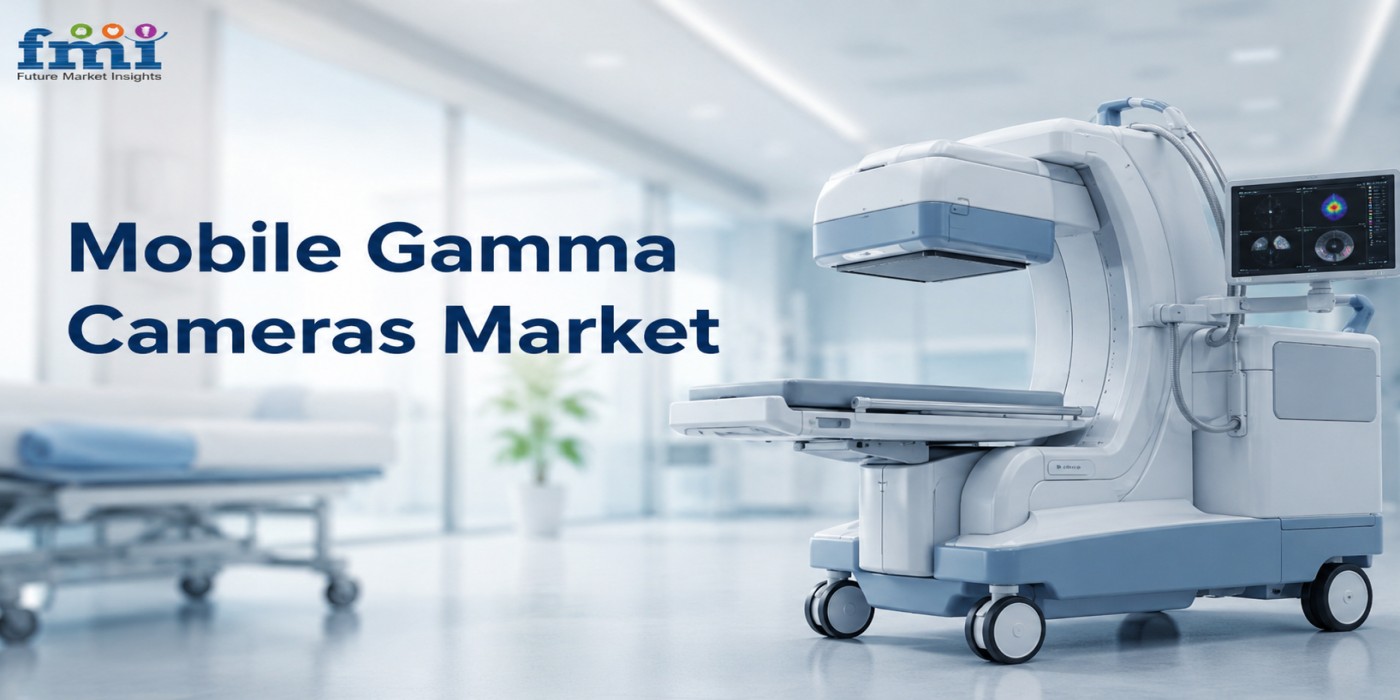
The global mobile gamma cameras market is witnessing a strategic shift as healthcare providers increasingly embrace service-led deployment models that prioritize financial flexibility, operational efficiency, and faster return on investment. Rather than committing to large upfront capital investments associated with traditional fixed nuclear imaging systems, hospitals and ambulatory care providers are adopting leasing arrangements, subscription models, and shared-use agreements that transform imaging economics.
Mobile gamma cameras are increasingly being deployed across operating rooms, intensive care units, catheterization laboratories, ambulatory surgery centers, and satellite facilities, enabling healthcare systems to extend nuclear imaging capabilities without the constraints of permanent installations.
Market Outlook
The mobile gamma cameras market is expected to experience steady growth during the forecast period, supported by increasing demand for flexible imaging solutions, rising pressure to optimize healthcare expenditures, and growing preference for operating expenditure-based acquisition strategies.
Unlike previous growth phases that relied primarily on outright equipment purchases, future market expansion is increasingly linked to leasing structures, pay-per-use agreements, bundled service offerings, and subscription-based deployment models.
Service-Led Deployment Models Transform Imaging Economics
A major factor supporting market growth is the growing adoption of service-led deployment strategies that fundamentally alter the financial profile of mobile gamma camera acquisition.
Traditional nuclear imaging installations often require substantial capital commitments, lengthy approval processes, and extended depreciation schedules. Mobile gamma cameras increasingly deploy through leasing structures that convert these capital expenditures into manageable operating expenses.
Healthcare organizations preserve capital for other strategic investments while maintaining access to advanced imaging capabilities. Pay-per-use structures are also gaining acceptance among institutions with fluctuating nuclear medicine volumes, allowing costs to align directly with utilization while minimizing financial exposure.
Higher Asset Utilization Drives Long-Term Value
One of the strongest economic advantages of mobile gamma cameras lies in their ability to achieve significantly higher utilization rates than fixed imaging systems.
Unlike stationary installations limited to dedicated nuclear medicine departments, mobile units can support multiple clinical environments throughout the day. A single system may facilitate endocrine imaging, assist with intraoperative procedures, and support cardiac applications across different departments.
Surgical Applications Expand Demand Opportunities
Mobile gamma cameras are increasingly supporting surgical workflows where fixed imaging systems cannot be practically installed.
Intraoperative imaging applications, including sentinel lymph node procedures and radioguided surgeries, benefit substantially from mobile deployment capabilities. Hospitals avoid dedicating valuable operating room space to permanently installed imaging equipment used only for selected procedures.
Comprehensive Service Contracts Reduce Operational Risk
Bundled service agreements are becoming a critical component of procurement decisions within the mobile gamma cameras market.
These contracts typically include preventive maintenance, detector calibration, software updates, quality assurance testing, and technical support designed to maintain optimal system performance.
Uptime guarantees and rapid response commitments protect hospitals against disruptions associated with unexpected equipment failures.
ROI Calculations Favor Mobile Deployment
Hospitals increasingly evaluate mobile gamma camera investments differently from traditional fixed nuclear imaging systems.
Mobile deployments eliminate many of the expenses associated with dedicated nuclear medicine installations, including specialized construction, radiation shielding modifications, architectural planning, and prolonged commissioning processes.
Procurement Strategies Prioritize Lifecycle Economics
Procurement priorities are evolving beyond purchase price considerations as healthcare systems adopt more sophisticated total-cost-of-ownership analyses.
Decision-makers increasingly assess vendors based on service reliability, technology refresh pathways, regulatory expertise, response time guarantees, and long-term partnership capabilities.
Predictable operating expenditures, reduced compliance complexity, and minimized maintenance uncertainty often outweigh lower acquisition prices associated with ownership models lacking comprehensive support.
OEM Service Models Influence Competitive Dynamics
Original equipment manufacturers are increasingly emphasizing recurring service relationships rather than one-time equipment transactions.
Multi-year service agreements offering technology upgrades and predetermined refresh schedules allow healthcare providers to maintain current imaging capabilities without repeated capital approval cycles.
However, procurement teams are also carefully evaluating vendor dependence, pricing transparency, and contractual flexibility to avoid excessive lock-in and preserve negotiating leverage.
Challenges Affecting Market Adoption
Despite favorable growth prospects, several factors continue to influence market development.
Hospitals must carefully assess long-term subscription costs relative to ownership economics, particularly in high-volume environments where utilization patterns may alter financial outcomes.
Variability in service pricing structures, differences in contract transparency, and potential vendor dependency require sophisticated procurement evaluation processes.
Regional Trends
North America remains a significant market for mobile gamma cameras due to established nuclear medicine infrastructure, growing focus on cost optimization, and increasing adoption of alternative financing arrangements.
Europe continues to witness expanding interest in service-led deployment models as healthcare systems seek to improve utilization efficiency and control operating expenditures.
Competitive Landscape and Future Outlook
The mobile gamma cameras market is becoming increasingly service-oriented, with vendors differentiating themselves through uptime guarantees, subscription offerings, regulatory expertise, and lifecycle support capabilities.
Future competition is expected to extend beyond equipment specifications toward the ability to deliver comprehensive imaging solutions that combine financial flexibility, operational reliability, and continuous technology access.
Conclusion: Flexibility and Lifecycle Value Define the Future of Mobile Gamma Cameras
The mobile gamma cameras market is entering a new phase of development where service excellence, utilization efficiency, and financial flexibility are becoming as important as imaging performance itself. Leasing arrangements, shared-use strategies, comprehensive service contracts, and subscription-based deployment models are reshaping traditional purchasing practices.
As healthcare providers seek solutions that reduce capital burdens while improving operational agility, mobile gamma cameras will continue to play an increasingly important role in expanding access to nuclear imaging, enhancing resource utilization, accelerating ROI, and supporting sustainable healthcare delivery models.
Explore More Related Studies Published by FMI Research:
Neonatal Thermoregulation Market
Cryoballoon Ablation System Market
Have specific requirements or need assistance on report pricing or limited budget? Please contact us – sales@futuremarketinsights.com
About Future Market Insights (FMI)
Future Market Insights, Inc. (FMI) is an ESOMAR-certified, ISO 9001:2015 market research and consulting organization, trusted by Fortune 500 clients and global enterprises. With operations in the U.S., UK, India, and Dubai, FMI provides data-backed insights and strategic intelligence across 30+ industries and 1200 markets worldwide.