

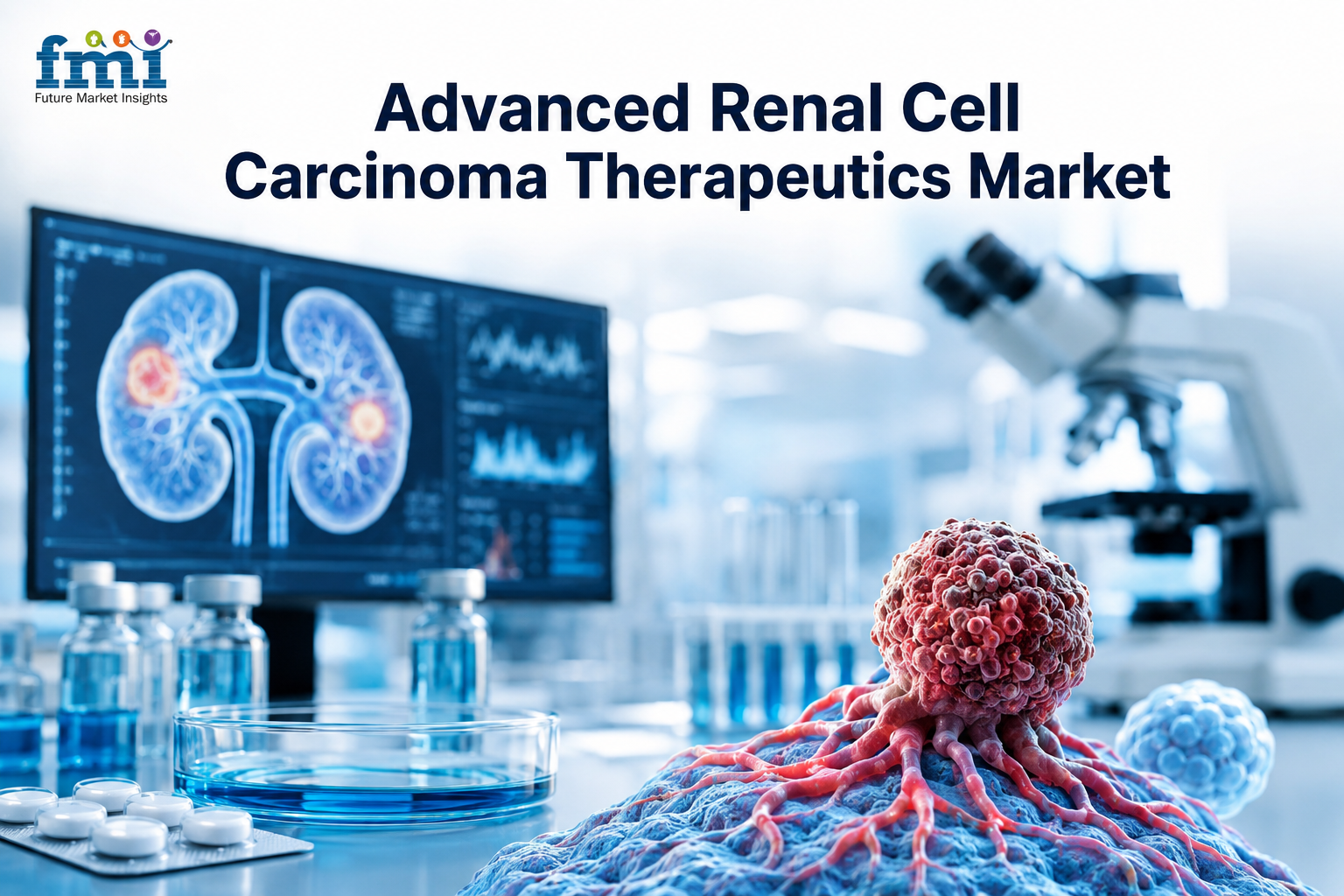
The advanced renal cell carcinoma (RCC) therapeutics market is undergoing significant transformation as treatment strategies evolve from single-agent therapies toward combination regimens that deliver improved survival outcomes and broader clinical benefits. Growing adoption of immune checkpoint inhibitor (IO) and tyrosine kinase inhibitor (TKI) combinations, expanding treatment options across multiple lines of therapy, and increasing focus on precision oncology are driving substantial changes in the competitive landscape.
As healthcare systems, oncologists, and payers seek therapies that improve patient outcomes while addressing long-term disease management challenges, advanced RCC therapeutics are becoming a critical area of investment within oncology. The market is increasingly shaped by innovative treatment mechanisms, evolving clinical guidelines, and growing demand for personalized treatment approaches.
Market Outlook
The advanced renal cell carcinoma therapeutics market is projected to expand steadily throughout the forecast period, supported by increasing cancer prevalence, rising utilization of combination therapies, expanding biomarker-driven treatment strategies, and continued investment in oncology innovation.
Unlike earlier phases of RCC treatment that relied heavily on cytokine-based therapies and single-agent targeted treatments, the market is now transitioning toward combination regimens that deliver superior progression-free survival and overall survival outcomes. This evolution is increasing treatment duration, expanding patient eligibility for advanced therapies, and driving higher healthcare spending per patient.
Combination Therapies Emerge as a Long-Term Growth Driver
A major factor supporting market growth is the widespread adoption of immune checkpoint inhibitor and VEGF-TKI combination therapies in first-line treatment settings.
Clinical guidelines increasingly support combinations such as nivolumab plus cabozantinib and pembrolizumab-based regimens for advanced RCC patients. These therapies have demonstrated meaningful improvements in survival outcomes compared with historical monotherapy approaches, leading to stronger physician confidence and broader adoption across treatment centers.
Novel Mechanisms Create New Competitive Opportunities
Innovation within the RCC treatment landscape continues to accelerate as manufacturers introduce therapies targeting new biological pathways.
The approval of belzutifan, the first HIF-2α inhibitor indicated for advanced RCC patients previously treated with both PD-1/PD-L1 inhibitors and VEGF-TKIs, represents a significant advancement beyond traditional checkpoint and VEGF-targeted approaches. The introduction of novel mechanisms is reshaping second-line treatment strategies while creating new opportunities for value-based contracting and personalized care pathways.
Clinical Evidence Continues to Strengthen Market Adoption
Growing availability of long-term clinical data is reinforcing confidence in advanced RCC combination regimens.
Studies such as the Phase III CLEAR trial have demonstrated superior progression-free survival and overall survival benefits for lenvatinib plus pembrolizumab compared with historical standards of care. Long-term follow-up data continue to support the durability of these outcomes, strengthening physician adoption and supporting premium pricing strategies.
Treatment Sequencing Reshapes Procurement and Reimbursement Strategies
The increasing complexity of RCC treatment pathways is influencing procurement, reimbursement, and formulary decision-making across healthcare systems.
With multiple first-line IO/TKI combinations now available and growing diversity within second-line treatment options, payers must evaluate treatment sequencing strategies more carefully than ever before. The emergence of therapies such as belzutifan introduces additional considerations related to prior-treatment requirements, patient eligibility, and budget impact planning.
Growing Focus on Precision Oncology and Personalized Treatment
Precision medicine initiatives are creating additional opportunities across the advanced RCC therapeutics market.
Advancements in biomarker research, molecular profiling, and patient stratification are enabling more personalized treatment approaches. Clinicians are increasingly seeking therapies that can be matched to specific disease characteristics, risk profiles, and prior treatment histories to optimize outcomes and reduce unnecessary treatment burden.
Challenges Facing the Market
Despite strong growth prospects, several challenges continue to influence market dynamics.
Rapid treatment innovation is creating increasingly complex clinical decision-making environments for physicians and healthcare providers. Frequent guideline updates, evolving treatment standards, and expanding therapeutic options require continuous evaluation of treatment sequencing and reimbursement strategies.
High treatment costs associated with combination regimens also remain a significant consideration for payers and healthcare systems. Budget pressures may intensify as newer therapies enter the market and treatment durations continue to increase.
Segmentation Highlights
Combination immunotherapy and targeted therapy regimens represent the fastest-growing treatment segment within the advanced RCC therapeutics market, supported by strong clinical evidence and broad guideline endorsement.
Additional key segments include VEGF-targeted therapies, immune checkpoint inhibitors, HIF-2α inhibitors, cytokine therapies, and emerging targeted treatment platforms.
Regional Trends
North America remains a leading market for advanced RCC therapeutics, supported by high treatment adoption rates, robust reimbursement frameworks, strong oncology research activity, and rapid incorporation of innovative therapies into clinical practice.
Europe continues to experience steady growth driven by expanding access to advanced cancer therapies, increasing utilization of precision medicine approaches, and supportive regulatory environments.
Competitive Landscape and Future Outlook
The advanced RCC therapeutics market remains highly competitive, with pharmaceutical companies focusing on combination strategies, novel molecular targets, clinical differentiation, and lifecycle management initiatives.
Manufacturers are increasingly investing in late-stage clinical development programs, biomarker-driven research, real-world evidence generation, and strategic partnerships to strengthen their market position.
Conclusion: Combination Therapies and Precision Medicine Define the Future of Advanced RCC Treatment
The advanced renal cell carcinoma therapeutics market is entering a new phase of growth characterized by combination treatment adoption, precision oncology advancements, and expanding therapeutic diversity. Clinical guideline support, innovative treatment mechanisms, and growing evidence supporting long-term survival benefits are transforming patient care pathways worldwide.
As healthcare systems increasingly prioritize outcomes-based treatment strategies and personalized medicine, advanced RCC therapeutics will continue to play a central role in improving survival, enhancing quality of life, and supporting the next generation of oncology care.
Explore More Related Studies Published by FMI Research:
Anaplastic Large Cell Lymphoma (ALCL) Therapeutics Market
Non-Small Cell Lung Cancer Market
Automated Cell Biology Systems Market
Have specific requirements or need assistance on report pricing or limited budget? Please contact us – sales@futuremarketinsights.com
About Future Market Insights (FMI)
Future Market Insights, Inc. (FMI) is an ESOMAR-certified, ISO 9001:2015 market research and consulting organization, trusted by Fortune 500 clients and global enterprises. With operations in the U.S., UK, India, and Dubai, FMI provides data-backed insights and strategic intelligence across 30+ industries and 1200 markets worldwide.