


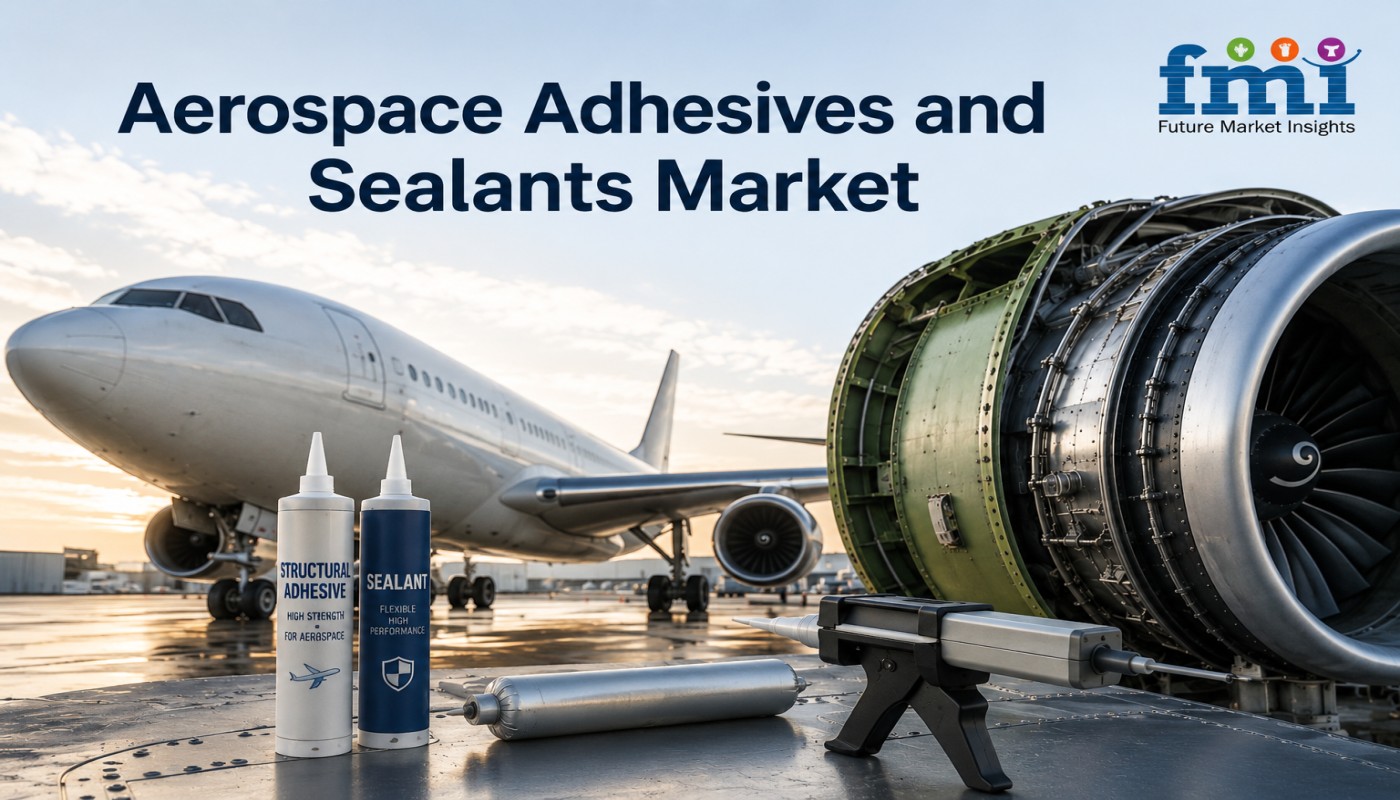
The aerospace adhesives and sealants market is witnessing steady growth as commercial aviation recovery, aircraft production ramp-ups, and expanding maintenance, repair, and overhaul (MRO) activities increase demand for advanced bonding and sealing solutions. Widely used in fuselage assemblies, wings, fuel tanks, cabin interiors, and structural components, aerospace adhesives and sealants play a critical role in reducing aircraft weight, enhancing durability, improving fuel efficiency, and ensuring long-term operational reliability.
Growing aircraft backlogs, rising global air passenger traffic, and increasing investments in aerospace manufacturing are reshaping procurement strategies across the industry. Manufacturers and suppliers are increasingly focusing on high-performance, lightweight, and regulatory-compliant formulations that support next-generation aircraft programs while meeting stringent safety and environmental requirements.
Market Outlook
The aerospace adhesives and sealants market is projected to expand from approximately USD 1.11 billion in 2026 to USD 1.83 billion by 2036, registering a CAGR of 5.1% during the forecast period.
Unlike earlier phases of market growth that were largely tied to aircraft production cycles and routine maintenance demand, future expansion is increasingly linked to production scalability, sustainability requirements, regulatory compliance, and qualification of advanced material technologies.
Aircraft Production Expansion Emerges as a Major Growth Driver
One of the most significant factors supporting market growth is the continued increase in global aircraft production. Commercial aircraft manufacturers are expanding production capacity to address historically high order backlogs and rising demand for air travel.
Every new aircraft requires extensive use of adhesives and sealants across structural bonding applications, cabin assemblies, composite materials, fuel systems, and aerodynamic surfaces.
MRO Activity Creates Long-Term Demand Opportunities
Growing global aircraft fleets and increasing aircraft utilization rates are creating substantial opportunities for adhesive and sealant suppliers within the aftermarket sector.
Maintenance providers rely heavily on sealants for fuel tank repairs, corrosion protection, structural maintenance, and component replacement activities. As airlines seek to maximize fleet availability and extend aircraft service life, demand for certified aerospace adhesives and sealants is expected to remain strong across commercial, military, and business aviation segments.
Regulatory Compliance Reshapes Product Development Strategies
Regulatory requirements are becoming increasingly influential in shaping purchasing decisions and product development efforts across the aerospace adhesives and sealants market.
Manufacturers are under growing pressure to reduce volatile organic compound (VOC) emissions, improve workplace safety, and comply with evolving environmental regulations governing chemical usage and exposure limits.
Growing Adoption of Lightweight and Advanced Material Technologies
The aerospace industry’s ongoing focus on weight reduction and fuel efficiency is accelerating the adoption of advanced adhesive technologies.
Modern aircraft increasingly utilize composite materials and lightweight structures that require specialized bonding solutions capable of delivering exceptional strength, durability, and resistance to extreme operating conditions.
Technological Advancements Strengthen Market Potential
Continuous innovation in material science is further supporting market growth. Manufacturers are developing products with enhanced thermal resistance, chemical compatibility, fatigue performance, and application efficiency.
Digital quality-control systems, automated dispensing technologies, predictive maintenance solutions, and advanced testing methodologies are also helping improve manufacturing consistency and operational performance across aerospace production and maintenance environments.
Challenges Facing the Market
Despite favorable growth prospects, several challenges continue to influence market dynamics.
Stringent qualification requirements can significantly extend product approval timelines, particularly for commercial and defense aerospace applications. Regulatory changes affecting chemical formulations may also require costly reformulation and requalification efforts.
Segmentation Highlights
Adhesives account for a significant share of market demand due to their extensive use in structural bonding, composite assembly, and lightweight aircraft manufacturing applications.
Epoxy-based products remain among the most widely utilized material categories owing to their superior strength, durability, and compatibility with advanced aerospace materials.
Regional Trends
North America continues to maintain a leading position in the aerospace adhesives and sealants market, supported by a strong aerospace manufacturing base, extensive defense spending, major aircraft production programs, and significant MRO activity.
Europe remains an important market driven by commercial aircraft manufacturing, technological innovation, and increasing focus on sustainable aviation solutions.
Asia-Pacific is expected to emerge as one of the fastest-growing regions, supported by expanding air travel demand, growing domestic aerospace manufacturing capabilities, increasing airline fleet expansion, and rising investments in aviation infrastructure across countries such as China and India.
Competitive Landscape and Future Outlook
The aerospace adhesives and sealants market remains highly competitive, with manufacturers focusing on product innovation, regulatory compliance, production capacity expansion, and customer support capabilities.
Companies are increasingly investing in advanced material technologies, low-VOC formulations, regional manufacturing facilities, and strategic partnerships to strengthen market positioning and support evolving customer requirements.
Conclusion: Production Growth, Compliance, and Lightweight Design Will Define Market Evolution
The aerospace adhesives and sealants market is entering a new phase of growth where aircraft production expansion, environmental compliance, and advanced material adoption are becoming as important as traditional performance characteristics.
Rising aircraft build rates, expanding MRO activity, increasing use of composite materials, and evolving regulatory requirements are reshaping procurement priorities across the aerospace sector.
Explore More Related Studies Published by FMI Research:
Have specific requirements or need assistance on report pricing or limited budget? Please contact us – sales@futuremarketinsights.com
About Future Market Insights (FMI)
Future Market Insights, Inc. (FMI) is an ESOMAR-certified, ISO 9001:2015 market research and consulting organization, trusted by Fortune 500 clients and global enterprises. With operations in the U.S., UK, India, and Dubai, FMI provides data-backed insights and strategic intelligence across 30+ industries and 1200 markets worldwide.