

Plastic bags have long been one of the most widely used packaging products across retail, food, and consumer goods industries due to their affordability, durability, and convenience. However, increasing environmental concerns over plastic waste, marine pollution, and carbon emissions have fundamentally changed the industry’s growth trajectory. Governments, businesses, and consumers are now accelerating the transition toward reusable, recyclable, and sustainable packaging solutions, forcing manufacturers to rethink product design and material choices.
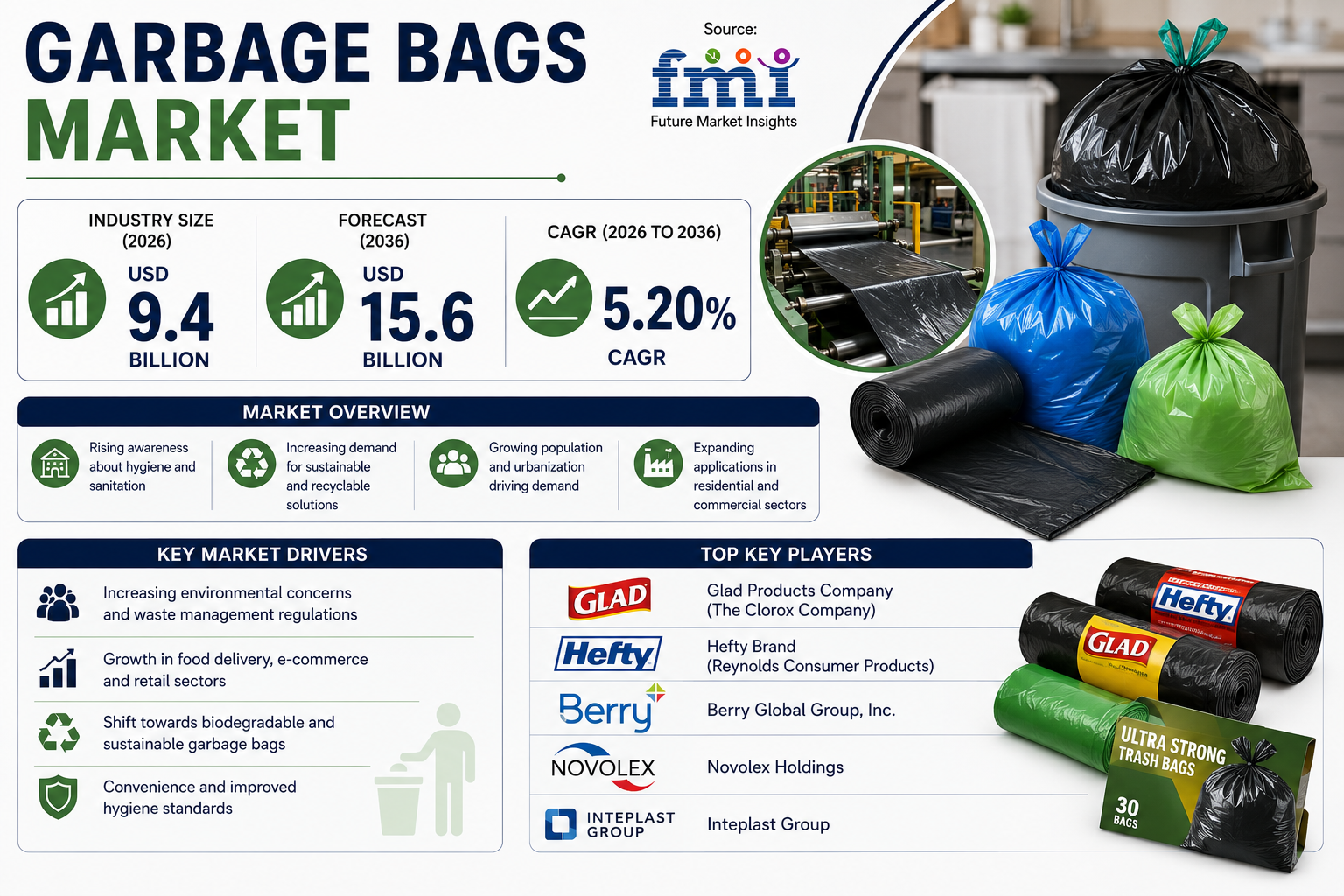
The Plastic Bags Market is projected to grow from USD 9.4 billion to USD 15.6 billion, expanding at a 5.2% CAGR during the forecast period. While demand continues across multiple end-use industries, future growth will increasingly depend on innovation in recyclable materials, regulatory compliance, and circular economy initiatives.
Sustainability Regulations Continue to Reshape Market Demand
Environmental regulations remain one of the strongest drivers influencing the plastic bags industry. Across Europe and several other regions, governments have introduced policies aimed at reducing the consumption of single-use plastic bags while encouraging reusable alternatives. The widespread concern stems from the long lifespan of conventional plastic bags, which can persist in the environment for hundreds of years. Improper disposal contributes significantly to land and marine pollution, threatening wildlife and increasing waste management costs. Rather than implementing identical regulations worldwide, many countries have adopted different approaches to reduce plastic bag consumption. These include mandatory usage charges, outright bans on lightweight shopping bags, minimum recycled-content requirements, and incentives promoting reusable packaging. Such measures are encouraging retailers and packaging manufacturers to invest in more sustainable product portfolios.
Consumer Preferences Continue to Shift
Consumer awareness regarding environmental sustainability has increased substantially over the past decade. Modern shoppers increasingly evaluate packaging alongside product quality, leading brands to prioritize environmentally responsible solutions. Reusable shopping bags have become common across supermarkets and retail chains, while paper bags, recyclable plastics, and bio-based alternatives continue gaining popularity. Many retailers now actively encourage customers to bring reusable bags through loyalty incentives or mandatory fees on disposable bags. This shift in consumer behavior has transformed sustainability from a regulatory requirement into a competitive advantage. Brands that demonstrate environmental responsibility through packaging innovation often strengthen customer loyalty while improving their corporate sustainability image.
Innovation Supports Industry Transformation
Although conventional plastic bags continue to dominate many applications, manufacturers are investing heavily in new technologies to improve recyclability and reduce environmental impact. Research efforts are focused on lightweight plastic formulations that use less raw material while maintaining strength and durability. Companies are also developing recyclable mono-material structures, incorporating higher levels of recycled resin, and exploring bio-based polymers to reduce dependence on virgin fossil-based plastics. Advanced manufacturing technologies are enabling better resource efficiency by minimizing production waste and lowering energy consumption. These innovations allow manufacturers to balance sustainability goals with cost competitiveness while meeting increasingly stringent regulatory requirements.
Biodegradable Alternatives Continue to Generate Debate
Biodegradable and compostable plastic bags have attracted considerable attention as potential alternatives to conventional plastics. However, industry experts continue to debate their long-term environmental effectiveness. Supporters argue that certified biodegradable materials can significantly reduce environmental impact under appropriate composting conditions. Critics, however, emphasize that some products require industrial composting facilities and may still contribute to microplastic formation if improperly disposed of. As governments refine environmental policies, greater emphasis is being placed on scientifically validated compostability standards, recyclability, and lifecycle assessments. This is encouraging manufacturers to develop packaging solutions supported by transparent environmental certifications rather than relying solely on marketing claims.
Circular Economy Creates New Opportunities
The global transition toward circular economy principles is creating significant opportunities throughout the plastic bags value chain. Manufacturers are increasingly designing products that can be collected, recycled, and reintroduced into production rather than discarded after a single use. Retailers and packaging suppliers are expanding recycling initiatives while investing in closed-loop material recovery systems. Increased use of post-consumer recycled content not only supports sustainability objectives but also helps companies comply with emerging regulatory requirements. Circular economy strategies are expected to become increasingly important as governments establish ambitious recycling targets and consumers continue demanding environmentally responsible packaging solutions.
Competitive Landscape Focuses on Sustainable Innovation
Leading manufacturers are expanding investments in recyclable materials, advanced polymer technologies, and sustainable production capabilities. Innovation now extends beyond material development to include improved manufacturing efficiency, supply chain optimization, and enhanced recycling infrastructure. Companies are also strengthening partnerships with retailers, waste management organizations, and recycling providers to improve material recovery rates and support circular packaging ecosystems. These collaborations help businesses remain competitive while adapting to evolving environmental regulations. Major companies operating in the Plastic Bags Market include Glad Products Company, Hefty Brand, Berry Global Group, Novolex Holdings, Inteplast Group, Poly-America L.P., and AEP Industries.
Future Outlook
The future of the Plastic Bags Market will be shaped less by simple production volume and more by sustainability performance, regulatory compliance, and material innovation. While plastic bags remain essential across numerous industries due to their cost-effectiveness and versatility, manufacturers must increasingly align their product portfolios with environmental expectations. Advances in recyclable polymers, recycled-content integration, biodegradable technologies, and circular economy initiatives will continue transforming the competitive landscape. Companies capable of balancing affordability, functionality, and sustainability will be best positioned to capture future market opportunities. With the market expected to reach USD 15.6 billion during the forecast period, the industry remains positioned for steady growth. Success, however, will depend on continuous investment in sustainable packaging technologies, responsible resource management, and compliance with increasingly stringent global environmental regulations.
Related Research Reports
Food Bags Market: The food bags market industry will grow at a CAGR of 6.8% and reach USD 1.59 billion by 2035.
Silo bags Market: The Silo bags Market is projected to reach USD 2.9 billion by 2035, registering a compound annual growth rate (CAGR) of 4.0% over the forecast period.
Polybags Market: The polybags market is projected to reach USD 54.8 billion by 2035, registering a compound annual growth rate (CAGR) of 7.7% over the forecast period.
About Future Market Insights (FMI)
Future Market Insights is a leading provider of market intelligence, consulting services, and syndicated research reports. FMI delivers actionable insights across packaging, logistics, industrial manufacturing, food and beverage, healthcare, chemicals, and emerging technologies, helping organizations identify growth opportunities and make informed strategic decisions in rapidly evolving markets.
Contact
Future Market Insights Inc.
Christiana Corporate
200 Continental Drive, Suite 401
Newark, Delaware 19713, USA
Email: sales@futuremarketinsights.com
Website: www.futuremarketinsights.com