

The global fish oil market is undergoing a significant transformation as competition between aquafeed producers and nutraceutical refiners intensifies across supply chains. Demand for omega-3-rich marine oils continues to rise from both aquaculture feed manufacturers and dietary supplement producers, creating allocation pressures that increasingly influence pricing, sourcing strategies, and investment decisions.
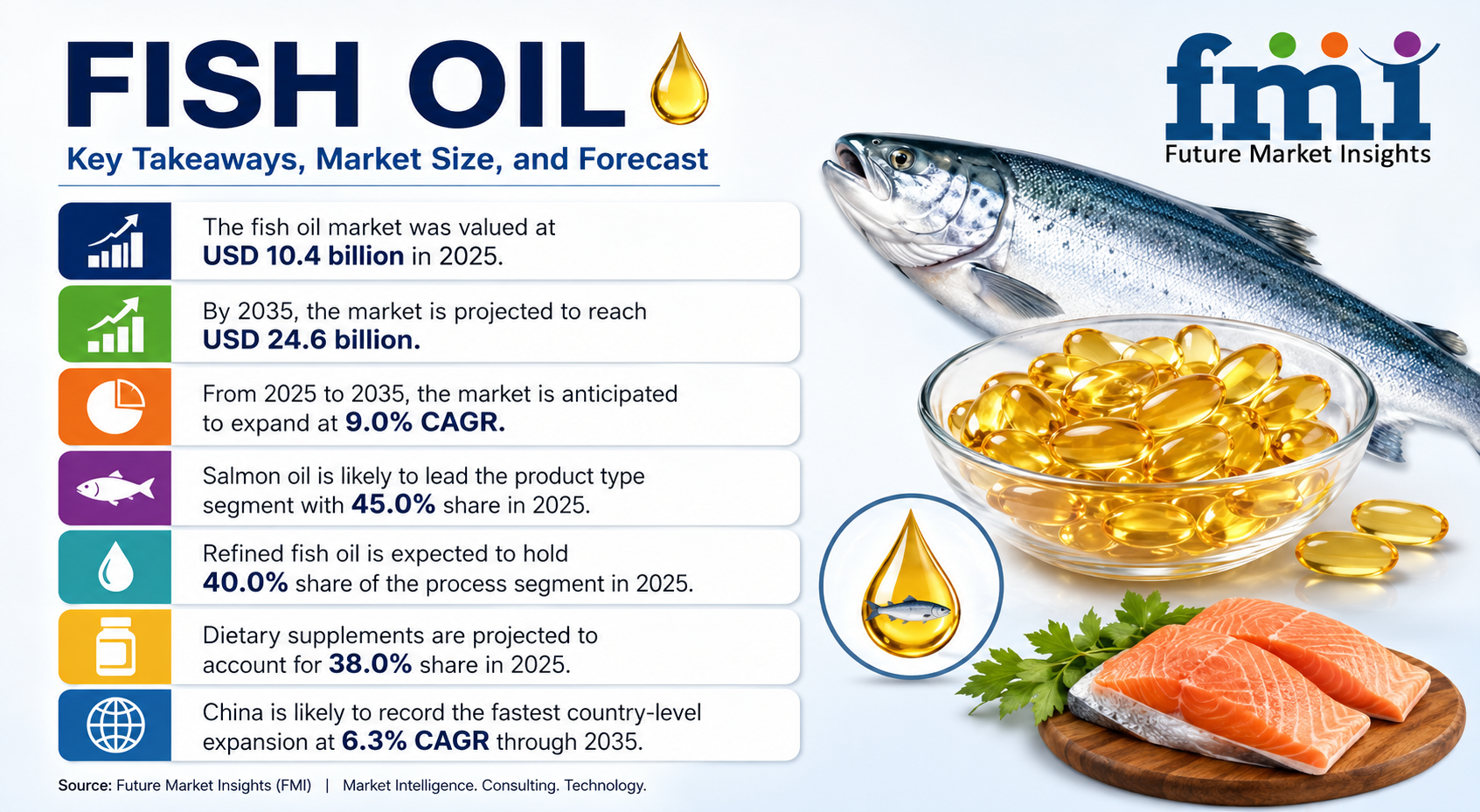
According to industry analysis, the fish oil market is projected to experience steady growth through 2035, supported by expanding aquaculture production, increasing consumer awareness of omega-3 health benefits, and growing demand for pharmaceutical-grade EPA and DHA concentrates.
The market is witnessing the emergence of what industry experts describe as a “Supply Allocation Premium,” where crude fish oil availability, seasonal salmon production cycles, and refining capacity constraints collectively determine market pricing dynamics.
Featured Snippet: Key Market Answer
Q: Why do aquafeed producers have greater influence on fish oil pricing than nutraceutical refiners?
A: Aquafeed manufacturers consume approximately 65% to 75% of global crude fish oil production and purchase significantly larger volumes than nutraceutical refiners. Because of this scale advantage, crude fish oil suppliers prioritize aquafeed contracts during periods of tight supply, making aquaculture demand the primary driver of market pricing and allocation decisions.
Quick Stats of Fish Oil Market
- Market Focus: Feed Grade, Food Grade, and Pharma Grade Fish Oil
- Largest Demand Segment: Aquafeed Industry
- Primary Consumer: Salmon and Trout Feed Manufacturers
- Leading Market Driver: Global Aquaculture Expansion
- Emerging Trend: EPA/DHA Concentrate Premiumization
- Major Pricing Influence: Seasonal Salmon Farming Cycles
- Fastest Growing Opportunity: Pharmaceutical and Nutraceutical Applications
Market Overview: The Battle for Omega-3 Supply
Fish oil remains one of the most strategically important marine-derived ingredients globally.
Produced primarily from anchovy, sardine, menhaden, herring, and other oily fish species, fish oil serves as a critical source of omega-3 fatty acids for aquaculture, dietary supplements, pharmaceuticals, food fortification, and cosmetic formulations.
However, supply growth remains constrained by sustainable fishing quotas, biomass management regulations, and seasonal harvesting limitations.
As a result, competition between aquafeed producers and nutraceutical refiners is reshaping the market.
Aquaculture companies require large volumes of fish oil to support salmon, trout, and marine fish production, while nutraceutical manufacturers depend on high-quality refinery-grade oils for omega-3 concentrates and premium dietary supplements.
This competition has created allocation-driven pricing dynamics that increasingly determine market profitability.
Key Growth Drivers
Expansion of Global Aquaculture Production
Aquaculture remains the largest consumer of fish oil globally.
Salmon and trout production continues to expand, creating substantial demand for feed formulations containing EPA and DHA.
Growing seafood consumption worldwide is supporting continued investment in aquaculture infrastructure and feed manufacturing capacity.
Rising Demand for Omega-3 Supplements
Consumers increasingly recognize the cardiovascular, cognitive, and anti-inflammatory benefits of omega-3 fatty acids.
This trend is accelerating demand for dietary supplements containing concentrated EPA and DHA derived from refined fish oil.
Limited Marine Resource Availability
Wild fish catch volumes remain constrained by sustainability requirements and fisheries management programs.
Quota systems implemented in major producing countries limit raw material availability and contribute to supply volatility.
Growing Pharmaceutical Applications
Pharmaceutical-grade omega-3 formulations continue gaining acceptance for cardiovascular health applications.
Demand for highly concentrated EPA and DHA products is increasing investment in refining technologies and quality assurance systems.
Market Trends Shaping the Industry
Seasonal Allocation Cycles Become More Pronounced
Salmon farming follows predictable biological cycles that significantly influence fish oil consumption patterns.
Peak feeding seasons between April and September generate substantial increases in crude fish oil demand, reducing availability for nutraceutical refiners.
Premiumization of Refinery-Grade Fish Oil
Only a portion of global crude fish oil production meets the specifications required for pharmaceutical and nutraceutical refining.
This scarcity is increasing premiums for low-oxidation, high EPA/DHA feedstock.
Growing Adoption of Alternative Omega-3 Sources
Algal oil and other marine alternatives are gaining attention as supplemental omega-3 sources.
While current production remains limited, investment in alternative omega-3 technologies continues to increase.
Vertical Integration Strategies
Major industry participants are pursuing upstream and downstream integration to secure supply and reduce exposure to market volatility.
Ownership of raw material sources and refining facilities is becoming a competitive advantage.
Increased Focus on Sustainability Certification
Environmental stewardship and responsible sourcing are becoming increasingly important procurement criteria across food, feed, and supplement sectors.
Certified marine ingredients command stronger market positioning and customer trust.
Segment Insights
End User Leadership: Aquafeed Industry
Aquafeed remains the dominant end-use segment.
Key factors supporting market leadership include:
- Large-scale salmon and trout farming operations
- High omega-3 requirements in feed formulations
- Consistent year-round consumption patterns
- Long-term supply agreements with producers
The aquafeed industry accounts for approximately 65% to 75% of global crude fish oil consumption.
Product Leadership: Refined Fish Oil
Refined fish oil continues gaining market share due to growing demand from dietary supplements and pharmaceutical manufacturers.
Benefits include:
- Higher purity levels
- Consistent EPA and DHA concentrations
- Regulatory compliance
- Improved shelf stability
Grade Leadership: Feed Grade Fish Oil
Feed-grade fish oil dominates overall volume consumption due to extensive use in aquaculture nutrition.
However, pharmaceutical-grade fish oil generates substantially higher value per metric ton.
Regional Insights
Europe
Europe remains a leading fish oil market owing to:
- Strong salmon farming industry
- Advanced refining infrastructure
- High omega-3 supplement consumption
- Strict quality standards
Norway continues to play a central role in global fish oil production and utilization.
North America
North America demonstrates strong demand for:
- Nutraceutical omega-3 products
- Pharmaceutical-grade concentrates
- Premium dietary supplements
The region benefits from a mature health and wellness industry.
Asia-Pacific
Asia-Pacific is expected to witness the strongest growth through 2035.
Key growth factors include:
- Expanding aquaculture production
- Rising seafood consumption
- Growing middle-class health awareness
- Increasing dietary supplement adoption
Latin America
Latin America remains strategically important due to Peru’s anchovy fisheries, which represent one of the world’s largest fish oil raw material sources.
Quota decisions in Peru significantly influence global supply and pricing trends.
Competitive Landscape
The fish oil market remains highly competitive, with participants competing across sourcing, refining, sustainability certification, and supply security.
Key Players
- Omega Protein Corporation
- Pelagia AS
- TripleNine Group
- FF Skagen A/S
- TASA
- Pesquera Diamante
- GC Rieber Oils
- BASF SE
- DSM-Firmenich
- KD Pharma Group
Competitive Differentiation Factors
- Access to sustainable fisheries
- EPA and DHA concentration capabilities
- Refining technology
- Regulatory compliance
- Supply chain integration
- Long-term sourcing agreements
- Sustainability certifications
Recent Developments
- Expansion of pharmaceutical-grade omega-3 refining capacity
- Increased investment in algal oil production technologies
- Growing adoption of sustainability-certified marine ingredients
- Strategic partnerships between fisheries and refiners
- Greater use of long-term supply contracts to manage volatility
- Enhanced traceability initiatives across marine ingredient supply chains
Expert Insight
The fish oil industry is increasingly being shaped by allocation economics rather than production economics.
Historically, market participants focused primarily on raw material availability and processing efficiency. Today, the ability to secure consistent access to refinery-grade crude fish oil has become equally important.
Aquafeed manufacturers continue to establish baseline pricing through their purchasing scale, while nutraceutical refiners drive premium value creation through concentration, purification, and pharmaceutical-grade processing.
Organizations that secure supply, invest in refining capabilities, and diversify omega-3 sourcing strategies are expected to gain the strongest competitive advantages over the coming decade.
FAQs
Why does aquafeed demand influence fish oil prices more than supplement demand?
Aquafeed manufacturers consume significantly larger volumes of crude fish oil and therefore establish baseline market pricing through large-scale purchasing agreements.
What causes seasonal fish oil shortages?
Peak salmon feeding periods create substantial increases in aquafeed demand, reducing crude fish oil availability for nutraceutical refiners and increasing pricing pressure.
Why is refinery-grade fish oil more expensive?
Refinery-grade fish oil requires higher EPA and DHA concentrations, lower oxidation levels, and stricter quality specifications, making qualified supply more limited.
How do fishing quotas affect fish oil pricing?
Quota reductions decrease raw material availability, tightening supply and increasing competition among buyers across feed and supplement sectors.
Can algal oil replace fish oil?
Algal oil can supplement omega-3 supply, particularly for DHA-focused applications, but current production volumes remain insufficient to fully replace fish oil demand.
What is the biggest long-term challenge facing the fish oil industry?
Balancing growing omega-3 demand with sustainable marine resource management remains the industry’s most significant long-term challenge.
Conclusion
The fish oil market sits at the intersection of aquaculture growth, human nutrition, and marine resource sustainability. Competition between aquafeed producers and nutraceutical refiners is increasingly shaping allocation decisions, pricing mechanisms, and investment strategies across the industry.
As aquaculture production expands and demand for omega-3 supplements continues rising, supply constraints are expected to persist. Organizations capable of securing reliable feedstock, expanding refining capacity, and developing diversified sourcing strategies will be best positioned to capitalize on future growth opportunities.
The next decade is likely to be defined not only by fish oil production volumes but by who can secure access to the right quality of fish oil at the right time.
Related Research Reports
Omega-3 Ingredients Market is expected to witness significant growth driven by increasing health awareness, pharmaceutical applications, and expanding dietary supplement consumption.
Aquafeed Market continues to benefit from global seafood demand growth, technological innovations, and increasing investments in sustainable aquaculture production.
About Future Market Insights (FMI)
Future Market Insights is a leading provider of market intelligence, consulting services, and syndicated research reports. FMI delivers actionable insights across food and beverage, consumer products, healthcare, chemicals, biotechnology, industrial products, and emerging technologies, helping organizations identify growth opportunities and make informed strategic decisions in rapidly evolving markets.
Contact Us:
Future Market Insights Inc.
Christiana Corporate, 200 Continental Drive,
Suite 401, Newark, Delaware – 19713, USA
T: +1-347-918-3531
Why FMI: https://www.futuremarketinsights.com/why-fmi
For Sales Enquiries: sales@futuremarketinsights.com
Website: https://www.futuremarketinsights.com