

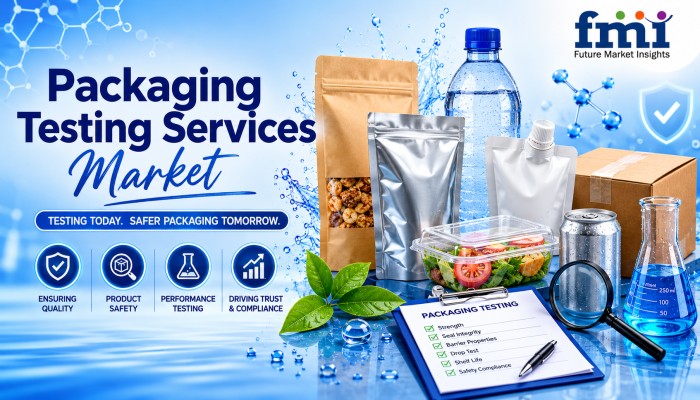
The packaging industry is undergoing a major transformation as rising costs of corrugated board, plastic resins, and cushioning materials force manufacturers to rethink traditional packaging practices. For both established packaging companies and emerging manufacturers looking to scale their operations, Packaging Testing Services have become an essential tool for balancing cost efficiency, product protection, and supply chain resilience.
For decades, brands relied on over-engineered packaging designs to minimize damage risks during transportation and storage. However, with material prices fluctuating significantly and supply chain disruptions becoming more frequent, businesses can no longer afford excessive material usage. Instead, companies are turning to data-driven testing methodologies to identify the most efficient packaging configurations without compromising product safety.
Why Packaging Testing Services Are Gaining Importance
Inflation across packaging materials has increased pressure on manufacturers to optimize every component of their packaging systems. Testing services provide measurable insights that help businesses reduce material consumption while maintaining performance standards.
Key Benefits Include:
- Reduced consumption of corrugated board, plastics, and cushioning materials
- Lower packaging and transportation costs
- Improved sustainability performance
- Reduced product damage during shipping
- Better compliance with retailer and e-commerce requirements
- Enhanced supply chain flexibility
As a result, packaging testing is evolving from a quality assurance activity into a strategic business function.
How Testing Supports Safe Material Reduction
Modern testing laboratories utilize internationally recognized standards such as ISTA and ASTM protocols to simulate real-world distribution environments. These evaluations help determine the exact point at which packaging performance begins to decline.
Common testing procedures include:
- Compression testing for warehouse stacking performance
- Drop testing to simulate handling impacts
- Vibration testing for transportation conditions
- Structural analysis for package integrity
- Environmental testing for temperature and humidity exposure
By identifying safe down-gauging thresholds, manufacturers can confidently reduce packaging material without increasing product damage rates.
Opportunities for Established and Emerging Manufacturers
Leading packaging suppliers are increasingly integrating advanced testing programs into product development strategies. At the same time, newer manufacturers are leveraging testing technologies to compete more effectively with larger industry players.
Emerging companies can utilize testing data to:
- Validate innovative lightweight packaging designs
- Accelerate market entry for sustainable packaging solutions
- Demonstrate product reliability to customers
- Gain competitive advantages in procurement negotiations
Established manufacturers, meanwhile, are using testing services to optimize existing product portfolios and strengthen customer relationships through proven performance metrics.
The Rise of Digital Engineering and Predictive Modeling
One of the most significant developments in Packaging Testing Services is the adoption of digital engineering technologies. Advanced simulation tools, including finite element analysis and digital twin modeling, allow engineers to evaluate packaging performance before physical prototypes are produced.
These technologies help companies:
- Reduce product development cycles
- Lower testing costs
- Evaluate multiple material combinations rapidly
- Identify potential failure points early in the design process
For manufacturers investing in next-generation packaging solutions, predictive modeling has become a powerful innovation accelerator.
Preparing for Automated Warehousing and Robotics
The rapid expansion of automated fulfillment centers is creating new packaging challenges. Robotic handling systems, conveyor networks, and high-speed sorting equipment generate unique stress conditions that traditional packaging designs may not withstand.
Testing providers now offer specialized evaluations such as:
- Robotic gripper-force testing
- Conveyor abrasion resistance testing
- Contact-point fatigue analysis
- Automation-ready packaging validation
These capabilities enable manufacturers to design packaging solutions specifically optimized for modern logistics environments.
Conclusion
As packaging material costs continue to rise, Packaging Testing Services are becoming a cornerstone of cost optimization and product protection strategies. By enabling safe material reduction, validating innovative designs, and supporting automation-ready packaging, testing services help both established manufacturers and emerging innovators create smarter, more sustainable, and more competitive packaging solutions for the future.
Explore More Related Studies Published by FMI Research:
Packaging Tubes Market: https://www.futuremarketinsights.com/reports/packaging-tubes-market
Packaging Films Market: https://www.futuremarketinsights.com/reports/packaging-films-market
Packaging Laminate Market: https://www.futuremarketinsights.com/reports/packaging-laminates-market
About Future Market Insights (FMI)
Future Market Insights, Inc. (FMI) is an ESOMAR-certified, ISO 9001:2015 market research and consulting organization, trusted by Fortune 500 clients and global enterprises. With operations in the U.S., UK, India, and Dubai, FMI provides data-backed insights and strategic intelligence across 30+ industries and 1200 markets worldwide.
Contact Us:
Future Market Insights Inc.
Christiana Corporate, 200 Continental Drive,
Suite 401, Newark, Delaware – 19713, USA
T: +1-347-918-3531
For Sales Enquiries: sales@futuremarketinsights.com
Website: https://www.futuremarketinsights.com
LinkedIn| Twitter| Blogs | YouTube