NEWARK, Del., November 17, 2026 — The global dough relaxants market is witnessing rapid growth as commercial bakeries and food manufacturers increasingly adopt advanced dough conditioning solutions to improve processing efficiency, dough extensibility, and production consistency. Rising demand for industrial bakery products, high-speed automated production lines, clean-label formulations, and advanced enzymatic ingredients is strengthening the adoption of dough relaxants across global bakery supply chains.
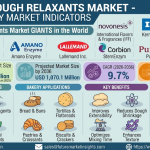
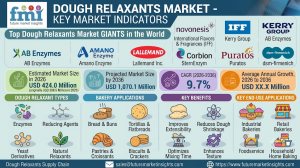
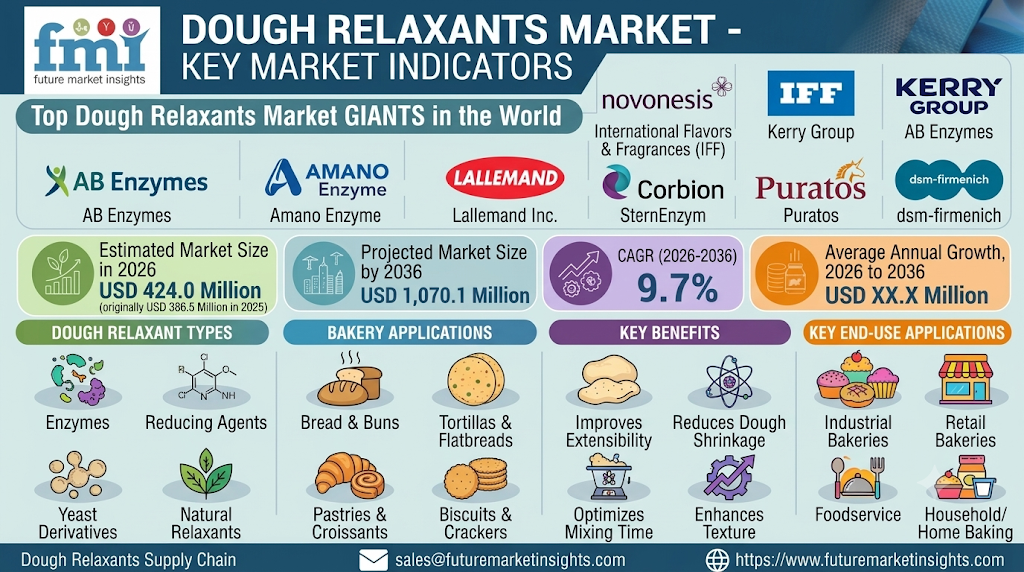
According to the latest market intelligence report published by Future Market Insights (FMI), the global dough relaxants market is estimated to reach USD 424.0 million in 2026, up from USD 386.5 million in 2025. The market is projected to expand to USD 1,070.1 million by 2036, registering a compound annual growth rate (CAGR) of 9.7% during the 2026–2036 forecast period. The market is expected to generate an incremental revenue opportunity of approximately USD 646.1 million over the assessment period.
Explore Detailed Market Forecasts, Competitive Benchmarking & Industry Insights: Request a Sample Report: https://www.futuremarketinsights.com/reports/sample/rep-gb-36068
The expansion reflects increasing demand for specialized dough conditioning ingredients that improve gluten extensibility, reduce dough elasticity, minimize sheeting shrinkage, and support consistent processing performance. Dough relaxants are increasingly used by industrial bakeries, flour mills, bakery ingredient manufacturers, and food processors seeking to optimize production speed while maintaining product quality.
Market Size & Growth Forecasts
The dough relaxants market is entering a high-growth phase supported by increasing industrial bakery automation, changing consumer preferences, and advancements in enzymatic dough conditioning technologies. Manufacturers are focusing on specialized proteases, reducing agents, glutathione-rich yeast ingredients, and multifunctional bakery improvers to address evolving commercial baking requirements.
Standard Grade formulations are projected to account for 38.0% of the product type segment in 2026, supported by established performance characteristics, predictable formulation costs, and suitability for large-scale industrial bakery operations.
From a form perspective, Powder / Dry formulations are anticipated to account for 49.0% of market demand in 2026. Their ambient shelf stability, convenient transportation, and compatibility with flour-mill improver premixes are strengthening their adoption among commercial ingredient suppliers.
From an application perspective, Bread & Rolls are expected to account for 27.0% of market demand in 2026. Increasing production of commercial bread, hamburger buns, hot-dog rolls, and other industrial bakery products is supporting demand for dough relaxation technologies.
Conventional formulations are projected to represent 54.0% of the claim segment in 2026, while Direct to Industrial Bakeries is expected to capture 54.0% of sales channel demand, reflecting the importance of customized formulations, technical support, and direct procurement relationships.
Key Market Takeaways
- Market Valuation: The global dough relaxants market is projected to increase from USD 424.0 million in 2026 to USD 1,070.1 million by 2036.
- Growth Rate: The market is expected to register a 9.7% CAGR between 2026 and 2036.
- Incremental Opportunity: The market is forecast to generate approximately USD 646.1 million in additional revenue during the assessment period.
- Leading Product Segment: Standard Grade formulations are anticipated to capture 38.0% of product type demand in 2026.
- Leading Form Segment: Powder / Dry formulations are projected to account for 49.0% of the form segment.
- Leading Application: Bread & Rolls are expected to represent 27.0% of application demand in 2026.
- Leading Claim Category: Conventional formulations are projected to account for 54.0% of the claim segment.
- Leading Sales Channel: Direct to Industrial Bakeries is expected to capture 54.0% of sales channel demand.
- Fastest-Growing Country: The UAE is projected to lead evaluated national markets with a 10.9% CAGR through 2036.
- Regional Growth Opportunities: Saudi Arabia is forecast to expand at 10.6%, South Korea at 10.3%, the United States at 9.9%, and the United Kingdom at 9.6% during the forecast period.
Industrial Bakery Automation Strengthens Dough Relaxants Demand
The growing adoption of automated bakery production technologies is emerging as a major growth catalyst for the global dough relaxants market. Commercial bakeries are increasingly investing in high-speed mixing, dividing, sheeting, molding, and baking systems to improve manufacturing efficiency and maintain consistent product quality.
Dough relaxants play an important role in controlling gluten elasticity and improving dough extensibility. These ingredients help prevent excessive dough shrinkage during sheeting and shaping, allowing manufacturers to maintain uniform product dimensions and reduce processing interruptions.
High-speed bread, biscuit, tortilla, and pastry production lines require precise dough handling characteristics. When gluten resistance becomes excessive, dough may retract after mechanical processing, resulting in dimensional inconsistencies and production inefficiencies.
Specialized dough relaxants help address these challenges by modifying gluten network structures through enzymatic and reducing mechanisms. Proteases, L-cysteine, and glutathione-rich ingredients are used in different formulations to achieve the required dough handling properties.
The expansion of industrial bakery facilities is creating additional opportunities for ingredient suppliers. Manufacturers are increasingly seeking specialized formulations that can reduce resting requirements, improve sheeting performance, and support higher production throughput.
The growing demand for packaged bread, hamburger buns, tortillas, biscuits, cookies, and convenience bakery products is further strengthening the commercial importance of dough relaxation technologies.
Standard Grade Formulations and Powder Blends Shape Product Demand
Standard Grade formulations are expected to maintain their leading position, accounting for 38.0% of the product type segment in 2026. Their established performance characteristics and predictable cost-in-use make them suitable for large-scale commercial bakery operations.
These formulations may incorporate food-grade L-cysteine hydrochloride, glutathione-rich inactive dry yeast, and bacterial or fungal proteases to achieve controlled dough relaxation.
Premium / Specialty Grade formulations are gaining attention among manufacturers requiring application-specific performance, specialized enzyme activity, and customized dough conditioning solutions.
Clean-label and organic-certified formulations are also creating opportunities as food manufacturers seek alternatives to conventional chemical reducing agents and ingredients that align with changing consumer expectations.
From a form perspective, Powder / Dry formulations are projected to account for 49.0% of market demand in 2026. Their ambient storage stability, convenient transportation, and compatibility with existing flour-mill premixing systems make them attractive for industrial ingredient supply chains.
Liquid formulations offer opportunities for automated dosing systems, while paste and semi-solid products serve specialized formulation requirements.
From an application perspective, Bread & Rolls are expected to account for 27.0% of market demand in 2026. Industrial pan-bread, hamburger bun, and hot-dog roll manufacturers require consistent dough extensibility to support uniform shaping and production efficiency.
Biscuits and cookies, cakes and muffins, viennoiserie and pastry, and other bakery and snack products further contribute to market demand.
Conventional formulations are anticipated to retain a 54.0% share of the claim segment in 2026. However, clean-label alternatives are gaining interest among manufacturers seeking to reformulate bakery products without compromising processing performance.
Direct to Industrial Bakeries is expected to account for 54.0% of sales channel demand, reflecting the importance of direct technical collaboration, formulation testing, and customized ingredient supply agreements.
Download the Market Research Summary – Explore Exclusive Industry Insights: https://www.futuremarketinsights.com/reports/brochure/rep-gb-36068
Clean-Label Enzymatic Solutions Create New Growth Opportunities
The increasing preference for clean-label bakery products is creating significant opportunities for dough relaxant manufacturers. Food producers are exploring enzymatic alternatives to conventional reducing agents to improve ingredient positioning while maintaining the processing characteristics required for commercial production.
Protease-based formulations are gaining attention because of their ability to modify gluten protein structures and improve dough extensibility.
Glutathione-rich inactive dry yeast is another important formulation approach. These ingredients provide reducing functionality and can support dough relaxation in bakery applications.
The development of specialized enzyme systems is also improving formulation flexibility. Manufacturers are investing in bacterial and fungal proteases with controlled activity profiles to achieve consistent results across different flour qualities and processing conditions.
Another opportunity lies in the integration of dough relaxants with multifunctional bakery improvers. Combining relaxation agents with other functional ingredients allows manufacturers to address multiple processing requirements through customized ingredient systems.
Suppliers offering application laboratories, flour rheology testing, pilot-scale production trials, and technical formulation support are positioned to strengthen relationships with large industrial bakeries.
Regional Growth Outlook: UAE, Saudi Arabia and South Korea Lead Expansion
The global dough relaxants market is experiencing varied growth patterns across major national markets, driven by industrial bakery investments, food processing modernization, wheat imports, and increasing adoption of automated production technologies.
United Arab Emirates (UAE) is projected to register the fastest growth among evaluated countries, with a 10.9% CAGR through 2036. Increasing investments in automated bakery facilities, imported wheat processing, and commercial flatbread manufacturing are creating opportunities for dough relaxant suppliers.
The expansion of industrial bakeries and food processing facilities under the UAE’s food security initiatives is strengthening demand for specialized bakery ingredients. High-speed flatbread and commercial bread production lines are creating opportunities for dry-powdered protease and reducing-agent formulations.
Saudi Arabia is forecast to expand at a 10.6% CAGR during the assessment period. Increasing investments in industrial wheat milling, commercial bakeries, and food manufacturing are supporting demand for advanced dough conditioning ingredients.
The expansion of high-volume bread and flatbread production facilities is encouraging manufacturers to adopt specialized bakery improvers that improve dough handling and reduce processing time.
South Korea is anticipated to register a 10.3% CAGR through 2036. Its growing convenience food industry, export-oriented biscuit manufacturing, and increasing adoption of automated bakery production systems are supporting market development.
The United States dough relaxants market is expected to expand at a 9.9% CAGR through 2036. High-speed hamburger bun, tortilla, bread, and cracker production facilities are creating opportunities for specialized enzymatic dough conditioning solutions.
The United Kingdom is projected to grow at a 9.6% CAGR, supported by industrial bread manufacturing, biscuit production, and increasing interest in clean-label bakery formulations.
Germany is expected to register a 9.3% CAGR through 2036. Demand from industrial bakeries, frozen bakery manufacturers, and flour-mill improver suppliers is supporting the adoption of advanced enzyme-based dough conditioning technologies.
France is forecast to expand at an 8.9% CAGR, supported by demand for specialty pastry production, industrial viennoiserie manufacturing, and clean-label bakery ingredients.
Japan is projected to grow at an 8.6% CAGR through 2036, driven by specialized bakery manufacturing, precision enzyme applications, and demand for consistent dough quality across commercial bread and biscuit production.
Key Companies in the Dough Relaxants Market
The competitive landscape includes international enzyme manufacturers, biotechnology companies, bakery ingredient suppliers, specialty yeast producers, and manufacturers of multifunctional bakery improvers.
Key companies covered in the Future Market Insights report and competitive analysis include:
- Novonesis
- International Flavors & Fragrances (IFF)
- Kerry Group
- AB Enzymes
- Amano Enzyme
- Lallemand Inc.
- Corbion
- SternEnzym
- Puratos
- dsm-firmenich
Market participants are focusing on enzymatic innovation, clean-label ingredient development, specialized protease formulations, and technical application support to strengthen their competitive positions.
Novonesis supplies specialized enzyme solutions, including Neutrase bacterial endo-protease, which can support dough handling optimization and gluten modification in industrial bakery applications.
International Flavors & Fragrances (IFF) develops enzyme technologies and bakery solutions designed to improve dough performance, processing consistency, and product quality.
Kerry Group provides bakery ingredients and functional solutions for commercial food manufacturers seeking improved formulation performance and production efficiency.
AB Enzymes develops specialized enzyme solutions for food and baking applications, including technologies that support dough processing and functionality.
Amano Enzyme specializes in enzyme technologies for food processing, including applications involving protein modification and bakery ingredient functionality.
Lallemand Inc. offers baking yeast and specialty yeast-derived ingredients, including glutathione-rich inactive dry yeast solutions that support dough relaxation.
Corbion provides functional food ingredients and bakery solutions, while SternEnzym develops specialized enzyme systems for biscuits, crackers, and other bakery products.
Puratos offers bakery ingredients, improvers, and specialized formulation technologies for industrial and artisanal manufacturers.
dsm-firmenich provides bakery enzyme solutions through its BakeZyme portfolio and supports industrial customers through technical application and innovation facilities.
Supplier capabilities in enzyme activity control, gluten modification, formulation consistency, technical support, and customized dosing are expected to remain important competitive factors.
Growth Opportunities and Industry Challenges
The expansion of industrial bakery production and increasing demand for clean-label formulations are creating new opportunities for dough relaxant manufacturers.
One important opportunity lies in the development of specialized enzymatic formulations. Proteases with controlled activity profiles can help manufacturers achieve consistent dough extensibility while improving production efficiency.
The growing adoption of automated bakery equipment is creating additional demand for ingredients that minimize dough shrinkage, reduce mechanical processing requirements, and improve sheeting consistency.
Clean-label reformulation represents another important growth opportunity. Manufacturers are exploring glutathione-rich yeast ingredients and specialized enzymatic systems as alternatives to certain conventional chemical reducing agents.
Emerging markets in the Middle East and Asia Pacific are also creating opportunities for suppliers. Investments in industrial bakeries, imported wheat processing, and packaged food manufacturing are strengthening demand for advanced bakery ingredients.
However, the industry faces challenges related to formulation precision, enzyme dosage, raw material variability, and processing conditions.
Excessive protease activity can weaken gluten structures beyond the required level, negatively affecting dough handling, loaf volume, and final product quality.
Differences in wheat protein content, flour characteristics, moisture levels, and processing temperatures can also influence ingredient performance.
Manufacturers must therefore invest in application-specific testing, controlled enzyme formulations, technical support, and consistent quality management to address industrial bakery requirements.
Future Market Outlook
The global dough relaxants market is expected to benefit from the continued expansion of industrial bakery manufacturing, increasing automation, and growing demand for advanced dough conditioning ingredients.
Rising adoption of enzymatic solutions, clean-label bakery formulations, and specialized gluten modification technologies will support long-term market opportunities.
For enzyme manufacturers, bakery ingredient suppliers, flour mills, commercial bakeries, and procurement teams, formulation consistency, controlled enzyme activity, technical application support, and reliable ingredient supply will remain important factors in strengthening market positioning.
Future Market Insights expects the market to maintain a strong growth trajectory through 2036 as dough relaxants become increasingly important for improving processing efficiency, dough extensibility, and product consistency across commercial bakery applications.
Explore the market outlook, forecast analysis and competitive landscape in the Full Report: https://www.futuremarketinsights.com/reports/dough-relaxants-market
About the Dough Relaxants Market Report
Future Market Insights’ Dough Relaxants Market Report provides comprehensive insights into market size, growth forecasts, segment performance, regional opportunities, competitive benchmarking, and industry developments for the 2026–2036 assessment period.
The report evaluates the market across product types, including Standard Grade, Premium / Specialty Grade, Organic Certified, and Clean Label Grade.
It also examines different product forms, including Powder / Dry, Liquid, Paste / Semi-Solid, and Granules / Pieces.
The application analysis covers Bread & Rolls, Cakes & Muffins, Biscuits & Cookies, Viennoiserie & Pastry, and Other Bakery & Snacks.
The report further evaluates market demand across Conventional, Clean Label, Organic, and Identity-Preserved Non-GMO claims, alongside sales channels such as Direct to Industrial Bakeries, Ingredient Distributors, Foodservice & Artisan Supply, and Online B2B.
The assessment covers major regional markets across North America, Latin America, Western Europe, Eastern Europe, East Asia, South Asia and Pacific, and the Middle East and Africa.
About Future Market Insights (FMI)
Future Market Insights (FMI) is a market intelligence and consulting firm providing data-driven research, strategic insights, and industry analysis to support business decision-making. FMI delivers market forecasts, competitive intelligence, demand assessments, and growth opportunity analysis across global industries, helping businesses identify emerging trends and develop informed growth strategies.
Media Contact
For Press & Corporate Inquiries
Rahul Singh
AVP – Marketing and Growth Strategy
Phone: +91 8600020075
For Sales: sales@futuremarketinsights.com
For Media: Rahul.singh@futuremarketinsights.com
Website: https://www.futuremarketinsights.com