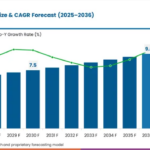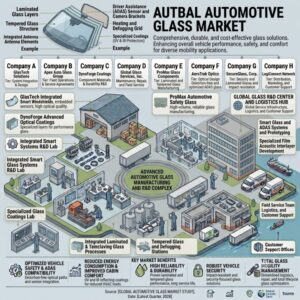


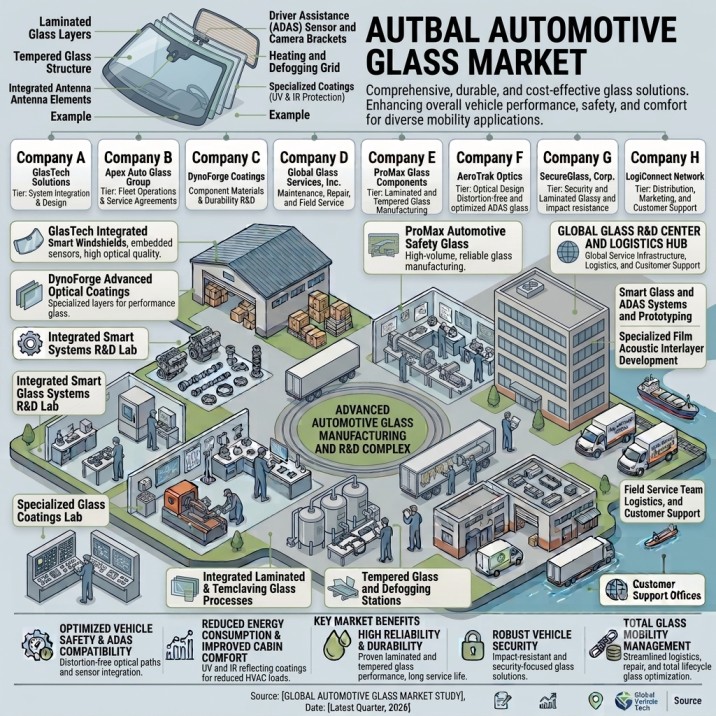
The global automotive glass market was valued at USD 22.2 billion in 2025 and is forecast to reach USD 23.5 billion in 2026. Expanding at a Compound Annual Growth Rate (CAGR) of 5.7% between 2026 and 2036, total market valuation is projected to achieve USD 40.8 billion by 2036. According to comprehensive market intelligence from Future Market Insights (FMI), the sector will generate an absolute incremental opportunity of USD 17.3 billion over the ten-year forecast period. This steady growth reflects a structural evolution in vehicle design as automotive glass transitions from commodity safety glazing into a platform-level design input essential for cabin thermal management, structural integrity, and driver-assistance sensor integration.
Get detailed market forecasts, competitive benchmarking, and pricing trends:
https://www.futuremarketinsights.com/reports/sample/rep-gb-2262
Key Market Highlights at a Glance
• 2025 Baseline Market Size: USD 22.2 billion
• 2026 Estimated Market Size: USD 23.5 billion
• 2036 Forecasted Market Size: USD 40.8 billion
• Ten-Year Compound Annual Growth Rate (CAGR 2026-2036): 5.7%
• Absolute Incremental Opportunity: USD 17.3 billion
• Leading Glass Type Segment (2026 Share): Tempered glass, holding a 66.5% market share
• Leading Application Segment (2026 Share): Windshield systems, accounting for a 23.9% market share
• Leading Vehicle Type Segment (2026 Share): Passenger vehicles, commanding a 60.0% market share
• Leading Sales Channel Segment (2026 Share): Original Equipment Manufacturers (OEMs), holding a 70.0% market share
• Leading Coating Type Segment (2026 Share): Infrared reflective coatings, holding a 40.0% market share
• Fastest-Growing Country Market: China, expanding at an 8.5% CAGR
• Second Fastest-Growing Country Market: Japan, expanding at a 6.7% CAGR
Why Is the Automotive Glass Market Growing?
Demand across the global automotive glass market is accelerating due to three primary operational and regulatory drivers:
• Platform Renewal and Cabin Heat Management in EVs: With global electric vehicle sales reaching 21 million units in 2025, automakers rely heavily on infrared reflective and solar-control glass to lower air-conditioning loads and preserve battery range.
• Expanded Vehicle Dimensions and Glazing Surface Area: According to EPA trends data, light trucks and larger crossovers accounted for 66% of new vehicles in model year 2024, expanding the total surface area of glass required per vehicle.
• Complex Windshield Replacement and Calibration Services: High-value windshields featuring advanced driver-assistance systems (ADAS) drive recurring aftermarket revenue as insurance-linked replacement flows demand precision glass fitting and sensor recalibration.
“Automotive glass is becoming a platform-level design input as carmakers manage visibility and sensor accuracy,” stated Nikhil Kaitwade, Principal Consultant for Automotive at Future Market Insights. “Replacement windshields face cost pressure from calibration work. Reliable lamination and coating control reduce fitting risk while local availability supports long-term glazing programs.”
Automotive Glass Market Segmentation Analysis
Which Glass Type Segment Dominates Total Market Revenue?
Tempered glass is estimated to lead the glass type category, capturing a 66.5% market share in 2026. Tempered glass maintains its dominant position because door glass, rear backlights, quarter glass, and vent panels require highly durable, thermal-shock-resistant safety glazing at a controlled cost structure. Laminated and advanced laminated glass account for the remaining segment share, serving as mandatory safety standards for front windshields and premium acoustic side windows.
• Tempered Glass: Projected to hold a leading 66.5% market share in 2026 due to extensive use across side door and rear window positions.
• Laminated & Advanced Laminated Glass: Account for the remaining 33.5% share, fulfilling structural safety mandates for front windshields and acoustic glazing.
Which Application Category Commands the Highest Value?
Windshield applications are projected to lead application revenue, holding a 23.9% market share in 2026. Windshields represent the highest single-component specification value due to multi-layer acoustic lamination, heads-up display (HUD) compatibility, and camera bracket mounting. Additional application segments include door glass, back glass, quarter glass, vent glass, and expanding sun-moon roof or panoramic glass canopies.
• Windshield Applications: Captures a leading 23.9% market share in 2026, driven by higher specification value in laminated visibility systems.
• Door Glass, Back Glass, Sun-Moon Roof, & Others: Represent the remaining 76.1% combined market share across primary vehicle viewing surfaces.
Which Vehicle Type Segment Accounts for the Largest Volume?
Passenger vehicles represent the dominant vehicle type category, estimated to account for a 60.0% market share in 2026. Massive global build volumes, combined with growing consumer preference for panoramic sunroofs and acoustic side windows, keep passenger cars at the forefront of demand. Light commercial vehicles, heavy commercial vehicles, and dedicated electric vehicle platforms account for the remaining revenue share.
• Passenger Vehicles: Commands a 60.0% market share in 2026, backed by high global build rates and expanding glazing area per vehicle.
• Commercial Vehicles & Dedicated Electric Vehicles: Represent the remaining 40.0% market share across freight logistics and specialized transport fleets.
Market Dynamics: Drivers, Restraints, and Trends
Key Market Drivers
Primary market drivers include mandatory compliance with safety standards such as eCFR 49 CFR 571.205, rapid scaling of global EV production, and rising consumer demand for panoramic sunroof systems that increase the overall square footage of glass per chassis.
Key Market Restraints
High manufacturing costs for multi-layer specialty coatings and cost pressure during complex windshield replacement calibration can limit margins. Fluctuations in raw float glass materials and energy-intensive manufacturing processes also present operational risks.
Key Market Trends
Automakers are rapidly specifying functional coatings. Infrared reflective coating is expected to account for a 40.0% market share in 2026 within the coating type segment to manage solar heat gain. Additionally, factory-installed original equipment dominates supply, with the OEM sales channel estimated to capture a 70.0% market share in 2026.
Regional Outlook: China and Japan Lead Asian Growth Corridors
• China: Projected CAGR of 8.5% (2026-2036)
• Japan: Projected CAGR of 6.7% (2026-2036)
• United States: Sustained high-volume demand driven by light truck production and replacement insurance flows.
• Europe: Strong adoption of advanced acoustic and low-emissivity glass across premium OEM platforms.
China Market Dynamics
China is projected to lead global country growth with an 8.5% CAGR. China produced over 34.5 million vehicles in 2025, providing massive domestic float glass supply depth and an expanding manufacturing footprint for advanced laminated and tempered automotive glass.
Japan Market Dynamics
Japan expands at a 6.7% CAGR through 2036. Demand is anchored by high-specification vehicle export programs, domestic OEM technological innovation, and early adoption of heads-up display glass architectures.
United States and Europe Market Dynamics
In the United States, high consumer preference for light trucks and SUVs-which utilize larger glazing packages-drives steady OEM delivery. Europe maintains a strong market position due to strict environmental mandates that encourage low-emissivity and solar-control glazing in electric passenger cars.
Competitive Landscape
The global automotive glass market features established tier-one suppliers capable of delivering high-volume float glass, precision bending, and advanced coating technologies. Companies that hold deep OEM approvals and localized lamination facilities maintain significant market advantages. Key industry leaders include:
• Fuyao Glass Industry Group Co., Ltd.: Premier automotive glass manufacturer with extensive global OEM integration and advanced lamination capabilities.
• AGC Inc.: World-leading developer of advanced vehicle glazing, heads-up display windshields, and solar-control coatings.
• NSG Group (Pilkington): Major global supplier recognized for innovative automotive glass solutions and thermal management coatings.
• Saint-Gobain Sekurit: Leading European automotive glass producer specializing in lightweight, acoustic, and electrochromic roof glass.
• Xinyi Glass Holdings Limited: Leading global float glass and replacement automotive glass producer with extensive manufacturing scale.
• Central Glass Co., Ltd.: Specialized Japanese manufacturer providing high-performance tempered and laminated safety glass.
• Vitro, S.A.B. de C.V.: Major North American producer supplying original equipment and replacement automotive glass.
Competitive dynamics center on securing early-stage platform contracts with EV automakers, expanding local lamination capacity, and offering integrated sensor-bracket assemblies to reduce OEM assembly friction.