

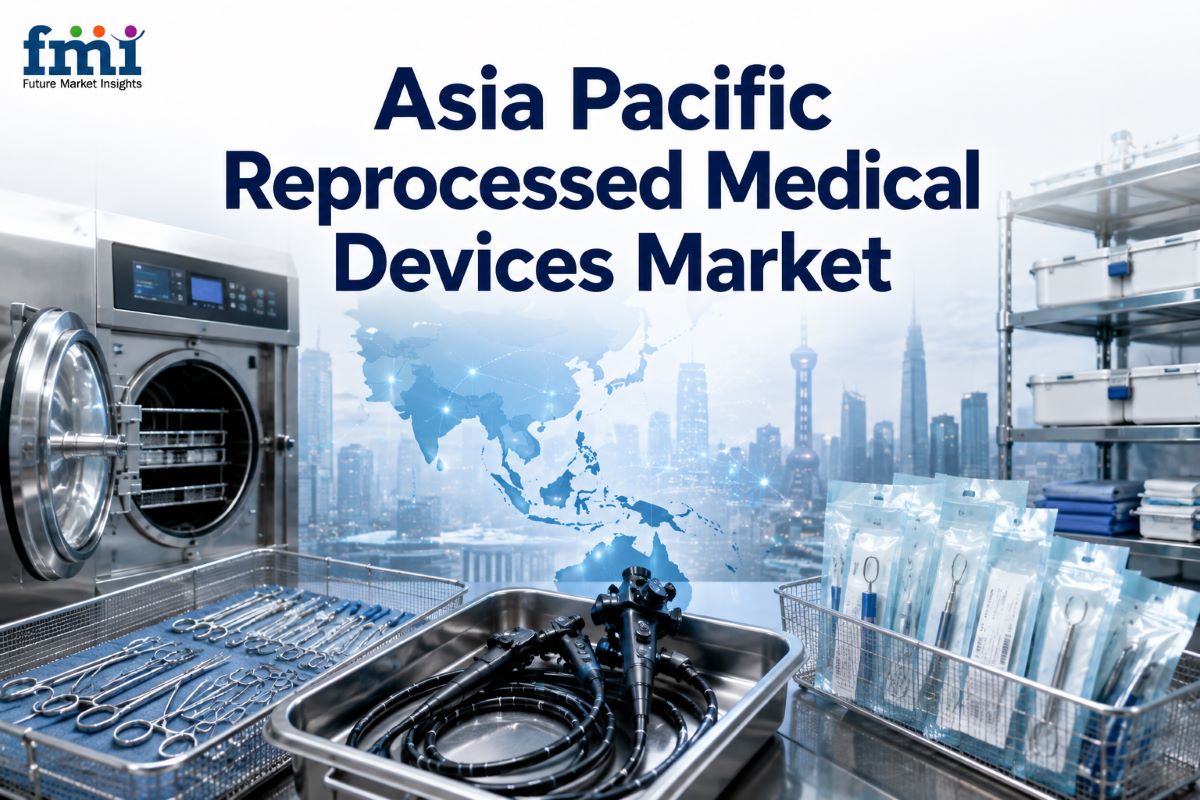
The APAC reprocessed medical devices market is gaining momentum as hospitals seek cost-effective medical solutions. Rising healthcare costs are encouraging providers to explore device reprocessing. At the same time, hospitals want to maintain high standards of patient care.
Medical device reprocessing involves cleaning, testing, sterilizing, and inspecting selected devices for reuse. The practice has gained attention across healthcare systems worldwide. Moreover, third-party reprocessing companies now support hospitals that prefer to outsource these activities.
Market Outlook
The APAC reprocessed medical devices market is expected to expand as healthcare providers focus on cost control. Rising healthcare expenditure will support this trend. Furthermore, growing hospital networks can create new opportunities for reprocessed devices.
Healthcare providers face constant pressure to improve operational efficiency. They also need affordable access to essential medical equipment. Therefore, reprocessed devices can offer an attractive option for selected applications.
Cost Savings Drive Market Expansion
Cost reduction remains a major factor supporting medical device reprocessing. Reprocessed devices can cost considerably less than new devices. Consequently, hospitals can reduce procurement expenses while maintaining access to essential equipment.
In addition, wider availability of reprocessed devices can increase price competition. This competition may encourage original equipment manufacturers (OEMs) to review their pricing strategies.
Rigorous Testing Supports Device Safety
Not every medical device qualifies for reprocessing. Companies first evaluate each device based on its materials and construction. Moreover, they examine the device’s functional characteristics and durability.
Reprocessors also assess the impact of cleaning and sterilization. They then develop suitable procedures for eligible devices. Furthermore, specialized engineers conduct detailed performance evaluations.
Testing plays a central role in the reprocessing process. Companies inspect devices before returning them to service. They also conduct functional and performance tests.
Regulatory Oversight Strengthens Market Confidence
Regulatory compliance remains essential for the reprocessed medical devices industry. In the United States, the FDA oversees reprocessed medical devices. Manufacturers and reprocessors must meet applicable safety and performance requirements.
Similarly, regulatory standards will influence market development across Asia Pacific. Countries in the region continue to strengthen healthcare quality requirements. Therefore, companies must maintain strong validation and documentation processes.
Reprocessors can use several information sources during device evaluation. For example, they may review patents, regulatory records, technical documents, and publicly available product information.
Third-Party Reprocessors Create New Opportunities
Third-party reprocessing companies are creating new opportunities across the healthcare sector. Hospitals can outsource reprocessing instead of developing internal capabilities. As a result, healthcare providers can reduce operational complexity.
Reprocessing companies employ technical specialists to evaluate medical devices. These specialists examine materials, construction, and functionality. Moreover, they assess cleaning and sterilization requirements before developing reprocessing procedures.
Independent testing can further support the process. Therefore, hospitals can work with specialized providers while maintaining focus on their core healthcare activities.
OEM and Reprocessor Debate
The medical device reprocessing industry continues to face debate between OEMs and third-party reprocessors. Some OEMs argue that certain single-use devices cannot withstand repeated processing. They also question the availability of original device specifications.
However, reprocessing companies dispute these concerns. They state that their procedures rely on scientific testing and engineering analysis. Moreover, they use validation processes to evaluate device performance.
This debate has increased attention toward device-specific testing. Consequently, companies are focusing more strongly on validation, documentation, and regulatory compliance.
Growing OEM Participation
The relationship between OEMs and reprocessors continues to evolve. Some OEMs have explored reprocessing their own devices. In addition, certain manufacturers have outsourced reprocessing activities.
Other companies have established relationships with third-party reprocessors. As a result, collaboration is becoming an important part of the broader medical device ecosystem.
Industry developments also highlight the importance of device design. Some companies have evaluated how devices respond to repeated cleaning and sterilization. Furthermore, these developments can encourage manufacturers and reprocessors to work more closely.
Greater collaboration could benefit hospitals as well. Ultimately, stronger cooperation can support better validation, improved device quality, and wider access to cost-effective solutions.
Emerging Growth Opportunities
The APAC reprocessed medical devices market offers opportunities across hospitals and other healthcare facilities. Rising healthcare costs will encourage providers to examine cost-saving alternatives.
Meanwhile, emerging markets across Asia Pacific can create additional opportunities. Healthcare infrastructure continues to develop across several countries. Therefore, demand for affordable medical technologies can increase.
Key opportunities include advanced cleaning systems and automated inspection technologies. Other opportunities involve sterilization solutions and device-specific validation methods.
Market Challenges
Despite its benefits, medical device reprocessing faces several challenges. Regulatory requirements vary across Asia Pacific countries. Consequently, companies may need different compliance strategies for different markets.
Quality assurance also remains a critical consideration. Reprocessors must select suitable devices and follow validated procedures. Furthermore, hospitals need confidence in the safety and performance of reprocessed products.
Patient and healthcare professional perceptions can also influence adoption. Some users may remain cautious about devices labeled for single use. Therefore, companies must provide clear information about testing, validation, and regulatory compliance.
Competitive Landscape and Future Outlook
Competition in the APAC reprocessed medical devices market is becoming increasingly technology-driven. Companies are investing in inspection, sterilization, testing, and tracking technologies.
Moreover, regulatory expertise can provide an important competitive advantage. Companies with strong validation capabilities can build greater confidence among healthcare providers.
Hospitals will also continue evaluating reprocessing as part of broader cost-management strategies. Consequently, providers that offer reliable, compliant, and cost-effective solutions can strengthen their market position.
Conclusion
The APAC reprocessed medical devices market is evolving as healthcare providers seek greater cost efficiency. Rising healthcare expenditure will continue to encourage interest in affordable medical technologies.
Reprocessing can help hospitals manage procurement costs for eligible devices. Furthermore, professional testing and regulatory compliance can strengthen confidence in reprocessed products.
Ultimately, cost savings, technological innovation, and stronger quality standards will create new opportunities for reprocessed medical devices across Asia Pacific.
Explore More Related Studies Published by FMI Research:
Diagnostic X-Ray System Market: https://www.openpr.com/news/4539403/diagnostic-x-ray-system-market-led-by-north-america-europe-ge
Continuous Glucose Monitoring Systems Market: https://www.openpr.com/news/4539404/continuous-glucose-monitoring-systems-market-led-by-north
Cardiovascular Enterprise Viewer Market: https://www.openpr.com/news/4539407/cardiovascular-enterprise-viewer-market-led-by-north-america
FMI Custom Research: Strategic Intelligence for Confident Decision-Making
In today’s rapidly evolving business environment, leadership teams need more than market data—they need clear, actionable intelligence tailored to their strategic objectives. FMI’s Custom Research solutions are designed around the specific business questions organizations need answered, enabling executives to evaluate growth opportunities, validate investments, assess competitive dynamics, and reduce uncertainty before making critical decisions. By combining deep industry expertise, primary research, and proprietary market intelligence, FMI delivers insights that help organizations move from assumptions to evidence-based strategies with greater speed and confidence.
Key Executive Benefits
- Decision-Ready Insights: Research tailored to your specific business challenges, growth plans, and investment priorities.
- Reduced Strategic Risk: Validate market opportunities, customer demand, and competitive positioning before committing resources.
- Market Entry Confidence: Assess opportunity size, regulatory barriers, channel dynamics, and competitive landscapes with precision.
- Competitive Advantage: Gain proprietary intelligence unavailable through syndicated reports or internal datasets.
- Faster Growth Decisions: Accelerate expansion, product development, portfolio optimization, and investment planning.
- Primary Market Validation: Access real-world customer, buyer, and stakeholder insights that support high-confidence decision-making.
- Global Industry Expertise: Powered by 100+ analysts, 20,000+ published reports, and 1.6 million+ hours of research experience.
- Proven Track Record: Over 7,000 market-entry engagements completed across six regions and 14 industry sectors with strong client retention.
Business Impact
FMI helps organizations transform market complexity into strategic clarity, enabling leadership teams to identify growth opportunities faster, optimize resource allocation, strengthen competitive positioning, and make high-stakes business decisions with confidence.
To explore how FMI Custom Research can support your strategic priorities, please connect with our team at – sales@futuremarketinsights.com
About Future Market Insights (FMI)
Future Market Insights is a leading provider of market intelligence, consulting services, and syndicated research reports. FMI delivers actionable insights across food and beverage, healthcare, consumer goods, biotechnology, chemicals, industrial products, and emerging technologies, helping organizations identify growth opportunities and make informed strategic decisions in evolving global markets.
Contact Us:
Future Market Insights Inc.
Christiana Corporate, 200 Continental Drive,
Suite 401, Newark, Delaware – 19713, USA
T: +1-347-918-3531
Why FMI: https://www.futuremarketinsights.com/why-fmi
For Sales Enquiries: sales@futuremarketinsights.com
Website: https://www.futuremarketinsights.com