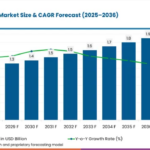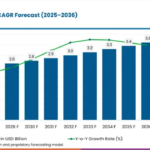


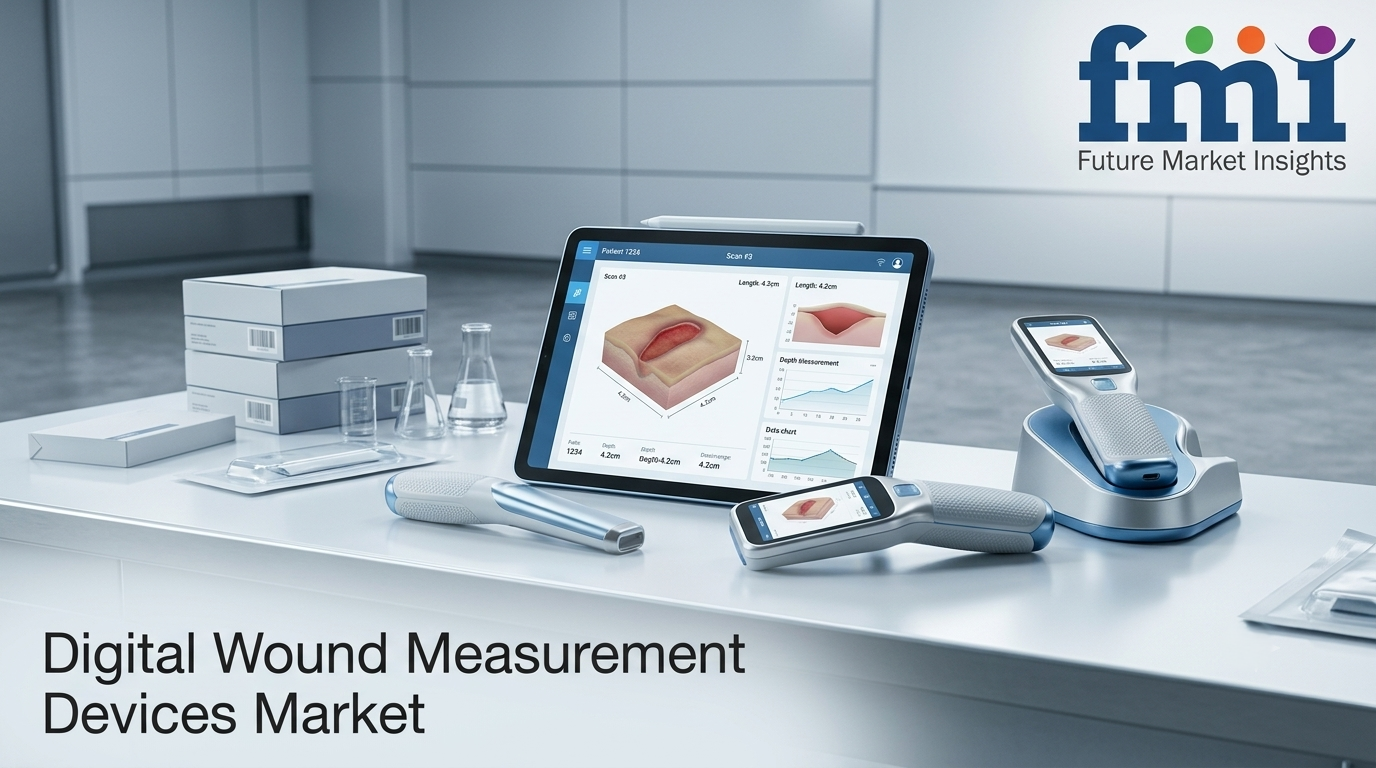
The global digital wound measurement devices market is entering a new phase of enterprise-driven expansion as healthcare providers increasingly integrate wound assessment technologies into broader digital health ecosystems. Valued at approximately USD 1.2 billion in 2026, the market is projected to reach USD 2.0 billion by 2036, advancing at a compound annual growth rate (CAGR) of 5.2% throughout the forecast period. Market momentum is supported by rising chronic wound prevalence, expanding diabetes incidence, and healthcare organizations’ growing investments in digitally connected care pathways.
Hospital procurement has evolved beyond acquiring standalone wound measurement devices toward enterprise platforms that combine software, cloud infrastructure, analytics, interoperability, and long-term clinical support. This transformation reflects increasing recognition that wound management directly influences patient outcomes, operational efficiency, quality reporting, and healthcare costs. Hospitals represent 61.0% of total end-user demand, while diabetic ulcer applications account for 32.0% of the market, underscoring the importance of continuous monitoring and multidisciplinary care coordination.
Market Overview
The digital wound measurement devices market is undergoing structural transformation as healthcare systems modernize wound care through enterprise-wide digital initiatives. Once focused primarily on improving measurement accuracy, procurement strategies now prioritize integrated platforms capable of supporting documentation standardization, longitudinal patient monitoring, telehealth, analytics, and clinical workflow optimization.
Growing pressure to reduce healthcare costs while improving patient outcomes has positioned digital wound assessment technologies as strategic assets within chronic disease management programs. Hospitals increasingly require interoperable systems capable of integrating with electronic health records (EHRs), remote patient monitoring platforms, and clinical decision support systems.
The projected increase from USD 1.2 billion in 2026 to USD 2.0 billion by 2036 reflects sustained investment in digital transformation, particularly among large healthcare systems seeking standardized wound management infrastructures.
Key Growth Drivers
- Rising prevalence of diabetes and chronic wounds driving long-term monitoring requirements.
- Expansion of enterprise digital transformation initiatives across hospitals.
- Growing adoption of standardized wound documentation and clinical workflows.
- Increased investments in integrated care coordination and remote patient monitoring.
- Greater demand for interoperable wound management platforms with EHR connectivity.
- Shift toward software-enabled procurement models including analytics and cloud services.
- Increasing focus on operational efficiency, quality metrics, and resource optimization.
Technology & Innovation Trends
Technology innovation is rapidly redefining competitive positioning across the digital wound measurement devices market. Modern platforms increasingly combine artificial intelligence-assisted wound assessment, cloud-based documentation, advanced analytics, telehealth compatibility, and automated healing progression tracking.
Healthcare organizations are moving toward subscription-based software models that provide continuous feature enhancements instead of periodic hardware upgrades. Artificial intelligence capabilities are gradually supporting objective wound assessment, while analytics platforms provide actionable insights for clinicians managing chronic wound populations.
Cybersecurity, interoperability, cloud storage, and scalable digital architecture have become procurement priorities as hospitals seek enterprise solutions capable of supporting multiple departments including wound care centers, endocrinology, surgical services, and home healthcare programs.
Market Challenges & Restraints
Despite positive growth prospects, several challenges continue to influence market adoption. Integration with diverse hospital information technology infrastructures remains complex, particularly within large healthcare systems operating heterogeneous clinical platforms.
Healthcare organizations must also balance technology standardization against supplier flexibility. While single-supplier agreements simplify governance and documentation consistency, multi-vendor environments continue to provide access to specialized clinical capabilities and reduce dependence on individual vendors.
Procurement complexity has also increased as purchasing decisions now require evaluation of cybersecurity standards, interoperability performance, cloud infrastructure, implementation services, software upgrades, technical support, and long-term subscription costs.
Segment Analysis
The diabetic ulcer application segment, representing 32.0% of market demand in 2026, remains the largest application area due to the prolonged treatment cycles associated with diabetic wound care. Digital measurement technologies enable objective healing assessments, longitudinal monitoring, and earlier clinical intervention, improving multidisciplinary care coordination while supporting chronic disease management initiatives.
By end user, hospitals account for 61.0% of total market demand, making them the primary drivers of enterprise procurement contracts. Large healthcare systems increasingly seek scalable platforms capable of supporting standardized documentation, analytics, and integrated patient management across multiple facilities.
Procurement strategies are also evolving. Single-supplier agreements continue gaining momentum because they simplify implementation, improve clinician training, streamline documentation workflows, and strengthen enterprise governance. Bundled contracts increasingly include software licensing, implementation services, cloud storage, analytics, and ongoing technical support.
Nevertheless, multi-supplier procurement models remain strategically important for healthcare organizations requiring technology flexibility, specialized functionality, supply chain resilience, and stronger negotiating leverage.
Regional Analysis
Regional market expansion is expected to be closely linked to healthcare digitalization initiatives and investments in chronic disease management infrastructure. Developed healthcare markets continue emphasizing integrated wound management platforms to improve operational efficiency and clinical outcomes, while emerging healthcare systems are progressively adopting digital assessment technologies as healthcare modernization accelerates.
Regions with growing diabetes prevalence and expanding hospital digital transformation programs are expected to generate sustained procurement demand, particularly as healthcare providers prioritize standardized wound documentation and enterprise interoperability.
Competitive Landscape
Competition is shifting away from standalone measurement hardware toward comprehensive digital wound management ecosystems. Vendors capable of delivering interoperable enterprise platforms, cloud-enabled analytics, cybersecurity, artificial intelligence functionality, and long-term service partnerships are strengthening their competitive positions.
The market increasingly rewards manufacturers that support healthcare providers throughout implementation, software evolution, workflow optimization, and enterprise digital transformation rather than focusing solely on device performance.
Leading Companies Analysis
Competitive differentiation increasingly depends on platform capabilities rather than individual devices. Manufacturers offering integrated software, cloud infrastructure, analytics, interoperability, and enterprise support services are better positioned to secure long-term hospital contracts.
Strategic collaborations with electronic health record providers, cloud infrastructure companies, and telemedicine platforms are becoming increasingly valuable as hospitals seek unified digital ecosystems capable of supporting enterprise-wide wound management initiatives.
Investment & Strategic Developments
Hospital procurement contracts are becoming substantially more comprehensive than traditional equipment purchases. Modern agreements increasingly encompass software subscriptions, cybersecurity protections, cloud storage, interoperability services, artificial intelligence capabilities, user training, technical support, implementation assistance, system scalability, and performance-based service commitments.
Healthcare providers also increasingly evaluate vendors based on long-term technology roadmaps, measurable implementation outcomes, and predictable operational costs through subscription-based pricing models.
Future Outlook
Looking ahead, enterprise procurement strategies will continue reshaping the digital wound measurement devices market. Demand is expected to remain strongest among hospitals investing in integrated wound management ecosystems capable of supporting chronic disease management, remote monitoring, and value-based healthcare delivery.
As digital health infrastructure continues to mature, manufacturers that successfully combine scalable software platforms, advanced analytics, interoperability, cybersecurity, and continuous innovation will be best positioned to capture future growth opportunities.
Related Report
https://www.openpr.com/news/4327875/united-states-powder-injection-molding-market-forecast
https://www.openpr.com/news/4327883/executive-report-future-of-the-global-united-states-lead
https://www.openpr.com/news/4327888/2026-global-united-states-hydro-processing-catalysts-market
FMI Custom Research: Strategic Intelligence for Confident Decision-Making
In today’s rapidly evolving business environment, leadership teams need more than market data—they need clear, actionable intelligence tailored to their strategic objectives. FMI’s Custom Research solutions are designed around the specific business questions organizations need answered, enabling executives to evaluate growth opportunities, validate investments, assess competitive dynamics, and reduce uncertainty before making critical decisions. By combining deep industry expertise, primary research, and proprietary market intelligence, FMI delivers insights that help organizations move from assumptions to evidence-based strategies with greater speed and confidence.
Key Executive Benefits
- Decision-Ready Insights: Research tailored to your specific business challenges, growth plans, and investment priorities.
- Reduced Strategic Risk: Validate market opportunities, customer demand, and competitive positioning before committing resources.
- Market Entry Confidence: Assess opportunity size, regulatory barriers, channel dynamics, and competitive landscapes with precision.
- Competitive Advantage: Gain proprietary intelligence unavailable through syndicated reports or internal datasets.
- Faster Growth Decisions: Accelerate expansion, product development, portfolio optimization, and investment planning.
- Primary Market Validation: Access real-world customer, buyer, and stakeholder insights that support high-confidence decision-making.
- Global Industry Expertise: Powered by 100+ analysts, 20,000+ published reports, and 1.6 million+ hours of research experience.
- Proven Track Record: Over 7,000 market-entry engagements completed across six regions and 14 industry sectors with strong client retention.
Business Impact
FMI helps organizations transform market complexity into strategic clarity, enabling leadership teams to identify growth opportunities faster, optimize resource allocation, strengthen competitive positioning, and make high-stakes business decisions with confidence.
To explore how FMI Custom Research can support your strategic priorities, please connect with our team at – sales@futuremarketinsights.com