

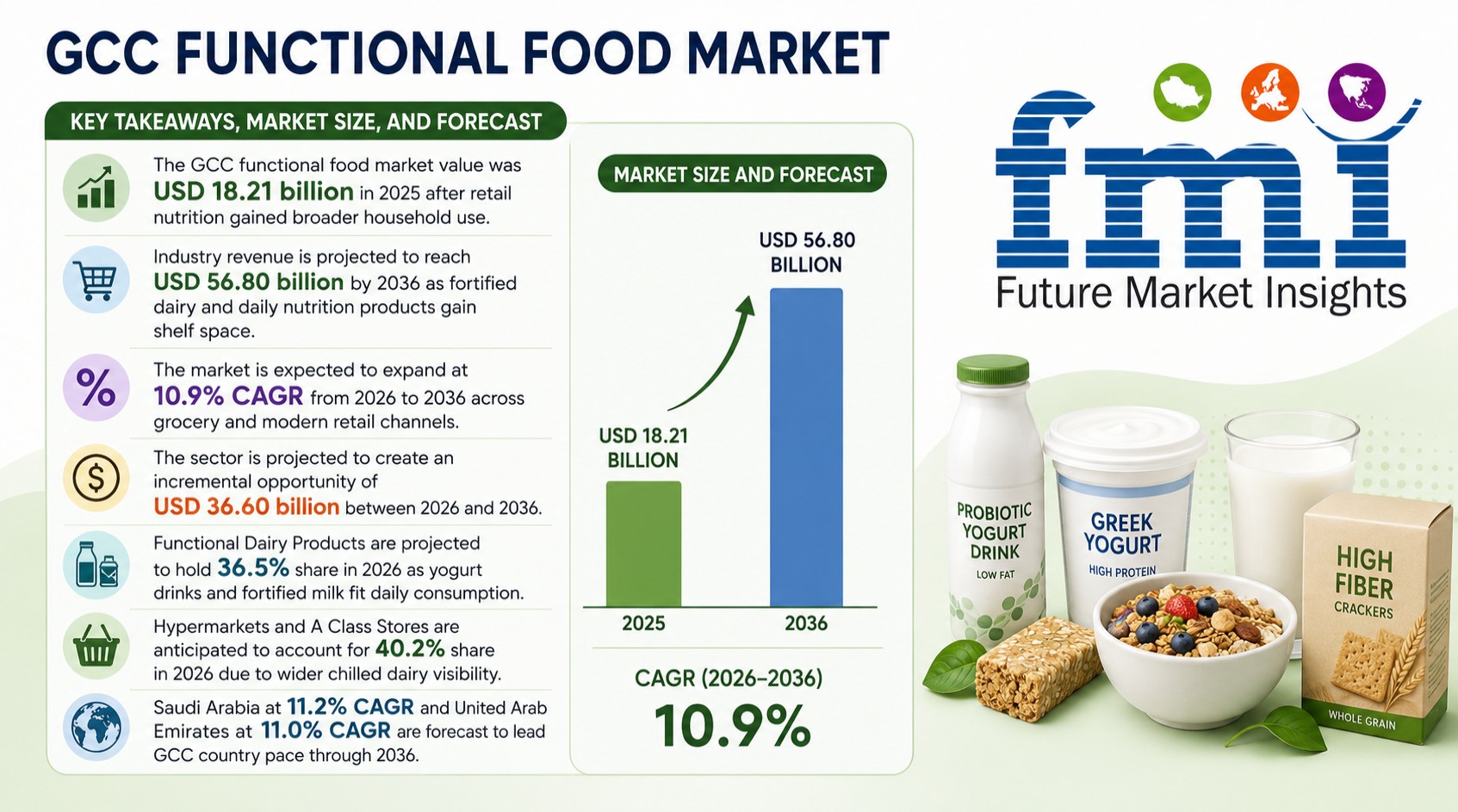
The GCC functional food market is entering a period of sustained expansion as rising health awareness, growing disposable incomes, and increasing prevalence of lifestyle-related diseases reshape food purchasing behavior across the Gulf region. Functional foods are no longer viewed as niche wellness products but are increasingly becoming part of mainstream dietary choices aimed at supporting metabolic health, immunity, digestive wellness, cardiovascular function, and overall wellbeing.
The market sits at the intersection of significant public health challenges and strong consumer purchasing power. While obesity, diabetes, and cardiovascular diseases continue to place pressure on healthcare systems across the GCC, governments, healthcare providers, and consumers are actively seeking preventive nutrition solutions. As a result, functional foods are gaining traction across dairy products, beverages, fortified snacks, cereals, and specialized nutrition categories.
However, profitability in the GCC functional food market is shaped by a complex interplay of import dependence, claims regulation, ingredient costs, retailer bargaining power, and consumer trust. Brands that successfully balance scientific credibility, pricing discipline, and consumer relevance are positioned to capture sustainable growth opportunities.
Featured Snippet: Key Market Answer
Q: What drives the economics and profitability of functional foods in the GCC?
A: The profitability of functional foods in the GCC is driven by the ability to maintain premium pricing while managing imported ingredient costs, regulatory compliance requirements, retailer promotions, and supply chain complexity. Products linked to clear health concerns such as obesity, diabetes, gut health, and immunity tend to achieve stronger margins when supported by credible scientific evidence and sold through premium retail and pharmacy channels.
Quick Stats of GCC Functional Food Market
- Key Demand Driver: Rising Obesity and Diabetes Prevalence
- Primary Cost Challenge: Dependence on Imported Ingredients and Bioactives
- Leading Distribution Channels: Pharmacies and Premium Modern Trade
- Fastest Growing Consumer Need: Gut Health and Metabolic Wellness
- Major Regulatory Influence: Sugar Reduction and Health Claims Compliance
- Core Profitability Lever: Sustainable Premium Pricing
Market Overview: Health Economics Meets Consumer Demand
The GCC functional food market is shaped by three fundamental structural forces.
First, the region faces one of the highest burdens of noncommunicable diseases globally. Obesity, type 2 diabetes, hypertension, and cardiovascular disorders continue to rise across Saudi Arabia, the United Arab Emirates, Kuwait, Qatar, Bahrain, and Oman.
Second, rapid urbanization and changing dietary habits have increased demand for convenient food products while simultaneously creating consumer demand for healthier alternatives.
Third, government-led initiatives focused on nutrition improvement, sugar reduction, and preventive healthcare are encouraging both manufacturers and consumers to embrace functional nutrition solutions.
As these trends converge, functional foods are becoming increasingly attractive not only as wellness products but also as strategic tools for reducing long-term healthcare risks.
Key Growth Drivers
Rising Burden of Obesity and Diabetes
The GCC continues to experience elevated rates of obesity and diabetes compared with many global regions.
Consumers are actively seeking products that support:
- Weight management
- Blood sugar control
- Heart health
- Digestive wellness
- Immune support
Functional foods positioned around these concerns typically achieve stronger market acceptance and higher repeat purchase rates.
Government Health Initiatives
Governments across the GCC are implementing policies designed to encourage healthier consumption patterns.
These include:
- Sugar-sweetened beverage taxes
- Public health awareness campaigns
- Nutrition labeling initiatives
- Healthy eating programs
- Food reformulation incentives
These measures create favorable conditions for functional food innovation.
Growing Health-Conscious Middle Class
Higher disposable incomes and increased awareness of preventive healthcare are encouraging consumers to invest in premium nutrition products.
Consumers increasingly evaluate foods based on:
- Nutritional value
- Functional benefits
- Ingredient transparency
- Scientific credibility
- Long-term health outcomes
Expansion of Modern Retail Infrastructure
Premium supermarkets, health-focused retail chains, pharmacies, and e-commerce platforms are expanding access to functional food products across the region.
These channels allow brands to educate consumers and justify premium pricing through targeted merchandising and health-oriented positioning.
Market Trends Shaping the Industry
Gut Health Becomes a Core Category
Probiotic and prebiotic products are gaining popularity as consumers become more aware of the connection between digestive health and overall wellness.
Functional dairy products, yogurts, fermented beverages, and fiber-enriched foods continue to experience growing demand.
Low-Sugar Formulations Gain Momentum
Sugar reduction remains one of the strongest innovation themes across the GCC.
Manufacturers are investing in:
- Alternative sweeteners
- Reduced-sugar recipes
- Functional beverage reformulations
- Diabetes-friendly product development
Personalized Nutrition Emerges
Consumers increasingly seek products tailored to specific health concerns.
This trend is driving innovation in:
- Sports nutrition
- Healthy aging products
- Women’s health nutrition
- Metabolic health solutions
- Immune support formulations
Clean Label and Ingredient Transparency
Consumers are paying closer attention to ingredient sourcing and product authenticity.
Brands that communicate ingredient origins and scientific validation are achieving stronger trust and loyalty.
Regulatory Scrutiny of Health Claims
Health claims are receiving increased regulatory attention throughout the region.
Manufacturers must support claims with credible scientific evidence, making regulatory compliance a key determinant of long-term profitability.
What Distinguishes High-Margin Functional Food Opportunities?
Health Problems with Clear Consumer Relevance
Products addressing highly visible regional health concerns consistently outperform niche offerings.
High-margin categories include:
- Diabetes management
- Weight management
- Heart health
- Digestive wellness
- Immunity enhancement
Balanced Premium Positioning
Successful products maintain a price premium that consumers perceive as justified by measurable benefits.
Moderately priced functional products often outperform highly fortified niche products that exceed consumers’ willingness to pay.
Strong Scientific Credibility
Consumers and regulators increasingly expect evidence-backed health benefits.
Brands that invest in research, clinical validation, and transparent communication achieve stronger long-term pricing power.
Strategic Channel Selection
Profitability varies significantly by distribution channel.
Higher-margin channels include:
- Pharmacies
- Specialty health stores
- Premium supermarkets
- Direct-to-consumer digital platforms
Mass retail channels often require more aggressive pricing and promotional activity.
Cost Structure Analysis
Imported Ingredient Dependence
One of the most significant challenges facing GCC functional food manufacturers is reliance on imported ingredients.
Key imported inputs include:
- Probiotics
- Prebiotics
- Plant extracts
- Specialty fibers
- Protein isolates
- Vitamins and minerals
Input cost fluctuations can materially impact profitability.
Cold Chain Requirements
Many functional foods require temperature-controlled logistics.
Cold-chain infrastructure increases:
- Transportation costs
- Storage expenses
- Quality assurance requirements
- Product handling complexity
Regulatory Compliance Costs
Health claims must often be substantiated through scientific documentation and regulatory review processes.
These requirements create additional expenses related to:
- Product testing
- Clinical validation
- Labeling compliance
- Regulatory approvals
Regional Insights
Saudi Arabia
Saudi Arabia represents the largest opportunity within the GCC due to:
- Large population base
- High obesity prevalence
- Active health policy reforms
- Expanding modern retail infrastructure
United Arab Emirates
The UAE remains a leading innovation hub for functional foods driven by:
- Premium consumer segments
- High disposable income
- Advanced retail channels
- Strong wellness culture
Qatar and Kuwait
These markets offer significant opportunities for premium functional products due to affluent consumer populations and growing health awareness.
Oman and Bahrain
Emerging opportunities are supported by increasing investments in healthcare, nutrition awareness, and retail modernization.
Competitive Landscape
The GCC functional food market remains highly competitive, with multinational brands, regional manufacturers, and specialized nutrition companies competing across multiple product categories.
Key Competitive Differentiators
- Scientific substantiation
- Health claim credibility
- Ingredient quality
- Supply chain resilience
- Product innovation
- Regulatory compliance
- Retail partnerships
- Consumer trust
Areas of Innovation
- Functional dairy products
- Probiotic beverages
- Fortified snacks
- Plant-based nutrition
- Reduced-sugar foods
- Metabolic health solutions
Recent Developments
- Expansion of sugar reduction initiatives across GCC countries
- Increasing investment in personalized nutrition products
- Growing adoption of clean-label formulations
- Rising consumer demand for digestive health solutions
- Enhanced regulatory focus on health claims validation
- Development of locally relevant functional food formulations
Expert Insight
The GCC functional food market is entering what can be described as the “Preventive Nutrition Economy.”
Historically, food companies competed primarily on taste, convenience, and price. The next phase of competition will revolve around measurable health outcomes and scientifically supported benefits.
The most successful companies will not necessarily be those with the most sophisticated ingredients, but those capable of balancing scientific credibility, consumer trust, regulatory compliance, and sustainable economics.
The greatest profitability opportunities will emerge where clear health needs, evidence-backed functionality, and premium distribution channels intersect.
FAQs
How do import costs affect GCC functional food margins?
Heavy dependence on imported ingredients, bioactive compounds, and specialized nutrition inputs increases production costs and creates exposure to global supply chain disruptions.
Why is claims regulation important for profitability?
Evidence-backed claims help sustain premium pricing, while weak or unsupported claims can result in regulatory challenges, relabeling costs, and reduced consumer trust.
What is the biggest pricing challenge in the GCC?
Retailer promotions and competitive pricing pressure make it difficult to maintain premiums unless products address highly relevant health concerns.
Which channels generate the strongest margins?
Pharmacies, specialty health retailers, premium supermarkets, and direct-to-consumer channels generally support higher margins than traditional mass-market retailers.
Why are bioactive ingredients considered a cost risk?
Probiotics, specialty fibers, plant extracts, and functional compounds often increase product costs faster than consumers are willing to absorb through higher prices.
Which functional food categories have the greatest long-term potential?
Gut health, metabolic wellness, diabetes management, immunity support, and heart health are expected to remain the most attractive growth segments across the GCC.
Conclusion
The GCC functional food market presents significant long-term growth opportunities driven by demographic trends, rising healthcare awareness, government nutrition initiatives, and increasing consumer demand for preventive health solutions.
However, profitability is not guaranteed. Brands must carefully balance ingredient costs, regulatory compliance, pricing strategies, and channel selection to preserve margins. Companies that successfully align scientific credibility with consumer relevance will be best positioned to capture sustainable growth.
As obesity, diabetes, cardiovascular risk, and other lifestyle-related health concerns continue to shape consumer behavior across the Gulf region, functional foods are expected to become a critical component of the future food and nutrition ecosystem.
Related Research Reports
Functional Ingredients Market is witnessing increased demand as manufacturers seek scientifically validated ingredients that support health-focused product innovation.
Probiotic Ingredients Market continues to expand due to growing interest in digestive health, immunity, and microbiome-based nutrition solutions.
FMI Custom Research: Strategic Intelligence for Confident Decision-Making
In today’s rapidly evolving business environment, leadership teams need more than market data they need clear, actionable intelligence tailored to their strategic objectives. FMI’s Custom Research solutions are designed around the specific business questions organizations need answered, enabling executives to evaluate growth opportunities, validate investments, assess competitive dynamics, and reduce uncertainty before making critical decisions. By combining deep industry expertise, primary research, and proprietary market intelligence, FMI delivers insights that help organizations move from assumptions to evidence-based strategies with greater speed and confidence.
Key Executive Benefits
- Decision-Ready Insights: Research tailored to your specific business challenges, growth plans, and investment priorities.
- Reduced Strategic Risk: Validate market opportunities, customer demand, and competitive positioning before committing resources.
- Market Entry Confidence: Assess opportunity size, regulatory barriers, channel dynamics, and competitive landscapes with precision.
- Competitive Advantage: Gain proprietary intelligence unavailable through syndicated reports or internal datasets.
- Faster Growth Decisions: Accelerate expansion, product development, portfolio optimization, and investment planning.
- Primary Market Validation: Access real-world customer, buyer, and stakeholder insights that support high-confidence decision-making.
- Global Industry Expertise: Powered by 100+ analysts, 20,000+ published reports, and 1.6 million+ hours of research experience.
- Proven Track Record: Over 7,000 market-entry engagements completed across six regions and 14 industry sectors with strong client retention.
Business Impact
FMI helps organizations transform market complexity into strategic clarity, enabling leadership teams to identify growth opportunities faster, optimize resource allocation, strengthen competitive positioning, and make high-stakes business decisions with confidence.
To explore how FMI Custom Research can support your strategic priorities, please connect with our team at – sales@futuremarketinsights.com
About Future Market Insights (FMI)
Future Market Insights is a leading provider of market intelligence, consulting services, and syndicated research reports. FMI delivers actionable insights across food and beverage, healthcare, consumer goods, biotechnology, chemicals, industrial products, and emerging technologies, helping organizations identify growth opportunities and make informed strategic decisions in evolving global markets.
Contact Us:
Future Market Insights Inc.
Christiana Corporate, 200 Continental Drive,
Suite 401, Newark, Delaware – 19713, USA
T: +1-347-918-3531
Why FMI: https://www.futuremarketinsights.com/why-fmi
For Sales Enquiries: sales@futuremarketinsights.com
Website: https://www.futuremarketinsights.com