

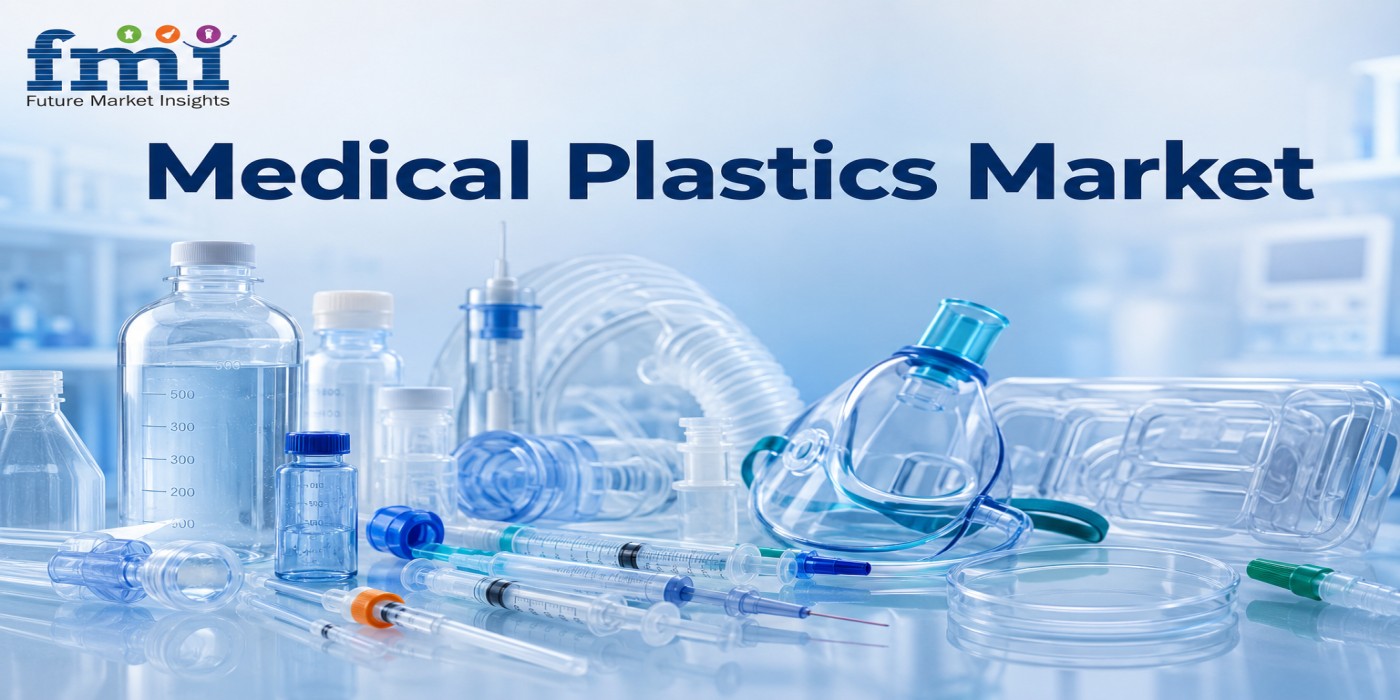
The global medical plastics market is experiencing sustained growth as healthcare systems expand, medical device innovation accelerates, and demand for safe, lightweight, and cost-effective materials continues to increase. Medical plastics have become indispensable across disposable medical supplies, diagnostic equipment, surgical instruments, implantable devices, drug-delivery systems, and healthcare packaging.
As healthcare providers seek greater efficiency, infection control, and regulatory compliance, manufacturers are increasingly relying on specialized polymer solutions that combine biocompatibility, sterilization compatibility, durability, and processing flexibility. The market is evolving beyond traditional commodity plastics toward a more segmented structure where high-volume disposable products and advanced performance-driven medical applications are growing simultaneously.
Market Outlook
The medical plastics market is projected to expand steadily throughout the forecast period, supported by rising healthcare expenditures, increasing demand for single-use medical products, growing adoption of minimally invasive procedures, and continuous advances in medical technology.
Unlike earlier market growth phases that were primarily supported by conventional disposable healthcare products, future expansion is increasingly linked to sophisticated medical devices, wearable healthcare technologies, implantable systems, home-care solutions, and precision diagnostics.
Demand is becoming increasingly associated with patient safety, device miniaturization, regulatory compliance, and material performance optimization, positioning medical plastics as a critical component of modern healthcare infrastructure.
Disposable Medical Products Continue to Drive Volume Growth
One of the most significant factors supporting market expansion is the continued reliance on disposable healthcare products across hospitals, clinics, laboratories, and home-care environments.
Syringes, tubing, specimen containers, packaging materials, diagnostic consumables, and fluid-management systems require large volumes of cost-effective and reliable polymers. The emphasis on infection prevention, patient safety, and operational efficiency continues to support demand for high-volume medical-grade plastics.
Healthcare providers increasingly prioritize disposable products that reduce contamination risks while maintaining affordability, creating long-term growth opportunities for medical plastic manufacturers.
Polyethylene Retains Leadership in High-Volume Medical Applications
Polyethylene remains the dominant material segment, accounting for approximately 29.7% of market demand in 2026. Its widespread use across tubing, sterile packaging, containers, bottles, films, caps, and disposable healthcare products continues to support substantial consumption volumes.
The material offers a highly attractive balance of processability, chemical resistance, flexibility, durability, and cost efficiency. Medical tubing, infusion systems, respiratory care products, and fluid-transfer applications continue to rely heavily on polyethylene-based solutions.
As healthcare systems expand globally, polyethylene is expected to remain the volume foundation of the medical plastics industry despite ongoing innovation in specialty polymers.
Polypropylene Benefits from Growth in Diagnostic and Drug-Delivery Devices
Polypropylene continues to strengthen its position across syringes, laboratory products, diagnostic consumables, caps, containers, cartridges, and fluid-handling components.
Its chemical resistance, low density, fatigue resistance, and compatibility with multiple sterilization methods make it highly attractive for both disposable and reusable healthcare products.
Growing demand for home diagnostics, specimen collection systems, drug-delivery devices, and point-of-care testing equipment is creating additional opportunities for polypropylene manufacturers. The material’s compatibility with high-volume injection molding processes further supports its long-term growth prospects.
PVC Remains Critical in Fluid Management Systems
Polyvinyl chloride continues to play a vital role in medical tubing, intravenous systems, blood bags, and fluid-management applications.
Its flexibility, transparency, bonding characteristics, and cost-effectiveness make it difficult to replace in many established healthcare products. However, increasing regulatory scrutiny surrounding specific plasticizers and additives is encouraging manufacturers to evaluate alternative formulations and substitute materials where technically feasible.
Rather than a rapid replacement cycle, the market is witnessing a gradual transition toward alternative plasticizers and selected non-PVC solutions while preserving PVC’s strong presence in core fluid-handling applications.
TPU Gains Momentum in Wearable Healthcare and Flexible Medical Devices
Thermoplastic polyurethane is emerging as one of the most promising specialty polymers within the medical plastics market.
The material offers exceptional elasticity, abrasion resistance, kink resistance, flexibility, transparency, and durability, making it particularly suitable for catheters, wearable medical devices, respiratory products, flexible connectors, cuffs, and advanced tubing systems.
The rapid growth of home healthcare, wearable monitoring systems, and portable drug-delivery technologies is accelerating TPU adoption. As patient-centered care models continue expanding, demand for flexible, comfortable, and durable materials is expected to strengthen significantly.
Polycarbonate Maintains a Strong Position in Diagnostic and Device Housings
Polycarbonate remains a preferred material for transparent and impact-resistant medical applications.
Its excellent optical clarity, toughness, dimensional stability, and durability support widespread use in diagnostic housings, transparent covers, reservoirs, connectors, and portable medical devices.
Although regulatory scrutiny regarding certain chemical components is encouraging some manufacturers to evaluate alternatives such as copolyesters and cyclic olefin polymers, polycarbonate continues to offer significant advantages in applications requiring strength and transparency.
Demand is expected to remain robust across diagnostic equipment and advanced healthcare devices where performance requirements outweigh substitution pressures.
PEEK Expands Within High-Performance Medical Applications
Polyether ether ketone (PEEK) continues to gain traction in specialized, high-value healthcare applications despite representing a relatively small share of overall material volumes.
The material’s exceptional mechanical strength, chemical resistance, thermal stability, and sterilization compatibility make it highly attractive for implants, surgical instruments, dental components, minimally invasive devices, and reusable medical equipment.
Growing interest in metal replacement strategies, combined with increasing demand for lightweight and radiolucent materials, is supporting continued expansion of PEEK usage across advanced medical technologies.
Specialty Polymers Gain Attention in Diagnostics and Pharmaceutical Packaging
Emerging materials such as cyclic olefin polymers, cyclic olefin copolymers, and advanced copolyesters are attracting increasing interest across diagnostic, pharmaceutical, and laboratory applications.
These materials offer advantages including high transparency, low moisture absorption, excellent chemical purity, and enhanced barrier performance. Applications include diagnostic cartridges, microfluidic systems, pharmaceutical packaging, syringes, vials, and fluid-contact components.
Although their costs remain higher than conventional polyolefins, growing regulatory and performance requirements are creating attractive opportunities for specialty polymer suppliers.
Sterile Packaging Innovation Supports Material Development
Medical packaging remains a major application area for medical plastics, with manufacturers focusing on improving barrier performance, sterilization compatibility, sustainability, and material efficiency.
Polyethylene and polypropylene continue to dominate packaging films, containers, trays, and sealing systems. PET, PETG, and high-density polyethylene also play important roles across sterile packaging formats.
Industry efforts increasingly focus on thinner films, improved recyclability, lower-carbon materials, and enhanced sterilization compatibility while maintaining strict performance requirements for package integrity and patient safety.
Challenges Facing the Market
Despite favorable growth prospects, the medical plastics market faces several challenges.
Increasing regulatory scrutiny regarding chemical composition, additives, patient-contact materials, and environmental impact is influencing material selection decisions. Product qualification and validation requirements can also lengthen development timelines and increase compliance costs.
Sustainability concerns surrounding medical waste generation, recycling limitations, and carbon reduction targets are creating additional pressure on manufacturers to develop environmentally responsible solutions without compromising patient safety or performance.
Supply-chain resilience and raw-material availability remain important considerations as healthcare manufacturers seek reliable sourcing strategies for critical medical-grade polymers.
Segmentation Highlights
Medical devices represent approximately 38.4% of total market demand, making them the largest application category within the medical plastics industry.
Disposable medical components account for approximately 42.9% of product demand, highlighting the continued importance of infection prevention, healthcare efficiency, and patient safety.
Major application areas include medical devices, diagnostic systems, drug-delivery products, tubing, catheters, implantable devices, laboratory consumables, pharmaceutical packaging, surgical instruments, and wearable healthcare technologies.
Regional Trends
Asia-Pacific remains one of the fastest-growing regions in the medical plastics market, supported by expanding healthcare infrastructure, rising healthcare spending, increasing medical device manufacturing activity, and growing demand for disposable healthcare products across major economies including China and India.
North America maintains a significant market position due to advanced healthcare systems, strong medical device manufacturing capabilities, ongoing healthcare innovation, and increasing adoption of sophisticated diagnostic and treatment technologies.
Europe continues to emphasize sustainability, regulatory compliance, patient safety, and medical innovation, supporting demand for advanced medical-grade polymer solutions throughout the region.
Competitive Landscape and Future Outlook
The medical plastics market remains highly competitive, with material suppliers focusing on product innovation, regulatory support, sustainability initiatives, and application-specific material development.
Manufacturers are increasingly investing in biocompatible formulations, sterilization-compatible materials, specialty polymers, recycling technologies, and advanced technical support services to strengthen market positioning.
Innovation efforts are increasingly centered on helping medical device manufacturers achieve performance, safety, regulatory compliance, miniaturization, and sustainability objectives simultaneously.
Conclusion: Specialization and Healthcare Innovation Shape the Future of the Medical Plastics Market
The medical plastics market is entering a new phase of growth where healthcare innovation, patient safety, regulatory compliance, and material specialization are becoming equally important alongside traditional cost and manufacturing considerations.
While polyethylene and polypropylene continue to dominate high-volume disposable healthcare products, specialty materials such as TPU, PEEK, cyclic olefin polymers, and advanced copolyesters are gaining momentum in performance-driven applications.
As healthcare systems continue to evolve and medical technologies become increasingly sophisticated, medical plastics will remain essential for enabling safer devices, improving patient outcomes, supporting healthcare efficiency, and advancing the next generation of medical innovation.
Explore More Related Studies Published by FMI Research:
Cyclomethicone Market: https://www.openpr.com/news/4539264/cyclomethicone-market-dominated-by-north-america-as-dow
Cooling Water Treatment Chemicals Market: https://www.openpr.com/news/4539266/cooling-water-treatment-chemicals-market-led-by-asia-pacific-as
Potassium Chloride Market: https://www.openpr.com/news/4541631/potassium-chloride-market-dominated-by-asia-pacific-nutrien
Have specific requirements or need assistance on report pricing or limited budget? Please contact us – sales@futuremarketinsights.com
About Future Market Insights (FMI)
Future Market Insights, Inc. (FMI) is an ESOMAR-certified, ISO 9001:2015 market research and consulting organization trusted by Fortune 500 companies and global enterprises. With operations across the United States, United Kingdom, India, and Dubai, FMI delivers data-driven market intelligence, strategic consulting, and actionable insights across more than 30 industries and 1,200 markets worldwide.