


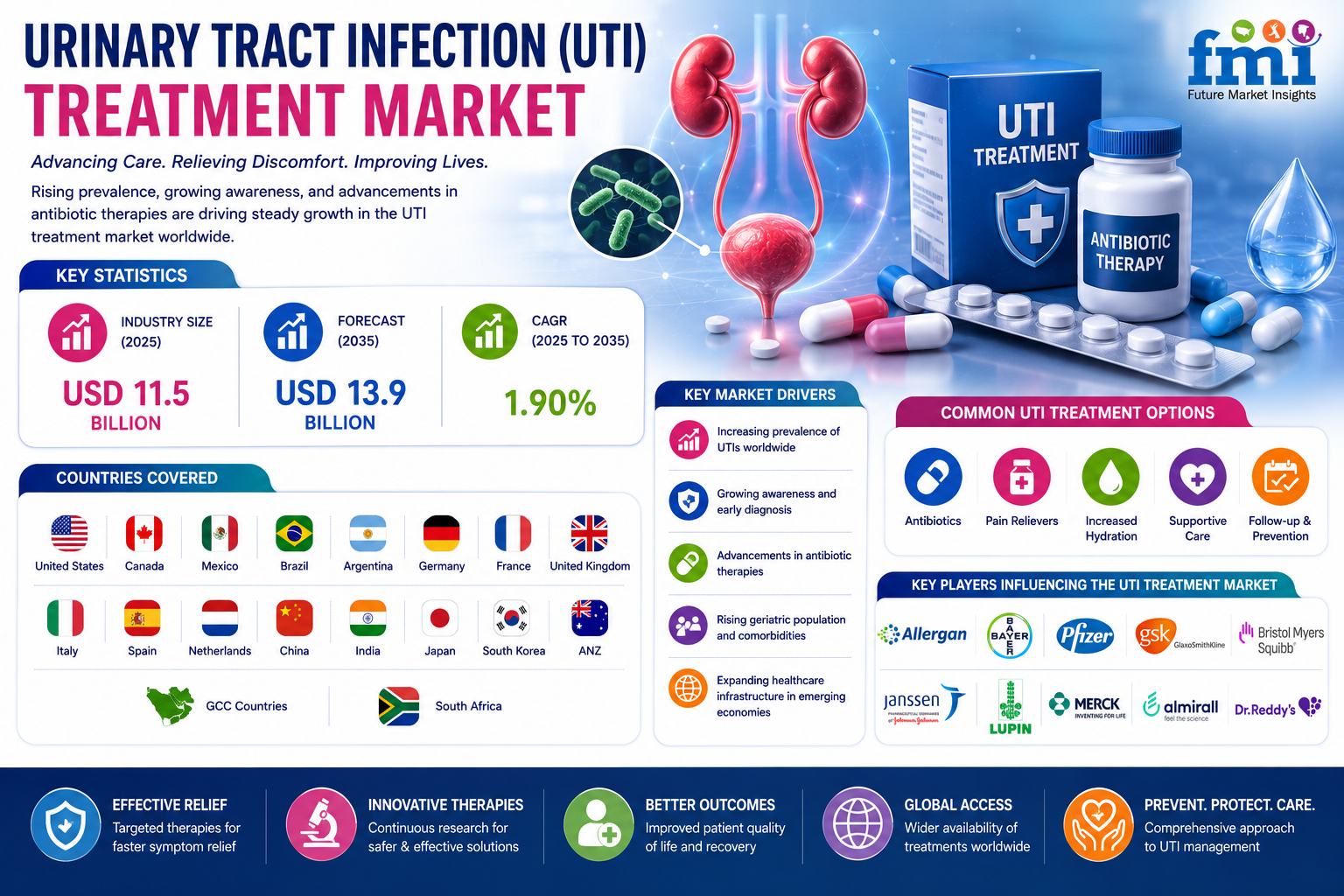
According to the latest insights by Future Market Insights, the global Urinary Tract Infection (UTI) Treatment industry is witnessing steady expansion as healthcare systems, pharmaceutical companies, and diagnostic innovators prioritize effective infection management, antimicrobial stewardship, and patient-centric treatment solutions. In 2025, rising UTI incidence among women, older adults, and pediatric populations is driving sustained demand for advanced treatment options worldwide.
Industry analysts indicate that while UTI treatment has traditionally relied heavily on broad-spectrum antibiotics, long-term market growth is increasingly influenced by antibiotic resistance, rapid diagnostic integration, regulatory oversight, and precision medicine approaches. Companies capable of delivering targeted, safe, and effective therapies are expected to strengthen their competitive positioning in the evolving infectious disease landscape.
Rising UTI Incidence Continues to Drive Treatment Demand
Urinary tract infections remain among the most common bacterial infections globally, creating a substantial burden on healthcare systems.
Growing disease burden contributes to:
- Increased outpatient consultations
• Higher prescription volumes for antibiotics
• Rising hospitalization in complicated cases
• Greater recurrence among women and elderly populations
• Increased healthcare expenditure on diagnostics and treatment
Repeated and recurrent UTIs continue to generate significant treatment demand, particularly in populations with weakened immunity, chronic illness, or catheter-associated complications.
As global infection prevalence rises, healthcare providers continue prioritizing faster diagnosis and more effective treatment strategies.
Antibiotic Resistance Accelerates Demand for Targeted Therapies
Antimicrobial resistance remains one of the biggest challenges affecting UTI treatment worldwide.
Key concerns include:
- Reduced efficacy of conventional antibiotics
• Increasing multidrug-resistant uropathogens
• Treatment failures in recurrent infections
• Higher complication risks in vulnerable patients
• Rising need for advanced antimicrobial combinations
Drug developers are increasingly focusing on next-generation antibiotics, reformulated generics, and combination therapies that improve bacterial eradication while minimizing resistance development.
As resistance patterns evolve, demand is expected to rise for safer and more targeted treatment solutions.
Digital Health and Rapid Diagnostics Transform Treatment Pathways
Technological advancements are reshaping diagnosis and treatment selection in the UTI market.
Healthcare providers are increasingly adopting:
- AI-based symptom tracking platforms
• Rapid urine diagnostic tools
• Home-based urine test kits
• Mobile health monitoring applications
• Precision microbial profiling systems
In 2024, Bayer AG introduced an AI-enabled digital tool that helps women track symptoms, monitor treatment progress, and reduce recurrence risks.
Simultaneously, home diagnostics using color-sensor technology and smartphone AI are improving early detection and accelerating treatment initiation.
These innovations are reducing diagnostic delays and supporting more personalized treatment decisions.
Non-Antibiotic Therapies Gain Market Attention
Growing concerns over antibiotic overuse are accelerating interest in alternative UTI management solutions.
Emerging treatment approaches include:
- Cranberry extract-based products
• D-mannose supplements
• Immune-support therapies
• Probiotic formulations
• Preventive wellness products
These solutions aim to reduce recurrence frequency and lower unnecessary antibiotic consumption.
The shift toward non-antibiotic therapies aligns with stewardship initiatives promoted by organizations such as World Health Organization.
As preventive care gains importance, alternative therapies are expected to capture growing market interest.
Antimicrobial Stewardship Supports Market Evolution
Healthcare institutions continue implementing stewardship frameworks to optimize antibiotic use.
Programs increasingly emphasize:
- Evidence-based prescribing
• Reduced empiric overtreatment
• Narrow-spectrum drug preference
• Prescription audits and controls
• Resistance surveillance programs
Organizations such as Centers for Disease Control and Prevention and The Joint Commission continue shaping treatment protocols through stewardship policies and clinical guidelines.
These efforts are improving treatment quality while helping slow resistance growth.
Balancing Efficacy, Safety, and Resistance Remains a Key Challenge
Despite innovation, UTI treatment providers continue facing significant clinical and commercial challenges.
Key considerations include:
- Antibiotic resistance management
• Adverse drug effect reduction
• Patient adherence improvement
• Regulatory compliance requirements
• Cost optimization for therapy access
• Treatment personalization based on pathogen profiling
Particularly in recurrent and complicated infections, therapy selection requires balancing microbial sensitivity, patient condition, and long-term treatment outcomes.
Companies that successfully address these challenges are expected to gain competitive advantages.
Pharmaceutical Innovation Accelerates Market Transformation
Public health priorities and private-sector R&D investments continue reshaping the UTI treatment landscape.
Industry stakeholders are investing in:
- Novel antibiotic discovery
• AI-assisted treatment tools
• Rapid diagnostic technologies
• Combination drug therapies
• Resistance management programs
• Personalized infectious disease care
Leading pharmaceutical companies including Pfizer, GlaxoSmithKline, Novartis, Merck & Co., and Dr. Reddy’s Laboratories are actively expanding their infectious disease portfolios.
Innovation is increasingly centered around improving therapeutic precision and long-term infection control.
Future Outlook
The future of the Urinary Tract Infection (UTI) Treatment industry will be increasingly shaped by rising infection prevalence, antimicrobial resistance, diagnostic innovation, and growing demand for precision therapies. Healthcare systems are expected to continue investing in solutions that improve treatment outcomes while minimizing resistance risks.
Growing adoption of AI-driven diagnostics, non-antibiotic preventive therapies, and targeted antimicrobial treatments is expected to create substantial opportunities across global markets. Manufacturers capable of combining therapeutic efficacy, patient safety, and resistance management are likely to achieve sustained growth throughout the forecast period.
As healthcare providers increasingly focus on precision infectious disease management, UTI treatment technologies are expected to remain a critical component of global healthcare investment strategies.
Key Takeaways
- Rising UTI prevalence continues to generate strong demand for effective treatment solutions.
• Antibiotic resistance is accelerating the need for targeted and safer therapies.
• AI-driven diagnostics and home testing are transforming early detection and treatment pathways.
• Non-antibiotic therapies such as cranberry extract and D-mannose are gaining popularity.
• Antimicrobial stewardship programs are improving evidence-based prescribing practices.
• Treatment efficacy, safety, and resistance management are becoming critical purchasing criteria.
Urinary Tract Infection (UTI) Treatment Market Snapshot
| Attributes | Key Insights |
| Estimated Market Size (2025) | USD 11.5 Billion |
| Projected Market Value (2035) | USD 13.9 Billion |
| CAGR (2025 to 2035) | 1.9% |
Related Reports
- The demand for UTI diagnostic solutions is rising due to growing adoption of AI-enabled and rapid urine testing technologies.
- The global antimicrobial stewardship solutions market is expanding as hospitals strengthen resistance monitoring and evidence-based prescribing systems.
- The infectious disease diagnostics market continues to grow with increasing focus on rapid pathogen identification and precision treatment selection.
Related Reports
The global Complicated Urinary Tract Infections Treatment Market is projected to grow from USD 10.3 million in 2025 to USD 19.8 million by 2036, registering a 6.1% CAGR during 2026–2036 and creating an incremental opportunity of USD 8.8 million over the forecast period.
The global Urinary Tract Infection Testing Market is expected to grow from USD 52.3 billion in 2026 to USD 78.9 billion by 2036, expanding at a CAGR of 4.2% during the forecast period 2026–2036.
Contact Us:
Future Market Insights Inc.
Christiana Corporate, 200 Continental Drive,
Suite 401, Newark, Delaware – 19713, USA
T: +1-347-918-3531
Why FMI: https://www.futuremarketinsights.com/why-fmi
For Sales Enquiries: sales@futuremarketinsights.com
Website: https://www.futuremarketinsights.com