

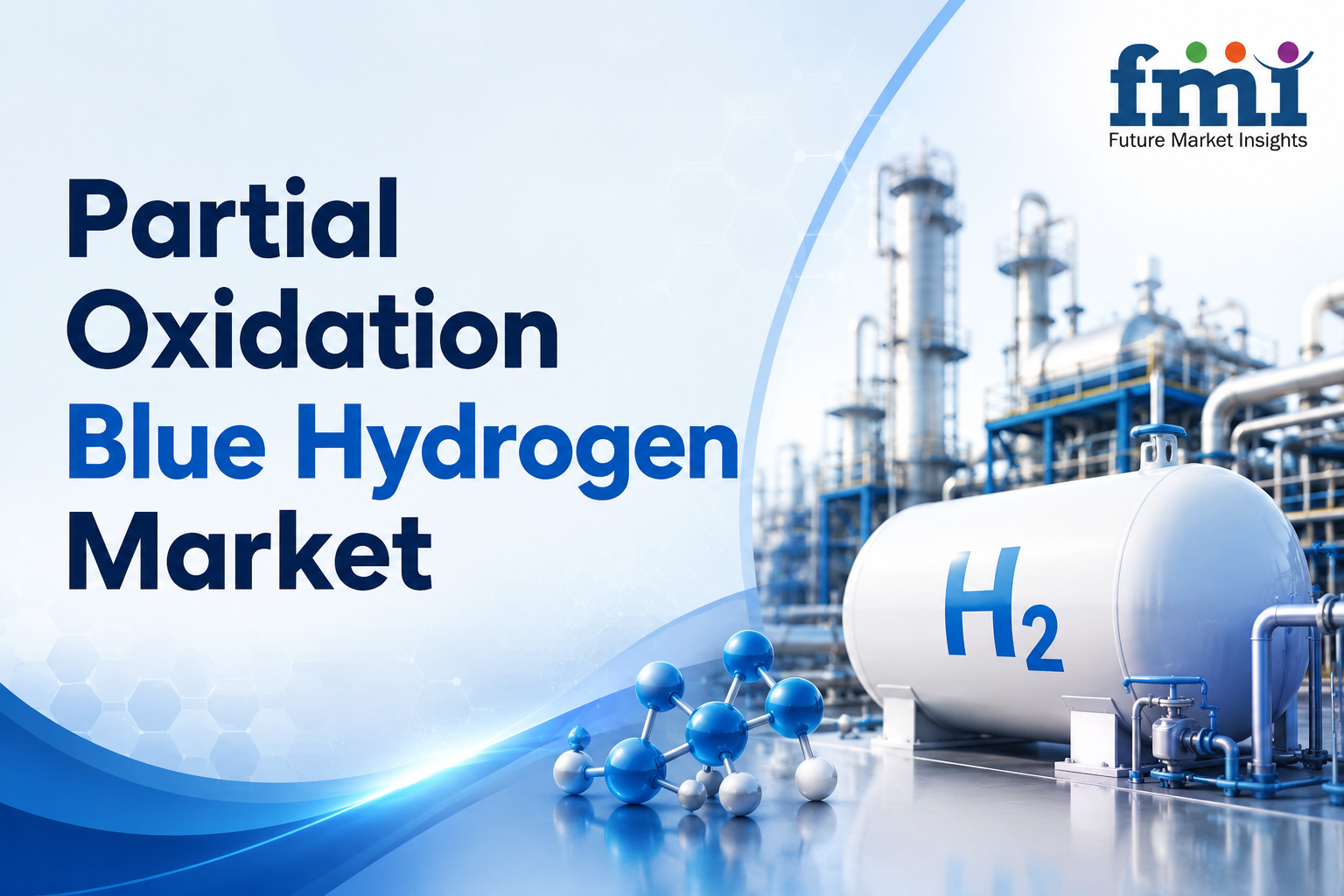
The global Partial Oxidation Blue Hydrogen Market is entering a significant growth phase as industries prioritize commercially viable low-carbon hydrogen solutions over long-term concepts that lack immediate demand. With refining, ammonia production, and chemical manufacturing already consuming substantial hydrogen volumes, the market offers both established manufacturers and new entrants a practical pathway for business expansion.
Key Market Highlights
- Strong Existing Demand Base
- Partial oxidation blue hydrogen benefits from established industrial demand rather than relying on future market creation.
- Refiners, ammonia producers, and chemical manufacturers continue to seek reliable, low-emission hydrogen supplies that integrate seamlessly into current operations.
- Opportunities for Established Manufacturers
- Leading hydrogen producers can strengthen their market presence by upgrading conventional grey hydrogen facilities with advanced carbon capture technologies.
- Companies investing in high-efficiency partial oxidation systems and certified low-carbon production methods are expected to gain a competitive advantage in regulated markets.
- Growth Potential for Emerging Manufacturers
- New manufacturers have opportunities to enter the market through innovative production technologies, carbon capture integration, and digital monitoring solutions.
- Partnerships with industrial clusters and infrastructure developers can accelerate commercialization while reducing project risks.
Policy and Certification Becoming Critical Market Drivers
Government policies are increasingly shaping investment decisions across the blue hydrogen value chain. Regulatory frameworks now require projects to demonstrate measurable carbon reductions through transparent monitoring and verification systems rather than relying solely on sustainability claims.
Tax incentives, carbon capture support programs, and hydrogen hub initiatives continue to improve project economics, encouraging manufacturers to invest in scalable production facilities with long-term commercial viability.
Industrial Clusters Creating New Business Models
The market is gradually shifting from isolated demonstration projects toward integrated industrial hubs where hydrogen production, carbon capture, transportation, and storage infrastructure operate together.
This cluster-based approach enables manufacturers to optimize logistics, lower operational costs, and deliver hydrogen at industrial scale while meeting increasingly stringent emissions standards.
Technology Innovation Reshaping the Competitive Landscape
Manufacturers are investing in advanced partial oxidation processes, higher carbon capture rates, methane emissions monitoring, and sophisticated Measurement, Reporting, and Verification (MRV) systems to enhance project performance.
Emerging technologies focused on process optimization and digital carbon accounting are expected to create new business opportunities while improving investor confidence and regulatory compliance.
Market Evolution at a Glance
- 2015–2025
- Hydrogen demand remained concentrated in refining and chemical industries.
- Market growth depended largely on future hydrogen adoption expectations.
- Regulatory definitions and incentive structures were still evolving.
- 2026–2036
- Existing industrial sectors become the primary drivers for low-carbon hydrogen substitution.
- Developers are increasingly evaluated based on bankable offtake agreements and certified carbon intensity.
- High carbon capture efficiency, methane accounting, and compliance with national standards become essential for commercial success.
Future Outlook
The next phase of market development will likely be defined by large-scale, high-capture hydrogen complexes capable of demonstrating both operational reliability and environmental performance. Industrial clusters supported by carbon transport infrastructure and favorable government policies are expected to lead global deployment.
As the industry matures, both established manufacturers and innovative new entrants have significant opportunities to expand their businesses by developing advanced technologies, strengthening strategic partnerships, and delivering certified low-carbon hydrogen solutions that meet evolving market and regulatory expectations.
Explore More Related Studies Published by FMI Research:
Steam Methane Reforming Blue Hydrogen Market
Have specific requirements or need assistance on report pricing or limited budget? Please contact us – sales@futuremarketinsights.com
About Future Market Insights (FMI)
Future Market Insights, Inc. (FMI) is an ESOMAR-certified, ISO 9001:2015 market research and consulting organization, trusted by Fortune 500 clients and global enterprises. With operations in the U.S., UK, India, and Dubai, FMI provides data-backed insights and strategic intelligence across 30+ industries and 1200 markets worldwide.