

NEWARK, Del., November 6, 2026 — The global Mycoprotein Market is valued at USD 362.5 million in 2026 and is projected to reach USD 778.1 million by 2036, expanding at a compound annual growth rate (CAGR) of 7.9% between 2026 and 2036, according to Future Market Insights (FMI). This represents an incremental market opportunity of USD 415.6 million over the forecast period.
The market outlook reflects growing interest in alternative protein sources, increasing demand for sustainable food ingredients and rising consumer adoption of plant-based and meat-alternative products. Mycoprotein, derived from fungal biomass, is gaining attention as a protein ingredient that can support the development of meat alternatives with desirable nutritional and textural properties. As food manufacturers explore innovative protein solutions, mycoprotein is emerging as an important ingredient in the evolving alternative protein industry.
Get the latest market insights and forecasts: Request a Sample Report: https://www.futuremarketinsights.com/reports/sample/rep-gb-14826
Mycoprotein Market Metric Value
- Estimated Market Size in 2026: USD 362.5 million
- Projected Market Size by 2036: USD 778.1 million
- CAGR, 2026 to 2036: 7.9%
- Added Market Value, 2026 to 2036: USD 415.6 million
The Short Version
- Alternative protein demand is increasing: Growing consumer interest in alternatives to conventional animal proteins is creating opportunities for mycoprotein-based food products.
- Sustainable food production is gaining importance: Food manufacturers are exploring fungal protein solutions to diversify their ingredient portfolios and support more sustainable food production strategies.
- Meat alternatives are expanding: Increasing innovation in meat-free burgers, nuggets, mince and other alternative protein products is supporting mycoprotein applications.
- Nutritional differentiation is attracting attention: Protein content, texture and versatility are important considerations in the development of next-generation mycoprotein products.
Growth Driver
The mycoprotein market is benefiting from growing demand for alternative protein ingredients and increasing efforts by food manufacturers to diversify protein sources. Changing dietary preferences, environmental considerations and interest in innovative food technologies are encouraging manufacturers to explore fungal-based protein solutions.
Mycoprotein offers opportunities for food developers seeking ingredients with protein functionality and meat-like textural characteristics. Its application in meat alternatives, ready-to-eat products and other innovative food formulations is supporting its commercial potential.
The growing popularity of flexitarian diets and interest in reducing dependence on conventional meat products are also encouraging investment in alternative protein technologies. As manufacturers focus on improving taste, texture, nutritional value and product accessibility, mycoprotein is gaining relevance in the development of differentiated food products.
Key factors supporting market expansion include:
- Rising alternative protein consumption: Increasing interest in plant-based and non-animal protein options is creating opportunities for fungal-derived protein ingredients.
- Growing demand for meat substitutes: Manufacturers are incorporating innovative protein sources into burgers, sausages, nuggets and other meat-alternative products.
- Focus on sustainable food systems: Interest in diversifying protein production methods is encouraging the development of fermentation-based and fungal protein technologies.
- Changing dietary preferences: Flexitarian and meat-reduction trends are supporting consumer interest in alternative protein products.
- Food technology innovation: Improvements in fermentation, processing and product formulation are creating opportunities to enhance mycoprotein quality and commercial applications.
Where Growth Is Strongest
The global mycoprotein market is expected to experience significant expansion throughout the forecast period, increasing from USD 362.5 million in 2026 to USD 778.1 million by 2036.
The projected 7.9% CAGR highlights the growing commercial opportunity for alternative protein manufacturers, food ingredient suppliers, fermentation technology companies and meat-alternative producers.
Market development is expected to benefit from increasing demand for sustainable protein options, expanding meat-free product portfolios and continued innovation in fungal biomass production. Manufacturers are also expected to focus on improving product texture, taste, nutritional characteristics and production efficiency to strengthen mycoprotein’s position in the alternative protein sector.
Who Is Moving: Market Developments and Competitive Landscape
Competition in the mycoprotein market is influenced by fermentation technology, production scalability, ingredient quality, nutritional performance, product innovation and the ability to establish commercial partnerships with food manufacturers.
Companies are focusing on developing differentiated fungal protein ingredients and expanding their presence across meat alternatives and other food applications.
Market participants can strengthen their positioning through:
- Expanding mycoprotein production capacity and commercial manufacturing capabilities.
- Investing in fermentation technologies and process optimization.
- Developing new fungal protein formulations for meat alternatives and other food applications.
- Improving product taste, texture, nutritional value and consumer acceptance.
- Building partnerships with food manufacturers, retailers and alternative protein companies.
Key Competitive Factors
The competitive landscape is shaped by fermentation efficiency, production economics, product consistency, nutritional performance, scalability and the ability to deliver commercially viable mycoprotein ingredients.
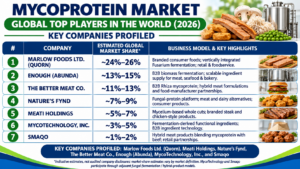
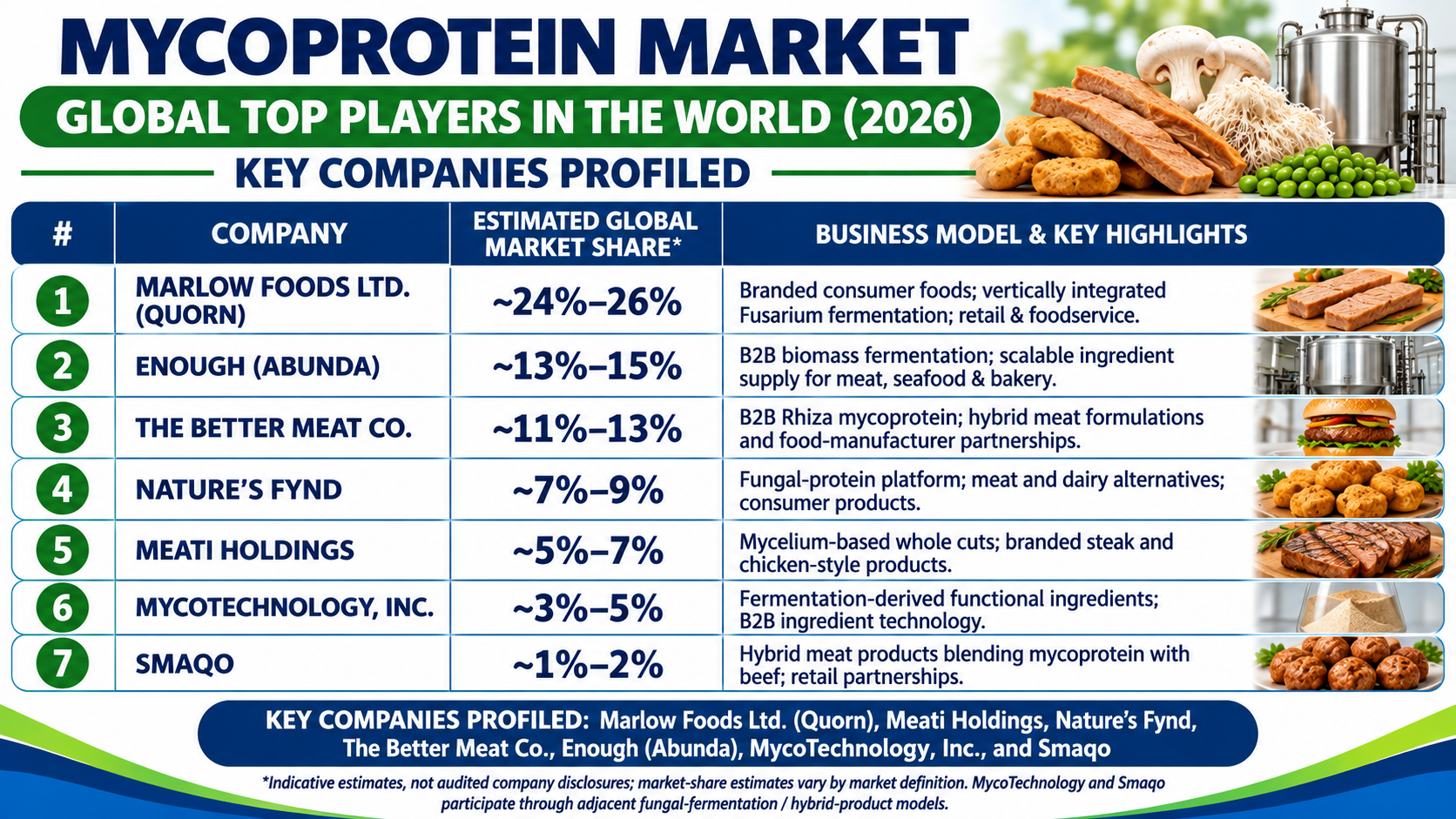
Key Companies Covered: Marlow Foods Ltd. (Quorn), Meati Holdings, Nature’s Fynd, The Better Meat Co., Enough (Abunda), MycoTechnology, Inc., and Smaqo, among other industry participants covered in the FMI study.
Strategic Opportunities for Market Participants
- Invest in advanced fermentation technologies: Improve production efficiency, fermentation processes and manufacturing scalability to support the growing demand for fungal protein ingredients.
- Expand meat-alternative applications: Develop mycoprotein-based burgers, nuggets, sausages and other alternative protein products to address evolving consumer preferences.
- Focus on product innovation: Enhance taste, texture, nutritional composition and versatility to improve the appeal of mycoprotein-based foods.
- Strengthen commercial partnerships: Collaborate with food manufacturers, ingredient distributors and alternative protein developers to expand market penetration.
- Improve production economics: Focus on cost optimization, process efficiency and consistent product quality to strengthen commercial competitiveness.
Explore the market outlook, forecast analysis and competitive landscape in the Full Report: https://www.futuremarketinsights.com/reports/mycoprotein-market
Where to Be Careful
- Production scalability: Scaling fermentation-based mycoprotein production while maintaining consistent quality and cost efficiency can present operational challenges.
- Manufacturing costs: Infrastructure, fermentation inputs, processing requirements and production optimization can influence overall manufacturing economics.
- Consumer acceptance: Taste, texture, product familiarity and pricing remain important factors influencing the adoption of mycoprotein-based foods.
- Regulatory compliance: Manufacturers must meet applicable food safety, ingredient approval, labeling and quality requirements across different markets.
- Competitive pressure: Mycoprotein producers face competition from plant-based proteins, precision fermentation ingredients and other emerging alternative protein technologies.
Analyst Perspective
The mycoprotein market’s projected 7.9% CAGR reflects growing commercial opportunities within the global alternative protein and food ingredient industries. As consumers and food manufacturers explore new protein sources, fungal-derived ingredients are gaining attention for their potential applications in meat alternatives and innovative food formulations.
Companies that combine advanced fermentation capabilities, production scalability, product innovation and effective commercial partnerships can strengthen their competitive positioning over the forecast period.
The commercial message is clear: mycoprotein is becoming an increasingly relevant ingredient in the development of next-generation alternative protein products. Businesses investing in fermentation technology, improved product formulations and scalable manufacturing solutions are positioned to capitalize on the market’s projected expansion.
About Future Market Insights (FMI)
Future Market Insights (FMI) is the publisher of this market intelligence research. Its report provides market sizing, forecasts, industry trends and competitive assessments to support business planning and investment decisions.
Media Contact
For Press & Corporate Inquiries
Rahul Singh
AVP – Marketing and Growth Strategy
Future Market Insights, Inc.
Phone: +91 8600020075
For Sales: sales@futuremarketinsights.com
For Media: Rahul.singh@futuremarketinsights.com
Website: https://www.futuremarketinsights.com