

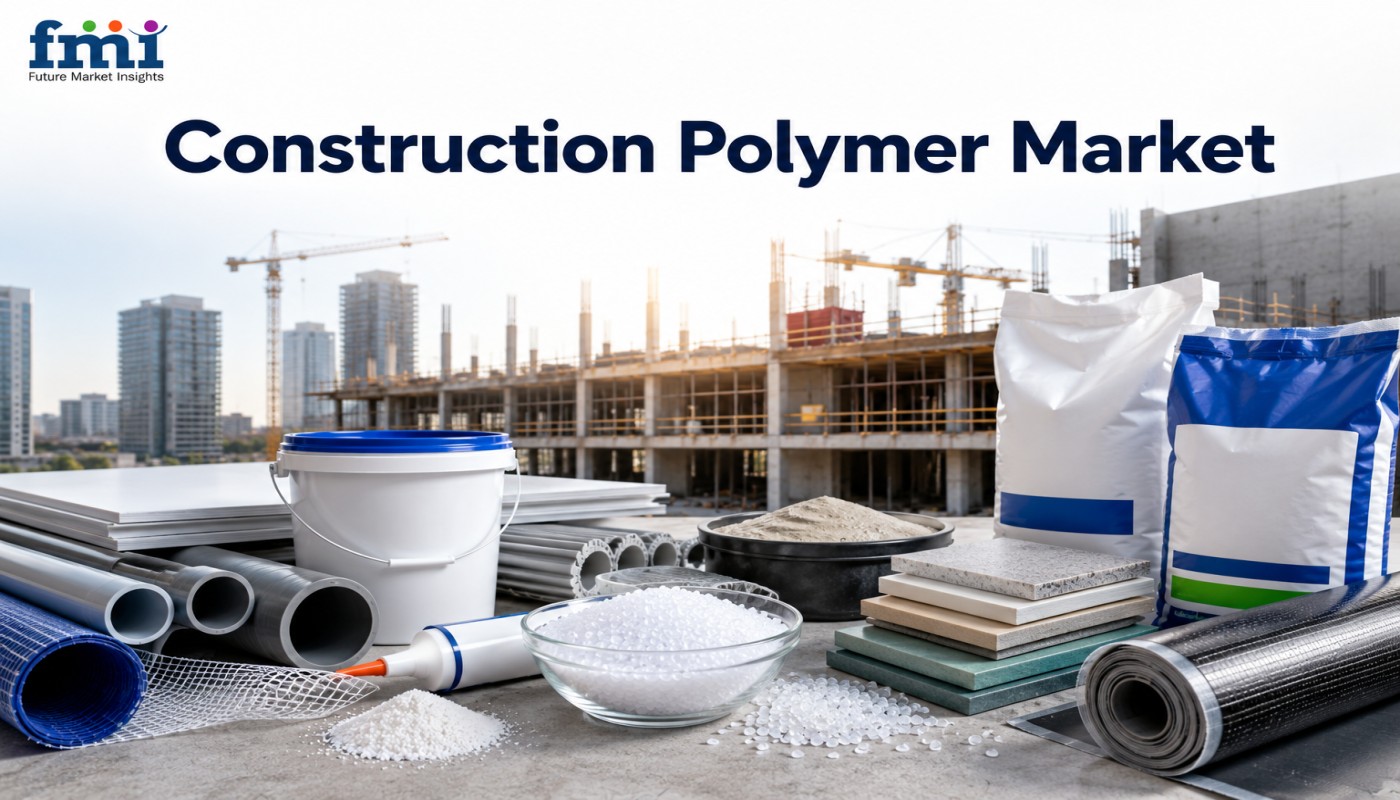
The global construction polymer market continues to experience remarkable growth as rapid urbanization, infrastructure modernization, commercial construction, and sustainable building initiatives accelerate demand for advanced polymer-based construction materials. Construction polymers have evolved far beyond traditional plastic applications to become indispensable components in modern buildings and infrastructure, offering enhanced durability, waterproofing, thermal insulation, corrosion resistance, structural strength, and long-term lifecycle performance across residential, commercial, industrial, and infrastructure projects.
As construction standards become increasingly performance-driven, developers, architects, and contractors are shifting from conventional materials toward engineered polymer solutions that improve energy efficiency, reduce maintenance costs, and support sustainable construction practices.
Market Outlook
The construction polymer market is projected to witness robust expansion throughout the forecast period, supported by rising global construction activity, increasing infrastructure investments, rapid urban development, and growing adoption of high-performance building materials.
The market is expected to grow from USD 314.6 billion in 2026 to USD 1,030.7 billion by 2036, reflecting a strong 12.6% CAGR. While new construction remains a major demand driver, future growth is increasingly supported by renovation projects, energy-efficient building upgrades, transportation infrastructure development, smart city initiatives, and modernization of aging commercial properties.
PVC Continues to Lead Polymer Demand
One of the strongest factors supporting market expansion is the continued dominance of polyvinyl chloride (PVC) across the global construction industry.
PVC remains the largest polymer segment, accounting for approximately 35.0% of total polymer demand in 2026. Its extensive use in pipes, fittings, window profiles, flooring, roofing membranes, electrical conduits, wall panels, and drainage systems continues to generate substantial market demand.
Petrochemical Feedstock Costs Continue to Influence Market Dynamics
Raw material pricing remains one of the defining characteristics of the construction polymer market.
Major construction polymers—including PVC, polyethylene (PE), polypropylene (PP), polyurethane (PU), polystyrene (PS), and epoxy resins—are closely linked to petrochemical feedstocks and global energy markets. Fluctuations in crude oil, natural gas, ethylene, propylene, chlorine, styrene, and related raw materials continue to influence production costs throughout the value chain.
Commercial Construction Remains the Largest End-Use Segment
Commercial real estate continues to represent the largest application segment, accounting for approximately 35.0% of total end-user demand in 2026.
Office buildings, shopping centers, healthcare facilities, educational institutions, hospitality developments, industrial facilities, and mixed-use commercial projects continue driving significant polymer consumption across multiple product categories.
Modern commercial buildings increasingly incorporate polymer-based waterproofing systems, insulated façade components, flooring materials, sealants, roofing membranes, and piping networks designed to improve operational efficiency while reducing maintenance requirements over extended service lives.
High-Performance Construction Materials Gain Market Share
Demand is steadily shifting toward engineered polymer solutions capable of delivering higher performance under increasingly demanding building specifications.
Advanced polyurethane insulation systems, epoxy-based structural adhesives, high-performance waterproofing membranes, specialty coatings, and chemically resistant flooring systems are gaining wider acceptance across industrial facilities, transportation infrastructure, hospitals, laboratories, and high-value commercial developments.
Sustainable Construction Supports Polymer Innovation
Sustainability continues to reshape product development throughout the construction polymer industry.
Manufacturers are investing heavily in recycled polymer content, bio-based formulations, lower-emission production technologies, improved recyclability, and environmentally certified construction materials that support green building standards.
Growing emphasis on energy-efficient buildings has also increased demand for advanced insulation materials, weather-resistant sealants, thermal barriers, and high-performance glazing systems that improve overall building efficiency while reducing operational energy consumption.
Product Innovation Strengthens Market Growth
Innovation across the construction polymer market increasingly focuses on enhancing product performance while improving installation efficiency and long-term durability.
Manufacturers continue expanding portfolios featuring improved UV resistance, higher impact strength, enhanced chemical resistance, superior moisture protection, fire-retardant properties, lightweight formulations, and extended service life.
Pricing Strategies Continue to Evolve
As raw material costs fluctuate, pricing strategies are becoming increasingly sophisticated across the industry.
Performance-grade, certified, and project-specific polymer products generally allow suppliers greater flexibility in passing through higher production costs compared to standard commodity materials sold into highly price-sensitive construction channels.
Long-term infrastructure projects frequently incorporate contractual pricing mechanisms linked to raw material movements, while specialized polymer formulations command premium pricing due to their technical performance, regulatory compliance, and limited substitution options.
Challenges Facing the Market
Despite its strong long-term outlook, the construction polymer market faces several ongoing challenges.
Volatility in petrochemical feedstock prices, rising energy costs, transportation expenses, evolving environmental regulations, and increasing certification requirements continue placing pressure on manufacturing margins.
Competition also remains intense, particularly within commodity-grade polymer segments where purchasing decisions are largely driven by price.
Segmentation Highlights
PVC accounts for approximately 35.0% of total polymer demand, reinforcing its position as the industry’s leading construction polymer.
Commercial real estate contributes approximately 35.0% of total end-user demand, highlighting the sector’s continued influence on product development, procurement strategies, and long-term market growth.
Regional Trends
North America continues to maintain a significant share of the construction polymer market, supported by large-scale commercial construction, infrastructure modernization, residential renovation activity, and growing adoption of sustainable building materials.
Europe remains a major growth region as stringent environmental regulations, green building initiatives, and energy-efficient renovation programs accelerate demand for advanced polymer-based construction systems across residential and commercial projects.
Asia-Pacific continues to emerge as the fastest-growing regional market, driven by rapid urbanization, expanding industrialization, infrastructure investment, affordable housing programs, commercial real estate development, and increasing consumption of high-performance construction materials across developing economies.
Competitive Landscape and Future Outlook
The construction polymer market remains highly competitive, with manufacturers focusing on technological innovation, sustainable product development, regional production expansion, and value-added polymer solutions to strengthen their market positions.
Leading suppliers continue investing in advanced PVC formulations, specialty polyurethane systems, engineered polyethylene and polypropylene products, high-performance epoxy technologies, and environmentally responsible manufacturing processes to meet evolving construction requirements.
Conclusion: Performance, Sustainability, and Innovation Shape the Future of Construction Polymers
The construction polymer market is entering a new phase of sustained expansion where product performance, sustainability, and technical differentiation increasingly determine long-term competitiveness.
While PVC continues to dominate overall market demand through its versatility, durability, and cost efficiency, demand for advanced polyurethane systems, epoxy resins, polyethylene, polypropylene, and specialty polymer formulations continues to accelerate across high-performance construction applications.
Explore More Related Studies Published by FMI Research:
Abdominal Compression Garments Market
Kitchen Vent Hood & Duct Cleaning Chemicals Market
About Future Market Insights (FMI)
Future Market Insights, Inc. (FMI) is an ESOMAR-certified, ISO 9001:2015 market research and consulting organization trusted by Fortune 500 companies and global enterprises. With operations across the United States, United Kingdom, India, and Dubai, FMI delivers data-driven market intelligence, strategic consulting, and actionable insights across more than 30 industries and 1,200 markets worldwide.