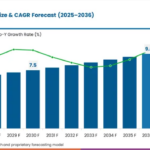


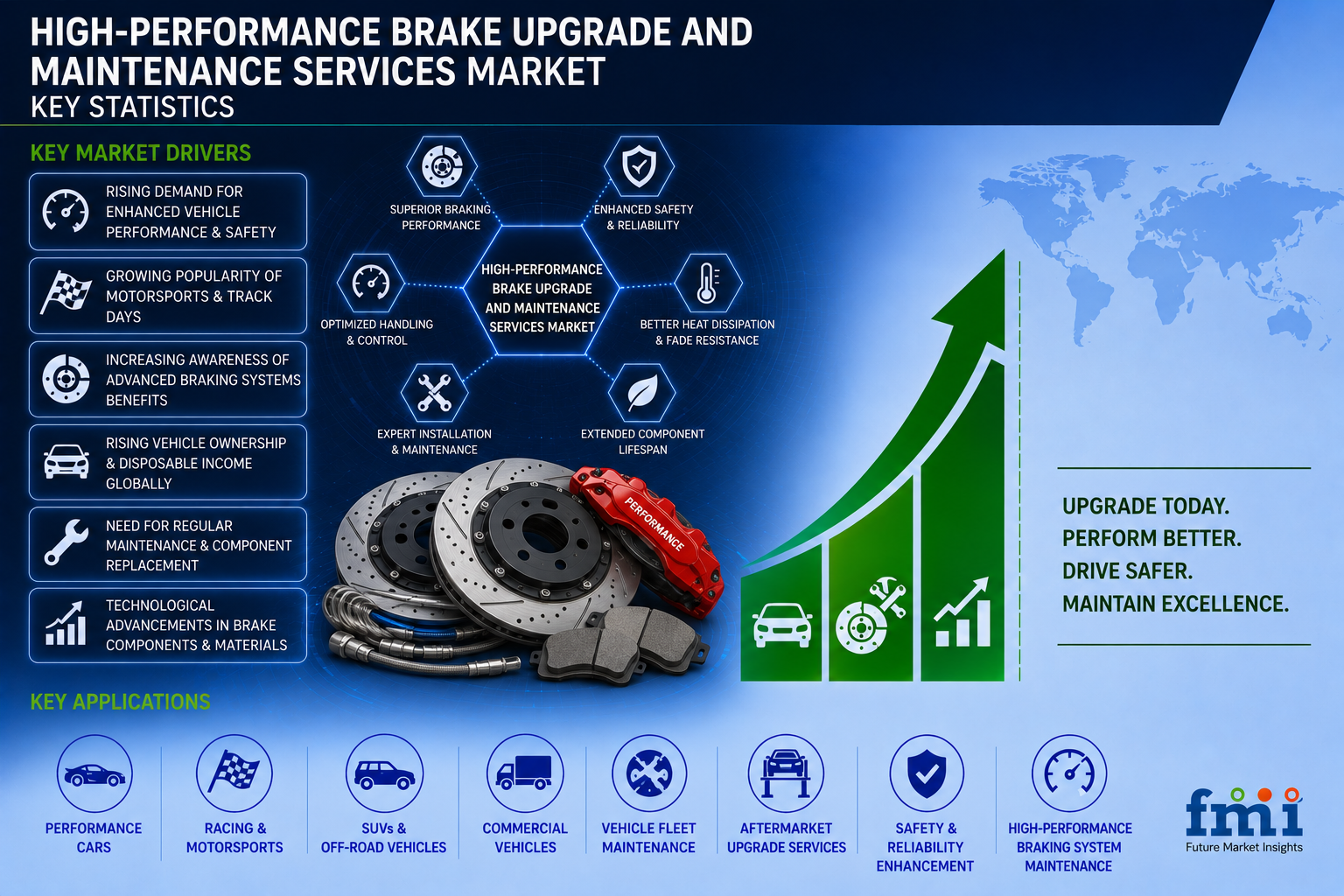
The global High-Performance Brake Upgrade and Maintenance Services Market is entering a strong growth phase, driven by increasing vehicle performance expectations, evolving brake dust regulations, and growing demand for specialized braking solutions across passenger cars, EVs, SUVs, and light trucks. According to Future Market Insights (FMI), the market was valued at USD 4.9 billion in 2025 and is projected to grow to USD 9.3 billion by 2036, registering a CAGR of 6.0% during the forecast period from 2026 to 2036.
As modern vehicles become heavier and more powerful, brake systems are exposed to higher thermal loads, creating new opportunities for brake upgrade services, premium components, and maintenance programs designed to improve stopping performance, heat management, and overall driving confidence.
Performance Braking Becomes a Planned Maintenance Category
Traditionally viewed as an enthusiast-focused aftermarket segment, high-performance brake services are increasingly becoming a mainstream maintenance category. Vehicle owners are no longer seeking upgrades solely for improved stopping power; they are also prioritizing reduced brake dust, enhanced durability, lower noise levels, and improved reliability under demanding driving conditions.
The market is benefiting from growing awareness of brake system performance among owners of premium vehicles, sports SUVs, electric vehicles, towing vehicles, and modified cars. Workshops are responding by offering comprehensive service packages that combine upgraded pads, rotors, fluids, steel lines, and installation services to improve overall braking performance.
According to FMI analysis, performance pads are expected to account for 36.4% of product demand in 2026, making them the most popular entry-level brake upgrade due to their affordability and measurable performance benefits.
EV Brake Dust Regulations Create New Opportunities
One of the most significant market drivers is the introduction of stricter brake particulate emission standards. Regulatory frameworks such as Euro 7 are drawing attention to brake-generated particulate matter, creating demand for low-dust braking technologies.
Brake dust reduction has become an important factor for vehicle manufacturers, service providers, and consumers alike. As electric vehicle ownership continues to expand globally, brake systems must balance regenerative braking performance with conventional friction braking requirements. This has increased interest in advanced pad materials, coated rotors, and optimized braking systems that reduce particulate emissions while maintaining braking efficiency.
Manufacturers are responding with innovative product offerings designed to meet both performance and environmental objectives. These developments are creating fresh revenue opportunities for workshops specializing in brake upgrades and maintenance services.
Independent Workshops Continue to Lead Market Growth
Independent workshops are expected to remain the dominant sales channel, accounting for 44.8% of market activity in 2026. Their success stems from specialized technical expertise, personalized customer consultation, and the ability to offer customized brake solutions across multiple vehicle brands.
Performance brake upgrades often require precise fitment checks, bedding procedures, fluid replacement, and post-installation testing. Independent garages and specialty tuners have established strong reputations for handling these complex services, making them the preferred destination for performance-oriented vehicle owners.
Specialist workshops are also benefiting from increasing demand for track preparation services, brake fluid bleeding, rotor resurfacing, and comprehensive brake inspections.
Iron Rotors Maintain Dominance Despite Premium Alternatives
While carbon ceramic systems continue to attract attention in premium vehicle segments, iron rotors remain the preferred material choice due to cost efficiency, broad compatibility, and easier replacement procedures.
FMI projects iron rotors to account for 52.7% of material demand in 2026. Vehicle owners continue to favor iron-based systems because they deliver reliable braking performance without the substantial replacement costs associated with carbon ceramic alternatives.
Meanwhile, premium braking solutions featuring ceramic pads, slotted rotors, and lightweight performance components are gaining traction among enthusiasts and performance vehicle owners seeking improved heat management and reduced brake fade.
Regional Markets Present Strong Growth Opportunities
India is expected to emerge as the fastest-growing national market, expanding at a CAGR of 8.1% through 2036. Growth is supported by increasing premium vehicle ownership, expansion of automated vehicle testing infrastructure, and a rapidly developing performance automotive culture in cities such as Mumbai, Pune, Bengaluru, and Hyderabad.
China follows closely with a projected CAGR of 7.4%, supported by strong new-energy vehicle (NEV) adoption, expanding premium vehicle ownership, and extensive aftermarket service networks. Demand for low-dust brake packages and EV-specific brake maintenance services is expected to accelerate across major metropolitan regions.
The United States remains one of the largest revenue-generating markets globally, benefiting from a mature aftermarket ecosystem, strong towing vehicle demand, performance car culture, and widespread participation in recreational motorsports activities.
Other important growth markets include Australia, Germany, the United Kingdom, and Japan, where technical service standards, premium vehicle ownership, and advanced automotive maintenance practices continue to support demand for specialized brake services.
Future Outlook
The future of the High-Performance Brake Upgrade and Maintenance Services Market will be shaped by regulatory compliance, vehicle electrification, and increasing consumer focus on safety and driving performance. As workshops continue to adopt digital fitment tools, standardized installation procedures, and data-driven maintenance practices, brake service offerings will become more sophisticated and customer-focused.
According to Nikhil Kaitwade, Principal Consultant for the Automotive domain at FMI, the market is increasingly moving toward planned brake care programs rather than reactive repairs. Vehicle owners are prioritizing improved pedal feel, lower dust generation, reduced noise, and long-term reliability, creating opportunities for suppliers and service providers that can deliver integrated braking solutions.
With performance expectations rising across both conventional and electric vehicles, the global high-performance brake upgrade and maintenance services market is positioned for sustained expansion through 2036, creating significant opportunities for manufacturers, distributors, workshops, and aftermarket service providers worldwide.
Browse More Industry Reports