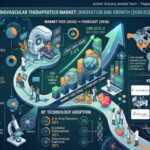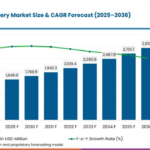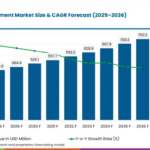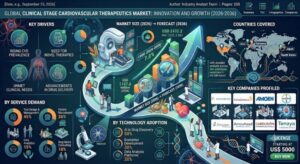


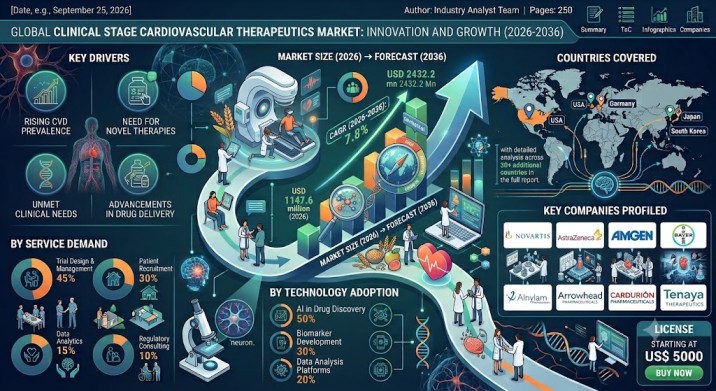
According to Future Market Insights, the global Clinical Stage Cardiovascular Therapeutics Market is valued at USD 1,147.6 million in 2026 and is projected to reach USD 2,432.2 million by 2036, expanding at a 7.8% CAGR during the forecast period.
Demand for clinical-stage cardiovascular therapeutics is being supported by persistent cardiovascular disease burden, incomplete treatment response, and pharmaceutical companies’ focus on candidates demonstrating measurable biological activity, clear dose response, and dependable safety. The World Health Organization reported in September 2025 that an estimated 1.4 billion adults aged 30 to 79 years had hypertension in 2024, reinforcing the need for additional prevention and treatment options.
👉 Get Detailed Market Forecasts, Competitive Benchmarking, and Pricing Trends:
https://www.futuremarketinsights.com/reports/sample/rep-gb-34183
Global Segment Leaders
- Phase I: 51.4% share in 2026 — Phase I leads the phase segment as cardiovascular development programs conduct first-in-patient safety assessments and dose exploration.
- Heart Failure: 38.1% share in 2026 — Heart failure represents the largest indication segment, reflecting treatment gaps across chronic and advanced disease.
- Small Molecules: 41.7% share in 2026 — Small molecules lead modality demand, supported by established chemistry and flexible dose exploration across oral and injectable programs.
- Pharma Companies: 48.0% share in 2026 — Pharmaceutical companies account for the largest sponsor segment through global study networks and sustained financing for lengthy development programs.
The market is segmented by Phase into Phase I, Phase II, and Phase III; by Indication into Heart Failure, Atherosclerotic Cardiovascular Disease, Cardiomyopathies, Dyslipidemia, and Others; by Modality into Small Molecules, Biologics, Gene Therapy, and RNA Therapeutics; and by Sponsor into Pharma Companies, Biotech Firms, and Academic/Collaborative groups.
Country-Level Performance
- South Korea – 9.6% CAGR (2026–2036): Concentrated tertiary hospitals and coordinated study activation.
- United Kingdom – 8.8% CAGR (2026–2036): Organized clinical research delivery and predictable regulatory review.
- USA – 8.3% CAGR (2026–2036): Extensive investigator networks, sponsor density, and study capacity.
- Japan – 7.8% CAGR (2026–2036): Academic research centers and structured safety review.
- Germany – 6.3% CAGR (2026–2036): Biomedicine expertise, regulated research activity, and specialist institutions.
South Korea records a 9.6% CAGR, supported by concentrated tertiary hospitals and coordinated clinical-study activation. The country had 8.41 million residents aged 55 to 64 in 2024, according to OECD data cited by FMI, supporting demand for cardiovascular prevention and chronic-disease research.
The United Kingdom follows at 8.8%. The Medicines and Healthcare products Regulatory Agency reported that 98% of UK trials received a combined review decision within 60 days during December 2024, supporting more predictable study scheduling.
The United States is projected to expand at 8.3%, benefiting from extensive investigator networks, specialty centers, and sponsor density. Japan records a 7.8% CAGR, influenced by academic research centers and structured safety review. Germany is forecast to grow at 6.3%, supported by biomedical expertise and regulated clinical research infrastructure.
👉 Access the Complete Report in PDF Format:
https://www.futuremarketinsights.com/reports/brochure/rep-gb-34183
Market Drivers, Restraints and Opportunities
Persistent cardiovascular disease burden: Heart failure and hypertension continue to create demand for differentiated therapeutic mechanisms, including treatments addressing residual symptoms and cardiovascular risk under existing care.
Clinical development complexity: Cardiovascular trials require dependable enrollment, consistent follow-up, and coordination across investigator networks. Safety findings or financing interruptions can delay progression before confirmatory investment.
Biomarker-guided development: More focused patient selection can improve signal detection and support clearer dose and endpoint strategies. FMI cites the planned Phase III MOVE-Lp(a) trial of muvalaplin, with planned enrollment of 10,450 participants, as an example of substantial investment in genetically informed and lipid-related cardiovascular research.
Regulatory engagement: The European Medicines Agency recorded 635 scientific advice requests during 2024, according to data cited by FMI, illustrating continued interaction between sponsors and regulators during medicine development.
Enrollment and site activation remain operational considerations. UK clinical research delivery data cited by FMI showed that 37% of commercial contract studies opened within 60 days during June 2025, highlighting the potential effect of contracting and activation timelines on development schedules.
Regional Context
The market assessment covers North America, Latin America, Western Europe, Eastern Europe, East Asia, South Asia and Pacific, and Middle East and Africa, with country-level analysis extending across the USA, United Kingdom, Germany, Japan, South Korea, and more than 30 additional countries.
The country comparison shows a 3.3-percentage-point spread between South Korea at 9.6% and Germany at 6.3%. South Korea and the UK show the highest projected growth among the five profiled markets, while the USA and Japan occupy an intermediate range. Germany remains positive at 6.3%, supported by regulated research activity and specialist biomedical infrastructure.
Competitive Landscape
The competitive landscape includes established pharmaceutical companies with broad cardiovascular development programs and specialized biotechnology companies focused on heart failure, cardiomyopathy, lipid management, thrombosis, and RNA-based therapeutics.
Novartis and Bayer are active in late-stage thrombosis and cardiovascular-risk programs. AstraZeneca and Amgen maintain heart failure and lipid-related development assets. Alnylam Pharmaceuticals and Arrowhead Pharmaceuticals are advancing RNA-based approaches, while Cardurion Pharmaceuticals and Tenaya Therapeutics pursue focused programs in heart failure and cardiomyopathy.
Key Developments
- April 2025: Novartis completed its acquisition of Anthos Therapeutics, bringing abelacimab into its cardiovascular pipeline. The antibody was undergoing Phase III development for prevention of stroke and systemic embolism.
- August 2025: Cardurion Pharmaceuticals completed enrollment in two global Phase II CYCLE trials evaluating CRD-750 across reduced and preserved ejection-fraction heart failure.
- October 2025: Alnylam Pharmaceuticals dosed the first participant in the global Phase III ZENITH cardiovascular outcomes trial for zilebesiran. The study planned to enroll approximately 11,000 participants across 35 countries.
Analyst Perspective
“Clinical-stage success is increasingly determined by the ability to demonstrate meaningful biological activity while maintaining an acceptable safety profile through successive development stages. Sponsors are placing greater emphasis on clinically relevant endpoints, patient selection strategies, and manufacturing readiness before advancing investment or partnership decisions.
Companies that generate robust evidence and execute disciplined clinical programs will be better positioned to strengthen commercialization opportunities.”
— Anurag Sharma, Principal Consultant for Healthcare at Future Market Insights
Access Full Report: https://www.futuremarketinsights.com/reports/clinical-stage-cardiovascular-therapeutics-market
Report Scope
The Clinical Stage Cardiovascular Therapeutics Market report covers:
- Phase: Phase I, Phase II, Phase III
- Indication: Heart Failure, Atherosclerotic Cardiovascular Disease, Cardiomyopathies, Dyslipidemia, Others
- Modality: Small Molecules, Biologics, Gene Therapy, RNA Therapeutics
- Sponsor: Pharma Companies, Biotech Firms, Academic/Collaborative
- Regions: North America, Latin America, Western Europe, Eastern Europe, East Asia, South Asia and Pacific, Middle East and Africa
- Key Countries: USA, United Kingdom, Germany, Japan, South Korea, and 30+ additional countries
- Forecast Period: 2026–2036
- 2026 Market Size: USD 1,147.6 million
- 2036 Market Forecast: USD 2,432.2 million
- CAGR:8%
- Starting Price: US$5,000
About Future Market Insights
Future Market Insights (FMI) is a leading provider of market research and consulting services, offering syndicated and customized research across industries including healthcare, pharmaceuticals, and biotechnology.
About Future Market Insights (FMI)
Future Market Insights (FMI) is a global market intelligence and consulting firm providing comprehensive market research, competitive intelligence, and strategic business insights across industries. The firm delivers detailed forecasts, technology analysis, and data-driven recommendations that support informed decision-making for manufacturers, investors, distributors, and policymakers worldwide.
For Press & Corporate Inquiries
Rahul Singh
AVP – Marketing and Growth Strategy
Future Market Insights, Inc.
+91 8600020075