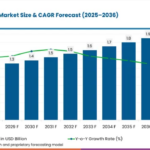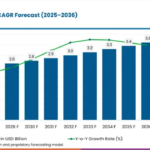


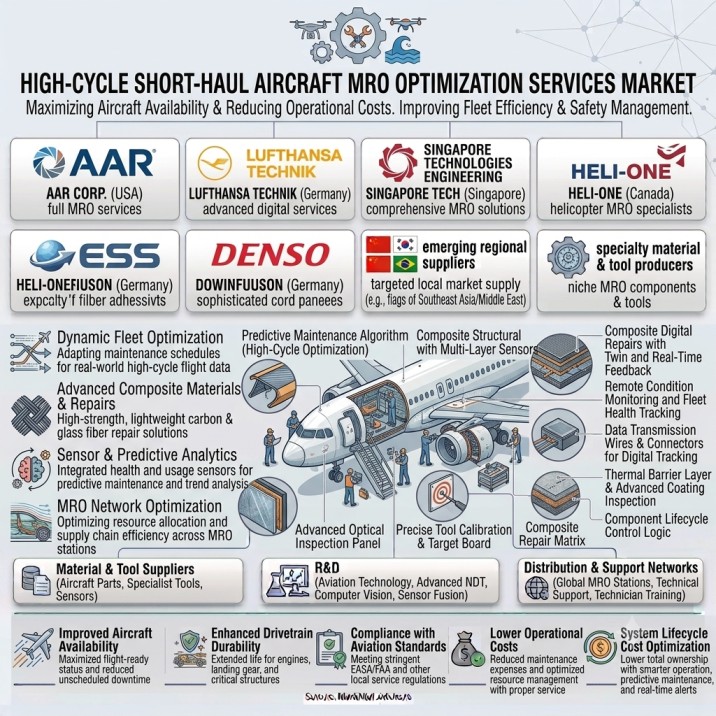
The global high-cycle short-haul aircraft MRO optimization services market was valued at USD 1.1 billion in 2025 and is forecast to reach USD 1.2 billion by 2026-end. Expanding at a steady Compound Annual Growth Rate (CAGR) of 6.7% between 2026 and 2036, total market value is projected to reach USD 2.3 billion by 2036. According to comprehensive industry intelligence from Future Market Insights (FMI), the market will generate an absolute incremental opportunity of USD 1.1 billion over the ten-year forecast period. This rapid adoption is propelled by airlines extracting longer operational service from existing fleets amid aircraft delivery delays, rising daily flight cycle intensity across dense airport networks, and severe supply chain disruptions that increase the risk of unscheduled maintenance downtime.
Get detailed market forecasts, competitive benchmarking, and pricing trends:
https://www.futuremarketinsights.com/reports/sample/rep-gb-33148
Key Market Highlights at a Glance
• 2025 Baseline Market Size: USD 1.1 billion
• 2026 Estimated Market Size: USD 1.2 billion
• 2036 Forecasted Market Size: USD 2.3 billion
• Ten-Year Compound Annual Growth Rate (CAGR 2026-2036): 6.7%
• Absolute Incremental Opportunity: USD 1.1 billion
• Leading End-User Segment (2026 Share): Airlines, commanding a 63.0% market share
• Leading Aircraft Class Segment (2026 Share): Narrow-body aircraft, accounting for a 61.0% market share
• Leading Engagement Model Segment (2026 Share): Managed services, holding a 46.0% market share
• Leading Optimization Focus Segment (2026 Share): Line maintenance, representing a 36.7% market share
• Leading Service Type Segment (2026 Share): Maintenance planning, capturing a 34.0% market share
• Fastest-Growing Country Market: India, expanding at a 9.2% CAGR
• Second Fastest-Growing Country Market: China, expanding at an 8.7% CAGR
Why Is the High-Cycle Short-Haul Aircraft MRO Optimization Services Market Growing?
Demand across the global high-cycle short-haul aircraft MRO optimization services market is accelerating due to three primary operational and financial catalysts:
• Escalating Supply Chain and Aircraft Aging Costs: Global aircraft delivery delays are forcing carriers to extend current fleet lifespans. Industry estimates from IATA indicate that supply chain challenges could cost airlines over USD 11 billion in 2025, including USD 3.1 billion in added maintenance costs and USD 2.6 billion in engine leasing costs, driving operators toward predictive aircraft health monitoring.
• Surging Global Flight Cycle Intensity: Commercial aircraft movements reached 100.6 million globally in 2024, standing at 96.8% of 2019 levels according to ACI World. High daily takeoff and landing cycles create frequent inspection triggers and demand tighter defect clearance within overnight turnarounds.
• Proactive Defect Recurrence Control: Carriers are using flight data monitoring earlier in the operational workflow to identify repeat faults before schedule recovery fails, helping control inventory timing and work packaging across complex route networks.
“High-cycle short-haul aircraft MRO optimization is developing into a planning control layer for airlines facing heavier use of current fleets,” stated Nikhil Kaitwade, Principal Consultant at Future Market Insights. “Operators want line maintenance records and defect history in one planning view.”
High-Cycle Short-Haul Aircraft MRO Optimization Services Market Segmentation Analysis
Speak to Analyst: Customize insights for your business strategy:
https://www.futuremarketinsights.com/customization-available/rep-gb-33148
Which End-User Segment Drives Primary Market Demand?
The airlines segment leads the end-user base, projected to capture a 63.0% market share in 2026. Because schedule disruptions directly impact carrier revenue and recovery costs, airlines prioritize digital planning systems that protect dispatch reliability. Third-party MRO providers, aircraft lessors, and OEMs account for the remaining 37.0% end-user share.
• Airlines: Projected to hold 63.0% share in 2026 as carriers retain direct responsibility for schedule integrity and operational recovery.
• MRO Providers, Lessors, & OEMs: Represent the remaining 37.0% market share across third-party overhaul facilities and asset management services.
Which Aircraft Class Category Commands the Largest Revenue Share?
Narrow-body aircraft represent the dominant platform, expected to capture a 61.0% market share in 2026. Fleet reliance on Airbus A320 and Boeing 737 families across dense short-haul routes drives continuous demand for structured check timing. Digital adoption is already established; Airbus reported connected aircraft under its Skywise platform reached approximately 11,600 aircraft in late 2024. Major carriers including Qantas, Jetstar, Philippine Airlines, and PAL Express have implemented Skywise Predictive Maintenance and S. Fleet Performance+ to anticipate failures and minimize aircraft-on-ground (AOG) events.
• Narrow-Body Aircraft: Captures a leading 61.0% market share in 2026, driven by intense utilization of A320 and 737 fleets.
• Regional Jets, Turboprops, & Small Freighters: Account for the remaining 39.0% market share serving feeder networks and regional cargo routes.
Which Service Type Segment Leads Technical Adoption?
Maintenance planning services lead the service type category, forecast to account for a 34.0% market share in 2026. Tighter daily check timing across rapid short-haul rotations requires integrated software to balance defect resolution with part availability. Reliability analytics, parts optimization, check optimization, and workforce planning make up the remaining 66.0% combined share.
• Maintenance Planning: Projected to capture 34.0% share in 2026 as carriers replace manual planning with automated work packages.
• Analytics, Parts, Check, & Workforce Optimization: Represent the remaining 66.0% share across predictive diagnostic and inventory tools.
Market Dynamics: Drivers, Restraints, and Trends
Key Market Drivers
Major growth drivers include severe aircraft delivery backlogs, expanding fleet utilization rates, rising supply chain costs for spare parts, and mandatory compliance requirements from global aviation safety authorities.
Key Market Restraints
Data integration barriers across legacy airline IT systems, long validation timelines for aviation compliance software, and shortage of specialized maintenance planning personnel present key adoption hurdles.
Key Market Trends
Carriers are shifting from transactional consulting projects toward recurring subscription models. Managed services are forecast to hold 46.0% market share in 2026 within the engagement model category. Furthermore, line maintenance accounts for 36.7% market share in 2026 under the optimization focus segment, reflecting the critical nature of overnight night-stop maintenance windows.