

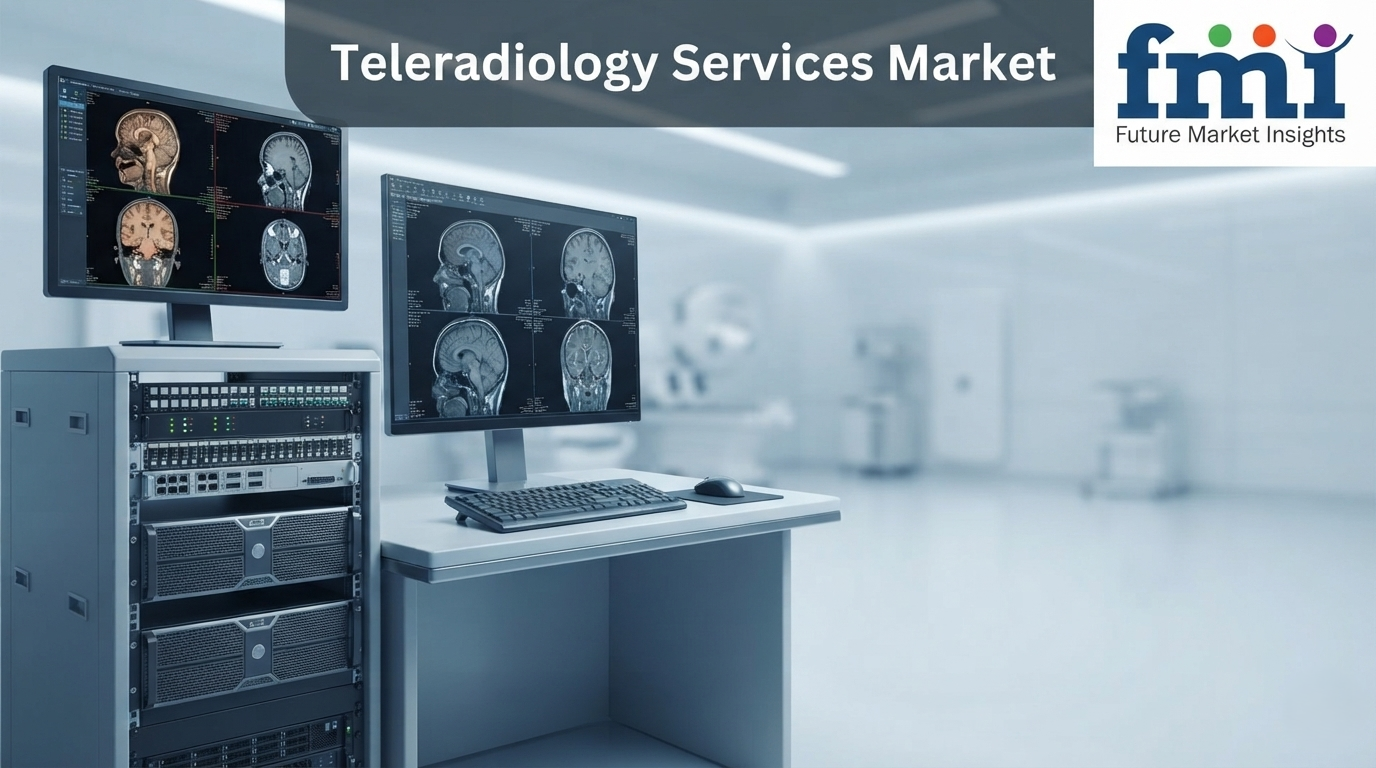
The global teleradiology services market is gaining strategic importance as healthcare providers seek faster access to diagnostic expertise, improved data management, and more flexible clinical workflows. Teleradiology enables medical images and associated patient data to be transmitted electronically, allowing radiologists and physicians to interpret cases remotely without being physically present at the hospital or clinic. This capability is particularly relevant as hospitals manage increasing patient volumes, chronic diseases, emergency cases, and an aging population.
According to the source data, certified reporting services are expected to hold a 62.9% value share, while emergency nighthawk services are projected to account for 31.6% revenue share in 2015. CT scans are forecast to register a 23.6% CAGR by 2026-end, highlighting the expanding role of remote imaging interpretation.
Market Overview
Teleradiology has emerged as an important component of technology-enabled healthcare because it separates diagnostic image interpretation from the physical location where imaging is performed. Hospitals, emergency care centers, telemedicine companies, clinics, and other medical facilities can transmit patient images to qualified professionals for analysis and reporting.
The model is particularly valuable for facilities facing high patient volumes or limited access to specialist radiologists. Physicians can review transmitted images and patient information remotely, supporting treatment decisions while reducing the need for specialists to be continuously present on-site.
Key Growth Drivers
- Rising chronic diseases: Increasing cases of orthopedic diseases, tumors, and cancer are generating greater demand for diagnostic imaging and interpretation services.
- Growing healthcare utilization: Higher admissions at ambulatory surgical clinics and centers, alongside hospitalization growth, are expanding the volume of diagnostic examinations.
- Aging population: An increasing elderly population is creating additional demand for accessible diagnostic services and specialist interpretation.
- Technology accessibility: Easier access to digital communication and imaging technologies is supporting wider adoption.
- Consumer awareness: Greater awareness of developing healthcare technologies is encouraging acceptance of remote medical services.
- Operational efficiency: Teleradiology can help healthcare providers manage diagnostic workloads while enabling specialists to serve patients remotely.
Technology & Innovation Trends
The central technological development behind teleradiology is the electronic transmission of medical images and patient information for remote interpretation. This approach reduces geographic barriers between patients, hospitals, and radiologists, creating opportunities for healthcare organizations to access specialist expertise beyond their immediate location.
Emergency nighthawk services represent an important application of this model because remote specialists can support interpretation when conventional staffing arrangements are constrained. Meanwhile, CT imaging is becoming a particularly significant technology segment, with the source forecasting a 23.6% CAGR through 2026-end.
Market Challenges & Restraints
Despite its advantages, the teleradiology services market faces structural challenges. Rising costs associated with technology infrastructure and services can limit adoption, particularly among healthcare facilities operating with constrained budgets.
A shortage of trained technicians and radiologists represents another significant barrier. Remote interpretation still depends on qualified professionals, meaning technology cannot completely eliminate workforce limitations.
Segment Analysis
The certified reporting services process segment is projected to dominate the market, accounting for 62.9% of value share in the coming years. This positioning reflects the importance of formalized and professionally interpreted diagnostic reporting within remote radiology workflows.
By service type, the emergency nighthawk service segment is projected to hold a 31.6% revenue share in 2015, making it a major contributor to market development. Its relevance stems from the need for timely interpretation of diagnostic images, particularly outside conventional operating hours.
Among end users, the hospital pharmacies segment is projected to account for 39.9% revenue share by the end of 2016, according to the supplied source data.
By modality, computerized tomography (CT) scans represent one of the strongest growth areas, with a projected 23.6% CAGR through 2026-end. This indicates increasing reliance on remotely interpreted advanced imaging examinations.
Regional Analysis
The U.S. market is projected to dominate the global teleradiology services market, supported by its established healthcare infrastructure and adoption of technology-enabled medical services.
The EU5 is identified as the second-most lucrative regional market, with a market attractiveness index of 1.3 throughout the forecast period. The regional outlook demonstrates that developed healthcare systems are likely to remain important adoption centers as hospitals seek greater efficiency and access to specialist expertise.
Competitive Landscape
Competition within teleradiology services is shaped by providers’ ability to deliver reliable remote interpretation, manage medical imaging data, and connect healthcare organizations with qualified radiologists. The market’s evolution is likely to favor service models that combine dependable technology infrastructure with professional reporting capabilities.
As healthcare providers face growing diagnostic workloads, the ability to provide timely interpretation without requiring specialists to be physically located at every facility remains a significant strategic consideration.
Leading Companies Analysis
The supplied source does not identify specific leading companies, individual market shares, or company-level developments. Accordingly, no company rankings or competitive claims are introduced here. The competitive environment can instead be assessed through the major service and process segments identified in the source, particularly certified reporting and emergency nighthawk services.
Investment & Strategic Developments
Investment opportunities are closely linked to healthcare digitization, remote diagnostics, imaging infrastructure, and specialist-access models. Providers and healthcare organizations can potentially improve operational flexibility by integrating teleradiology into existing diagnostic workflows.
However, investment decisions must account for infrastructure costs, workforce availability, data transmission reliability, and differences in technology adoption between developed and developing markets.
Future Outlook
The future trajectory of the global teleradiology services market is closely connected to the continuing transformation of healthcare through digital communication and remote medical services. Rising chronic disease prevalence, increasing diagnostic requirements, population aging, and greater healthcare utilization are expected to sustain demand.
At the same time, overcoming radiologist shortages, technology costs, transmission limitations, and awareness gaps will be essential for broader adoption. The projected 23.6% CAGR for CT scan modalities through 2026-end demonstrates the potential for advanced imaging to remain a major source of market expansion.
FMI Custom Research: Strategic Intelligence for Confident Decision-Making
In today’s rapidly evolving business environment, leadership teams need more than market data—they need clear, actionable intelligence tailored to their strategic objectives. FMI’s Custom Research solutions are designed around the specific business questions organizations need answered, enabling executives to evaluate growth opportunities, validate investments, assess competitive dynamics, and reduce uncertainty before making critical decisions. By combining deep industry expertise, primary research, and proprietary market intelligence, FMI delivers insights that help organizations move from assumptions to evidence-based strategies with greater speed and confidence.
Key Executive Benefits
- Decision-Ready Insights: Research tailored to your specific business challenges, growth plans, and investment priorities.
- Reduced Strategic Risk: Validate market opportunities, customer demand, and competitive positioning before committing resources.
- Market Entry Confidence: Assess opportunity size, regulatory barriers, channel dynamics, and competitive landscapes with precision.
- Competitive Advantage: Gain proprietary intelligence unavailable through syndicated reports or internal datasets.
- Faster Growth Decisions: Accelerate expansion, product development, portfolio optimization, and investment planning.
- Primary Market Validation: Access real-world customer, buyer, and stakeholder insights that support high-confidence decision-making.
- Global Industry Expertise: Powered by 100+ analysts, 20,000+ published reports, and 1.6 million+ hours of research experience.
- Proven Track Record: Over 7,000 market-entry engagements completed across six regions and 14 industry sectors with strong client retention.
Business Impact
FMI helps organizations transform market complexity into strategic clarity, enabling leadership teams to identify growth opportunities faster, optimize resource allocation, strengthen competitive positioning, and make high-stakes business decisions with confidence.
Related Report:
About Future Market Insights (FMI)
Future Market Insights, Inc. (FMI) is an ESOMAR-certified, ISO 9001:2015 market research and consulting organization, trusted by Fortune 500 clients and global enterprises. With operations in the U.S., UK, India, and Dubai, FMI provides data-backed insights and strategic intelligence across 30+ industries and 1200 markets worldwide.
Contact Us:
Future Market Insights Inc.
Christiana Corporate, 200 Continental Drive,
Suite 401, Newark, Delaware – 19713, USA
T: +1-347-918-3531
For Sales Enquiries: sales@futuremarketinsights.com
Website: https://www.futuremarketinsights.com