

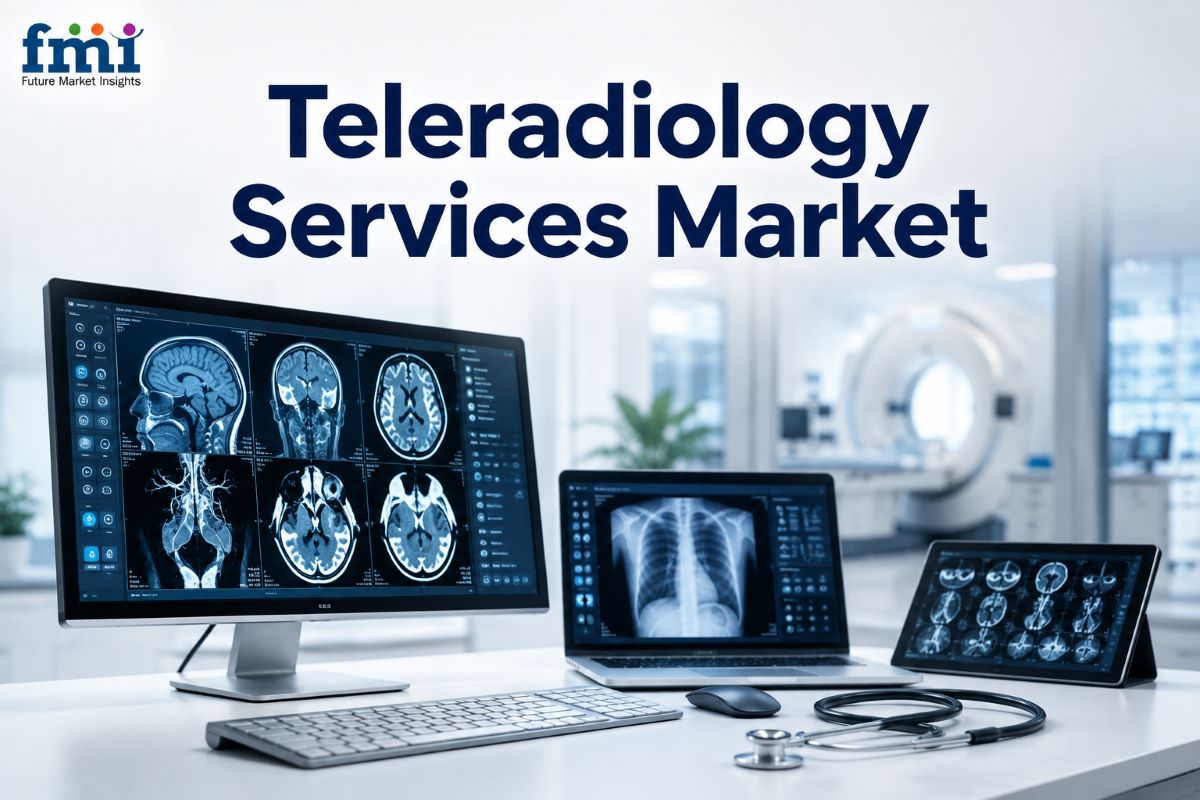
The teleradiology services market is expanding as healthcare providers increasingly use digital technology to share and review medical images remotely. Teleradiology allows radiologists to access and analyze X-rays, MRIs, and CT scans without being physically present at the hospital or diagnostic center.
The growing need for faster diagnosis, remote medical expertise, and improved access to radiology services is supporting market growth. Moreover, cloud computing, image compression, voice recognition, and advanced image-processing technologies are making remote radiology more efficient.
The global teleradiology services market was estimated to reach USD 1,971.4 million by the end of 2016 and was projected to expand at a CAGR of 21% during 2016–2026. The market’s development reflects the broader shift toward technology-enabled healthcare and remote diagnostic services.
Market Outlook
The teleradiology services market is gaining momentum as hospitals, research institutions, diagnostic centers, and training facilities adopt remote image-sharing and interpretation solutions.
Radiologists can review patient images from different locations, helping healthcare providers address shortages of specialized professionals and improve access to diagnostic expertise. As a result, healthcare organizations can support faster reporting and more flexible treatment decisions.
Furthermore, the growing use of cloud-based healthcare infrastructure is creating new opportunities for teleradiology service providers. Remote access to medical images enables radiologists to collaborate across geographical boundaries while supporting continuous healthcare delivery.
Convenient Treatment and Improved Mobility
Convenience remains one of the major advantages of teleradiology. The technology enables healthcare providers to transmit X-rays, CT scans, MRIs, and other diagnostic images electronically.
As a result, patients can benefit from radiology expertise without requiring every specialist involved in their diagnosis to be physically present at the same facility.
Cloud-based platforms further improve mobility by allowing authorized users to store and access medical images remotely. Moreover, doctors can collaborate on complex cases by sharing diagnostic information across locations.
This capability is particularly useful for hospitals and healthcare facilities located in areas where specialized radiologists may not be readily available.
Socio-Economic Factors Support Demand
Changing lifestyles and the increasing prevalence of health conditions are creating greater demand for diagnostic imaging services. Chronic diseases, injuries, and age-related health problems often require diagnostic tests such as X-rays, CT scans, and MRIs.
In addition, an expanding geriatric population is increasing the need for regular medical evaluation and diagnostic support. Sports-related injuries and other physical conditions can also increase the requirement for imaging services.
Teleradiology helps healthcare providers respond to these needs by enabling images to be reviewed remotely. Therefore, patients can gain access to specialist interpretation without always traveling to major healthcare centers.
The combination of increasing diagnostic requirements and demand for convenient healthcare is expected to support the adoption of teleradiology services.
Technological Advancements Transform Teleradiology
Technology remains at the center of teleradiology market development. Cloud computing has improved the ability of healthcare providers to transmit, store, and access large medical imaging files.
Furthermore, modern teleradiology platforms can incorporate technologies such as image compression, voice recognition, graphics processing, and digital communication tools.
These technologies can help radiologists analyze medical images more efficiently while improving communication between healthcare professionals.
The ability to access patient-related imaging data remotely also supports faster collaboration. As a result, healthcare providers can connect radiologists with hospitals and diagnostic centers across different geographical locations.
Geographical Analysis
North America represents a major market for teleradiology services, supported by advanced healthcare infrastructure and the widespread adoption of digital medical technologies.
Within North America, the United States was estimated to account for approximately 90% of the regional teleradiology market, while Canada accounted for around 10%. Canada’s market was supported by the development of non-hospital-based teleradiology service networks and increasing adoption of remote diagnostic solutions.
Meanwhile, the EU5 region was projected to remain another attractive market for teleradiology services. Growing healthcare digitization and the need for efficient diagnostic services support opportunities across major European healthcare systems.
Asia Pacific excluding Japan (APEJ) also offers significant growth potential. In particular, geographical advantages, expanding healthcare infrastructure, and the increasing presence of teleradiology service providers can support market development.
In contrast, regions with limited healthcare infrastructure and lower awareness of advanced diagnostic services may experience slower adoption.
Research and Training Opportunities
Teleradiology is not limited to clinical diagnosis. The technology also supports medical education, research, and professional training.
Medical students and healthcare professionals can access radiological images and reports remotely for learning and research purposes. For example, CT scans, MRIs, and X-rays can be shared with students and trainees, allowing them to study real-world cases without being physically present at the healthcare facility.
Moreover, remote access enables institutions in different countries to collaborate on research projects and exchange medical imaging data.
This ability to connect teachers, students, researchers, and healthcare professionals across geographical boundaries can strengthen medical education and knowledge sharing.
Growth Opportunities
The teleradiology services market offers opportunities as healthcare organizations increasingly seek faster and more flexible diagnostic solutions.
Key growth opportunities include:
- Remote radiology reporting
- Cloud-based medical image storage
- Cross-border radiology consultation
- AI-enabled image analysis
- Remote medical education and training
- Specialist access for underserved regions
- Integration with digital healthcare platforms
Furthermore, continued improvements in cloud infrastructure and medical imaging technologies can help service providers develop more efficient and scalable solutions.
Market Challenges
Despite its growth potential, the teleradiology market faces several challenges. Handling large medical imaging files requires reliable digital infrastructure and secure data transmission systems.
In addition, healthcare providers must protect sensitive patient information while enabling authorized professionals to access medical images remotely. Data security, privacy, and regulatory compliance therefore remain important considerations.
The cost of implementing advanced technology can also create challenges for smaller healthcare institutions. As a result, service providers need to balance technological capabilities with affordability and ease of implementation.
Competitive Landscape and Future Outlook
Competition in the teleradiology services market focuses on technology capabilities, reporting efficiency, service coverage, data security, and the ability to connect healthcare providers with qualified radiologists.
Companies and healthcare organizations are increasingly focusing on cloud-based platforms and remote diagnostic capabilities. Moreover, advancements in artificial intelligence, image processing, and digital healthcare infrastructure may create additional opportunities for market participants.
Future growth is expected to depend on the continued adoption of digital healthcare technologies, increasing diagnostic imaging requirements, and the need to provide specialist radiology services across geographical boundaries.
Conclusion
The teleradiology services market is benefiting from the growing integration of technology into healthcare. Remote access to X-rays, CT scans, MRIs, and other diagnostic images enables radiologists and healthcare providers to collaborate more efficiently.
Moreover, cloud computing, image processing, voice recognition, and other digital technologies are improving the accessibility and functionality of teleradiology platforms.
The technology also creates opportunities in medical education and research by enabling students and healthcare professionals to access imaging data remotely. Ultimately, increasing demand for faster diagnosis, improved specialist access, and technology-enabled healthcare is expected to continue supporting the development of teleradiology services.
Explore More Related Studies Published by FMI Research:
https://www.openpr.com/news/4533262/global-coxsackievirus-infections-treatment-market-led-by-usa
https://www.openpr.com/news/4533572/cytokine-release-syndrome-management-market-expands-led-by-usa
FMI Custom Research: Strategic Intelligence for Confident Decision-Making
In today’s rapidly evolving business environment, leadership teams need more than market data—they need clear, actionable intelligence tailored to their strategic objectives. FMI’s Custom Research solutions are designed around the specific business questions organizations need answered, enabling executives to evaluate growth opportunities, validate investments, assess competitive dynamics, and reduce uncertainty before making critical decisions. By combining deep industry expertise, primary research, and proprietary market intelligence, FMI delivers insights that help organizations move from assumptions to evidence-based strategies with greater speed and confidence.
Key Executive Benefits
Decision-Ready Insights: Research tailored to your specific business challenges, growth plans, and investment priorities.
Reduced Strategic Risk: Validate market opportunities, customer demand, and competitive positioning before committing resources.
Market Entry Confidence: Assess opportunity size, regulatory barriers, channel dynamics, and competitive landscapes with precision.
Competitive Advantage: Gain proprietary intelligence unavailable through syndicated reports or internal datasets.
Faster Growth Decisions: Accelerate expansion, product development, portfolio optimization, and investment planning.
Primary Market Validation: Access real-world customer, buyer, and stakeholder insights that support high-confidence decision-making.
Global Industry Expertise: Powered by 100+ analysts, 20,000+ published reports, and 1.6 million+ hours of research experience.
Proven Track Record: Over 7,000 market-entry engagements completed across six regions and 14 industry sectors with strong client retention.
Business Impact
FMI helps organizations transform market complexity into strategic clarity, enabling leadership teams to identify growth opportunities faster, optimize resource allocation, strengthen competitive positioning, and make high-stakes business decisions with confidence.
To explore how FMI Custom Research can support your strategic priorities, please connect with our team at – sales@futuremarketinsights.com
About Future Market Insights (FMI)
Future Market Insights is a leading provider of market intelligence, consulting services, and syndicated research reports. FMI delivers actionable insights across food and beverage, healthcare, consumer goods, biotechnology, chemicals, industrial products, and emerging technologies, helping organizations identify growth opportunities and make informed strategic decisions in evolving global markets.
Contact Us:
Future Market Insights Inc.
Christiana Corporate, 200 Continental Drive,
Suite 401, Newark, Delaware – 19713, USA
T: +1-347-918-3531
Why FMI: https://www.futuremarketinsights.com/why-fmi
For Sales Enquiries: sales@futuremarketinsights.com
Website: https://www.futuremarketinsights.com