

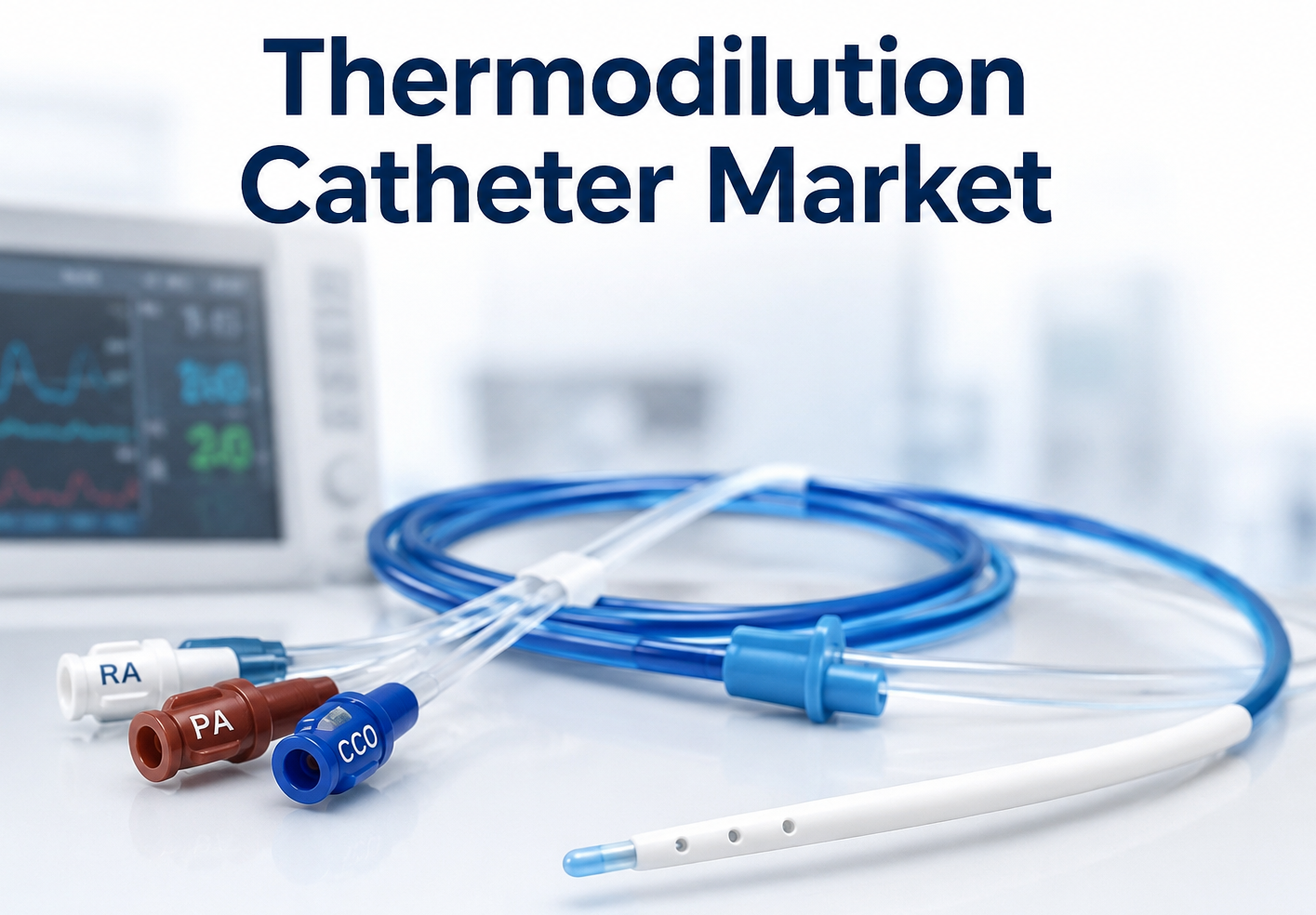
The global thermodilution catheter market continues to maintain a stable position within critical care and cardiovascular medicine as healthcare providers seek accurate hemodynamic assessment for complex cardiac and shock management. Despite the growing availability of noninvasive monitoring technologies, thermodilution catheters remain an important tool in selected high-acuity clinical settings where precise measurement of cardiac output, pulmonary artery pressures, and circulatory dynamics is essential for informed treatment decisions.
This evolving role reflects broader trends in critical care medicine, where clinicians increasingly prioritize patient-specific monitoring strategies rather than adopting a one-size-fits-all approach. As hospitals focus on improving outcomes in severe cardiovascular conditions, cardiogenic shock, advanced heart failure, and high-risk surgical procedures, thermodilution catheters continue to provide valuable diagnostic insights that support complex clinical decision-making.
Market Outlook
The thermodilution catheter market is expected to experience steady growth throughout the forecast period, supported by rising cardiovascular disease prevalence, increasing demand for advanced hemodynamic monitoring, and expanding utilization in specialized critical care environments. Unlike earlier periods when pulmonary artery catheterization was more routinely performed, future demand is increasingly concentrated within carefully selected patient populations where invasive monitoring delivers measurable clinical value.
As healthcare systems continue to invest in specialized cardiac care units, advanced surgical programs, and shock management protocols, thermodilution catheters are expected to remain a critical component of high-acuity patient management strategies.
Rising Cardiovascular Disease Burden Supports Market Growth
One of the primary factors driving market expansion is the increasing global burden of cardiovascular diseases. Growing incidence of heart failure, cardiogenic shock, pulmonary hypertension, and complex cardiac conditions is creating sustained demand for advanced monitoring solutions capable of delivering detailed hemodynamic information.
Thermodilution catheters provide clinicians with critical insights into cardiac performance, fluid responsiveness, and vascular status, enabling more precise therapeutic interventions in unstable patients
Specialized Critical Care Applications Sustain Demand
The continued use of thermodilution catheters in selected intensive care and perioperative settings remains an important contributor to market stability. Hospitals managing high-risk cardiac surgery patients, severe shock cases, and advanced heart-failure populations continue to rely on pulmonary artery catheter-based monitoring to guide treatment decisions in situations where noninvasive alternatives may provide insufficient diagnostic detail.
Technological Advancements Improve Clinical Utility
Continuous innovation is helping strengthen the value proposition of thermodilution catheter systems. Manufacturers are focusing on improving catheter design, monitoring accuracy, signal quality, data integration capabilities, and ease of use within modern critical care environments.
Advancements in sensor technology, digital monitoring platforms, integrated data management systems, and workflow optimization are enhancing the effectiveness of thermodilution-based monitoring. These improvements are helping healthcare providers obtain more reliable clinical information while supporting safer and more efficient patient management practices.
Challenges Facing the Market
Despite favorable demand drivers, several challenges continue to influence market growth. Concerns regarding procedure-related complications, infection risks, pulmonary artery injury, and operator-dependent variability remain important considerations for healthcare providers.
The increasing adoption of less invasive monitoring technologies also creates competitive pressure within the hemodynamic monitoring landscape.
Segmentation Highlights
Critical care and intensive care units remain among the largest application areas for thermodilution catheters. Additional demand originates from cardiac surgery, cardiogenic shock management, advanced heart-failure treatment, pulmonary hypertension assessment, and perioperative hemodynamic monitoring.
From an end-user perspective, tertiary hospitals, academic medical centers, specialized cardiac care facilities, and advanced surgical centers account for a significant share of overall market demand due to their concentration of high-acuity cardiovascular cases and complex patient management requirements.
Regional Trends
North America continues to represent a major market for thermodilution catheters, supported by advanced healthcare infrastructure, high cardiovascular disease prevalence, established critical care protocols, and significant adoption of specialized cardiac monitoring technologies.
Europe maintains a strong market position due to well-developed cardiac care systems, growing focus on precision medicine, and continued investment in advanced critical care capabilities.
Asia-Pacific is expected to witness notable growth, driven by expanding healthcare infrastructure, rising cardiovascular disease incidence, increasing critical care capacity, and growing investment in advanced medical technologies across China, India, Japan, and Southeast Asia.
Competitive Landscape and Future Outlook
The thermodilution catheter market remains competitive, with manufacturers focusing on product innovation, monitoring accuracy, safety enhancements, and integration with modern patient monitoring platforms. Industry participants are increasingly investing in technologies that improve usability, reduce procedural risks, and support data-driven clinical decision-making.
Looking ahead, market demand is expected to remain supported by the persistent need for accurate hemodynamic assessment in complex cardiovascular and critical care settings. While utilization will likely remain concentrated within specialized patient populations, thermodilution catheters are expected to retain an important role in advanced cardiac and shock management.
Explore More Related Studies Published by FMI Research:
Cardiology Information System Market
Cardiopulmonary Functional Testing Platform Market
Cardiovascular CT Systems Market
Have specific requirements or need assistance on report pricing or limited budget? Please contact us – sales@futuremarketinsights.com
About Future Market Insights (FMI)
Future Market Insights, Inc. (FMI) is an ESOMAR-certified, ISO 9001:2015 market research and consulting organization, trusted by Fortune 500 clients and global enterprises. With operations in the U.S., UK, India, and Dubai, FMI provides data-backed insights and strategic intelligence across 30+ industries and 1200 markets worldwide.