

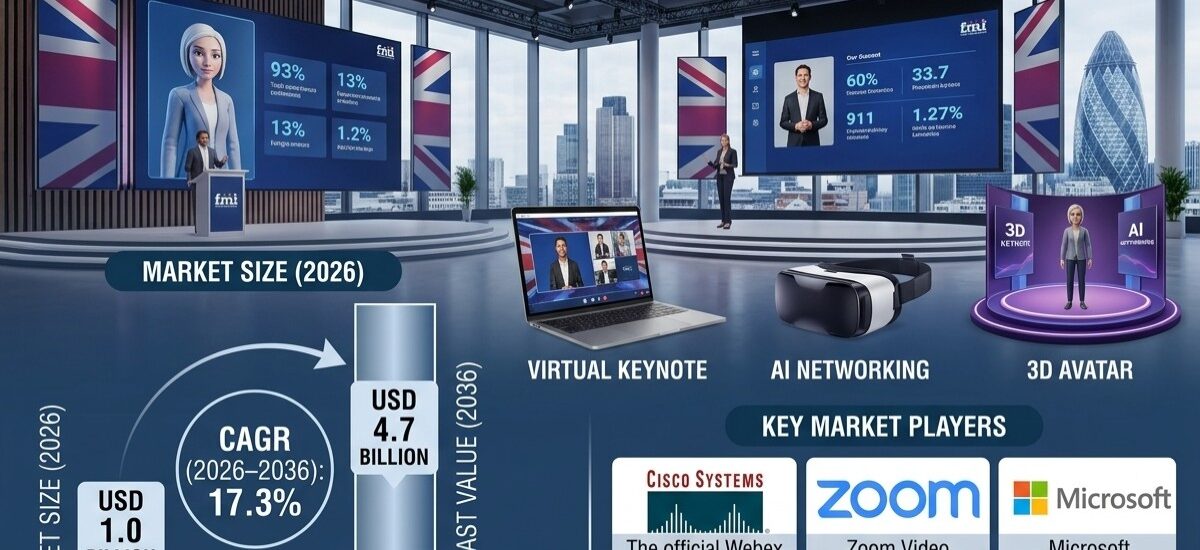
The United Kingdom’s virtual event platforms market is entering an accelerated growth phase as organizations permanently embed digital and hybrid engagement strategies into their operations. According to the latest analysis, the market is valued at USD 1.0 billion in 2026 and is projected to surge to USD 4.7 billion by 2036, expanding at a remarkable CAGR of 17.3%.
This rapid expansion reflects a structural shift in how businesses, academic institutions, and event organizers connect with audiences—moving from physical-only formats to scalable, data-driven, and globally accessible digital experiences. Virtual platforms are no longer temporary solutions; they are now core infrastructure for modern communication, marketing, and collaboration.
Get detailed market forecasts, competitive benchmarking, and pricing trends:
https://www.futuremarketinsights.com/reports/sample/rep-gb-31483
Featured Snippet: Key Market Answer
Q: What is driving the growth of the virtual event platforms market in the UK?
A: Growth is driven by the widespread adoption of hybrid work models, increasing demand for scalable global audience engagement, and the integration of AI-powered analytics, networking, and personalization features into virtual event ecosystems.
Quick Stats
- Market Size (2026): USD 1.0 billion
- Forecast (2036): USD 4.7 billion
- CAGR (2026–2036): 17.3%
- Leading Region: England (19.0%)
- Leading Solution Segment: Software (70.0%)
- Leading Enterprise Size: Medium-sized Enterprises (19.3%)
- Leading End User: Enterprises/Corporates (34.3%)
Market Overview: Digital-First Engagement Becomes the New Standard
The UK virtual event platforms market is evolving from a pandemic-driven necessity into a long-term strategic investment. Organizations are increasingly prioritizing platforms that offer:
- Seamless hybrid event execution
- Real-time attendee analytics
- Global accessibility with reduced operational costs
- Integrated marketing and CRM capabilities
The UK’s position as a global hub for finance, technology, academia, and professional services—especially in London—creates a high concentration of early adopters and advanced users. This ecosystem continues to drive innovation and large-scale deployment of virtual event technologies.
Key Growth Drivers
- Permanent Shift to Hybrid Work Models
Organizations now operate in distributed environments, requiring robust virtual platforms for:
- Internal collaboration
- Global meetings
- Customer engagement
- Training and development
- Demand for Measurable ROI in Events
Virtual platforms enable:
- Lower cost per lead
- Detailed attendee insights
- Performance tracking across campaigns
This data-driven approach ensures sustained budget allocation for virtual events.
- Global Reach and Scalability
Companies can now:
- Engage international audiences instantly
- Host large-scale events without physical constraints
- Expand brand visibility across geographies
Market Trends Shaping the Industry
- AI Integration: Personalized agendas, AI matchmaking, real-time translation, and automated summaries
- Rise of Hybrid Events: Seamless integration of in-person and virtual audiences
- Immersive Technologies: Growing adoption of AR/VR for premium experiences
- Platform Consolidation: Demand for all-in-one solutions combining streaming, networking, and analytics
- Focus on Engagement: Gamification, live polling, and interactive networking tools
Segment Insights
Solution Leadership: Software (70.0%)
Virtual event platform software dominates the market as the foundational technology enabling:
- Event creation and hosting
- Registration and ticketing
- Networking and engagement
- Data analytics
Services such as implementation and event management remain important but are built around this core software layer.
Speak to Analyst: Customize insights for your business strategy:
https://www.futuremarketinsights.com/customization-available/rep-gb-31483
Enterprise Size: Medium-Sized Enterprises (19.3%)
Medium-sized enterprises lead adoption due to:
- Agile decision-making
- Strong need for competitive digital marketing tools
- Growing investment in audience engagement strategies
End User Leadership: Enterprises/Corporates (34.3%)
Corporates dominate usage, leveraging platforms for:
- Product launches
- Sales kick-offs
- Webinars and training
- Hybrid annual general meetings (AGMs)
Event agencies and academic institutions also contribute significantly to demand.
Regional Insights
Top Growth Regions (CAGR 2026–2036)
- England: 19.0%
- Scotland: 16.9%
- Wales: 15.7%
- Northern Ireland: 13.8%
England: Market Epicenter
England leads due to:
- London’s global business dominance
- High concentration of multinational corporations
- Strong tech and research ecosystem
Scotland: Tech and Academic Strength
Growth is fueled by:
- Thriving startup ecosystem
- Prestigious universities adopting digital platforms
- Strong financial services sector
Wales: Digitally Driven Expansion
Key drivers include:
- Government-backed digital initiatives
- Expanding knowledge-based industries
- Increased focus on innovation and investment events
Northern Ireland: Emerging Digital Hub
Growth is supported by:
- Expanding tech and cybersecurity sector
- Academic and cross-border collaboration
- Increasing global connectivity efforts
Market Dynamics
Key Opportunities
- AI-powered personalization and automation
- Expansion of immersive virtual environments
- Growth of hybrid event management capabilities
Key Challenges
- Virtual event fatigue among attendees
- Platform integration complexity
- Data privacy and security requirements
Potential Threats
- Intense competition and pricing pressure
- Rapid technological obsolescence
- Economic fluctuations impacting event budgets
Competitive Landscape
The market is highly competitive, with players differentiating through:
- Advanced analytics and AI capabilities
- User experience and platform reliability
- Integration with enterprise tools
- Industry-specific solutions
Key Players
- Cisco Systems
- Zoom Video Communications Inc.
- Microsoft Corporation
- vFairs
- Cvent Inc.
Expert Insight
The UK virtual event platforms market is transitioning from a tactical communication tool to a strategic digital engagement infrastructure. As hybrid work becomes permanent and AI capabilities mature, platforms that deliver immersive, data-driven, and seamlessly integrated experiences will dominate the competitive landscape.
FAQs
- What is the future outlook for the UK virtual event platforms market?
The market is projected to reach USD 4.7 billion by 2036, growing at a CAGR of 17.3%, driven by hybrid work adoption and digital transformation.
- Which segment leads the market?
Virtual event platform software leads with a 70% market share due to its central role in hosting and managing events.
- Why are companies investing in virtual event platforms?
To achieve cost efficiency, global reach, and measurable engagement insights.
- What are the key challenges?
- Attendee fatigue
- Integration complexity
- Data security concerns
- Which region shows the highest growth?
England leads with a CAGR of 19.0%, driven by London’s global business ecosystem.
Unlock 360° insights for strategic decision making and investment planning:
https://www.futuremarketinsights.com/reports/united-kingdom-virtual-event-platforms-market
Conclusion
The United Kingdom virtual event platforms market stands at the forefront of digital transformation in communication and engagement. With strong growth momentum, expanding use cases, and rapid technological innovation, the sector is set to become a cornerstone of modern business infrastructure.
As organizations prioritize scalable, intelligent, and immersive engagement solutions, virtual event platforms will continue to redefine how the world connects, collaborates, and conducts business in the digital era.




