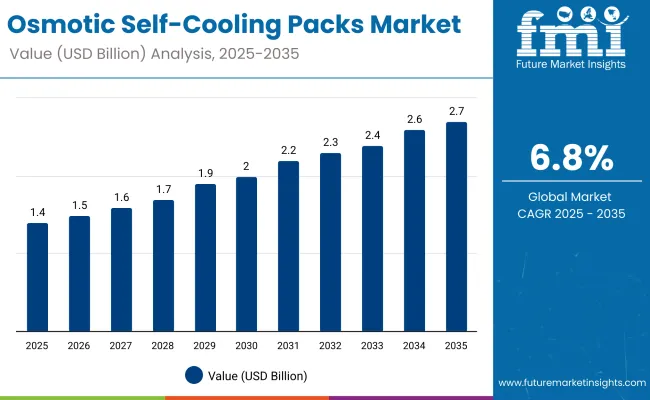
The global osmotic self-cooling packs market is undergoing transformative growth as both established manufacturers and emerging companies capitalize on rising demand for energy-free cooling solutions across various industries. Poised for significant expansion over the next decade, this segment is playing a crucial role in evolving cold chain ecosystems, sustainable packaging trends, and temperature-sensitive logistics.
With demands rising from food & beverage, healthcare, and cold chain logistics sectors, osmotic self-cooling packs are rapidly gaining traction as efficient, portable, and eco-friendly alternatives to traditional refrigeration and ice-based cooling methods. Beyond fundamental cooling performance, the market is witnessing a wave of innovation in materials, pack design, and integrated technologies that enable accurate temperature control without external power — a defining feature in today’s sustainability-focused climate.
Market Expansion and Industry Dynamics
The osmotic self-cooling packs industry has grown into a dynamic global market that continues to attract investment and strategic activity. Driven by expanding cold chain logistics networks, heightened demand from pharmaceutical and biologics distribution, and the convenience-oriented food & beverage segment, manufacturers are scaling production while exploring advanced cooling mechanisms. Firms are leveraging cutting-edge research into hydrogel chemistries, phase-change materials, and osmotic membranes to deliver performance enhancements that address longstanding cooling challenges.
Established players — including long-standing manufacturers in thermal packaging — are enhancing their portfolios with reusable and high-efficiency osmotic solutions. These firms have built robust manufacturing infrastructures, global distribution networks, and deep relationships with cold chain stakeholders, enabling them to deliver reliable products at scale while responding to regulatory compliance and sustainability requirements.
Parallel to these established names, a new wave of technology-driven challengers is redefining how osmotic self-cooling packs are designed and applied. These emerging participants are often more agile, embracing digital integration, smart sensing, and environmentally conscious materials early in the product lifecycle. Their innovations are accelerating performance improvements and creating specialized offerings for niche segments such as high-value pharmaceutical shipments, outdoor food service, and last-mile logistics.
Innovation at the Forefront: New Technologies and Emerging Players
One of the most noteworthy trends in the market is the integration of advanced materials science with osmotic cooling principles. Hydrogel-based packs with enhanced absorbency and controlled phase-change materials are extending cooling duration and reliability, even under prolonged transit conditions. These breakthroughs are particularly appealing to logistics providers and healthcare distributors who require precision thermal protection without the complexity or power requirements of mechanical refrigeration.
In addition, innovative entrants are focusing on smart temperature monitoring technologies that provide real-time feedback throughout transit. Integrated sensor systems and connected packaging solutions are empowering shippers with visibility into thermal performance, enabling proactive measures to safeguard sensitive cargo and meet stringent regulatory standards.
Another emerging facet is the commitment to sustainability. As environmental concerns become a central business imperative, new manufacturers are developing biodegradable and recyclable cooling pack formats. These eco-centric designs reduce waste and align with broader global initiatives to minimize carbon footprints across supply chains. Such advancements are resonating strongly with end users who seek cooler solutions that are not just efficient, but also environmentally responsible.
Sectoral Demand: What’s Driving Adoption?
Across industries, the appeal of osmotic self-cooling packs continues to broaden:
-
Food & Beverage: Consumer preferences for fresh, ready-to-eat meals and chilled products have amplified the need for portable cooling solutions. Osmotic packs offer convenience for logistics operations, outdoor consumption, and retail applications without relying on bulky refrigeration systems.
-
Healthcare & Pharmaceuticals: Vaccine distribution, biologic transport, and temperature-sensitive medical logistics are immense growth segments. Reliable temperature control is critical to preserving product efficacy, and osmotic self-cooling packs offer an accessible and energy-free alternative that can be deployed even in regions with limited power infrastructure.
-
Cold Chain & Logistics: From last-mile delivery services to international freight shipments, cold chain providers are integrating self-cooling technologies into insulated transport systems to ensure consistency, reduce spoilage, and optimize cost efficiencies throughout the supply network.
Collaboration and Competitive Landscape
Market activity continues to be marked by strategic partnerships, cross-industry collaboration, and targeted investments. Established corporations are broadening their technology licensing and co-development efforts with specialized innovators. At the same time, startups and tech-focused firms are leveraging partnerships with logistics providers and material scientists to refine their solutions and accelerate market penetration.
Both categories of market players — established leaders with deep manufacturing roots and energetic newcomers driving technological innovation — are contributing to a highly competitive and expanding marketplace. This ecosystem fosters continuous improvements in product performance, sustainability, and user experience.
Outlook and Future Growth
Looking ahead, the osmotic self-cooling packs market is positioned for robust growth, underpinned by accelerating demand from cold chain expansion, global healthcare logistics, and eco-conscious packaging trends. As manufacturers adapt and innovate, the industry is expected to deliver reliable temperature control solutions that are more efficient, more sustainable, and more integrated than ever before. With an evolving landscape that balances tradition and innovation, the market is set to redefine the future of passive cooling technologies.