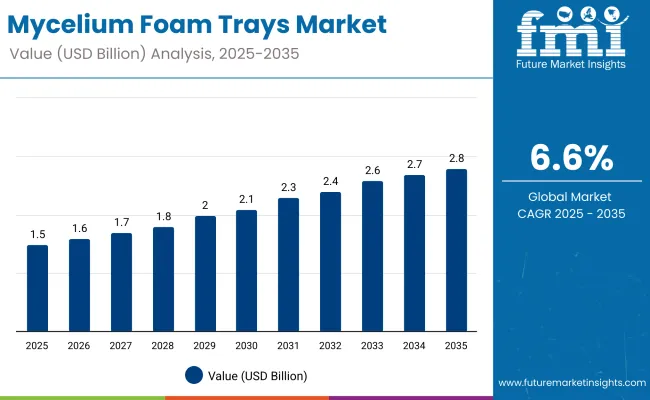
The global packaging landscape is undergoing a meaningful transformation as demand for sustainable alternatives accelerates, creating significant opportunities for both established manufacturers and innovative newcomers. The Mycelium Foam Trays Market, driven by heightened environmental awareness and regulatory pressure to reduce plastic waste, is poised for substantial growth through 2035, supported by advancements in biofabrication technologies and expanding commercial adoption across industries.
Mycelium foam trays, derived from fungal root structures grown on agricultural residues, are emerging as a high-performance, biodegradable alternative to traditional petroleum-based foams. These trays offer a unique combination of thermal stability, lightweight structure, moisture resistance, and full compostability — characteristics that appeal to forward-thinking brands and manufacturers seeking to meet sustainability commitments without compromising performance.
Market Opportunity: A Sustainable Shift in Packaging
Industry trends indicate that sustainability is no longer an optional branding effort — it is a core strategic imperative shaping purchasing decisions at every level of the supply chain. As global bans on single-use plastics tighten and consumer preference for eco-friendly products rises, companies are increasingly integrating mycelium-based trays into their packaging portfolios.
This shift is drawing interest not only from traditional packaging giants but also from dynamic startups and digital manufacturers focused on expanding their footprint in greener materials. With regulatory frameworks in Europe and North America pushing for compostable and biodegradable materials, and cost-effective mass production scaling rapidly across Asia-Pacific, the environment is ripe for innovation and collaboration.
Established Leaders Expand Capabilities
Several well-known players in the mycelium packaging space have already begun to solidify their presence through research investments and technology enhancements. These companies are leveraging advanced cultivation techniques and automated forming processes to deliver mycelium trays with consistent quality and greater design flexibility.
These established manufacturers bring invaluable experience in industrial scaling, quality certification, and global distribution networks, serving as anchors for broader market stability. Their work in advancing mold-based production and hybrid formulation methods has helped reduce barriers for entry while setting performance benchmarks that inspire confidence among large brand adopters.
New Entrants Bring Fresh Technology and Business Models
The current market environment is also favorable for new manufacturers eager to carve out niches by introducing cutting-edge technologies or specialized product lines. Emerging makers are exploring innovations such as 3D-grown mycelium structures, which enable custom tray shapes and enhanced protective properties for e-commerce and fragile goods.
Additionally, attention is turning toward integrating plant-derived fibers and nanocellulose blends with mycelium networks, elevating both strength and barrier properties without reverting to synthetic polymers. These advancements appeal to food and beverage businesses, logistics companies, and specialty retail sectors that require reliable packaging with minimal environmental impact.
Another exciting area for new players is in digital manufacturing and localized production models. By investing in modular cultivation equipment and near-shore production facilities, startups can reduce lead times, cut transportation emissions, and compete on both sustainability and cost.
Cross-Sector Growth Across Industries
While food and beverage applications remain the dominant segment for mycelium foam trays, demand is rapidly spreading into other markets. Retail and e-commerce firms are eager to replace conventional protective foams with sustainable alternatives, and the electronics industry has begun exploring mycelium trays for shock-absorbing packaging solutions that align with corporate sustainability goals.
Healthcare and industrial goods sectors are also joining the transition, recognizing that bio-based trays can contribute to broader environmental, social, and governance (ESG) targets. As cross-industry interest continues to rise, the competitive landscape is expanding, paving the way for partnerships between traditional materials producers and innovative bio-material technology firms.
Key Drivers of Growth
Environmental Regulation: Stricter waste and compostability regulations are compelling companies to shift away from plastics toward fully biodegradable materials.
Corporate ESG Commitments: Competitive brands are aligning packaging decisions with their net-zero and circular economy targets.
Technological Advancements: Automation in mycelium cultivation, precision molding, and composite integration is enhancing production efficiency and scalability.
Consumer Preferences: Increasing consumer demand for sustainable packaging is influencing procurement strategies across retail and institutional buyers.
Looking Ahead: Collaboration and Innovation
As the market expands, collaboration will play a central role in fostering innovation and accelerating commercialization. Strategic partnerships between established firms and emerging innovators will enable knowledge sharing, drive down costs, and unlock new applications for mycelium foam trays.
Investors and entrepreneurs are encouraged to explore this space, as there are multiple avenues for differentiation — from proprietary growth systems and novel material blends to digital supply chains and regional manufacturing hubs.
With a shared focus on reducing environmental impact and meeting future packaging demands, the mycelium foam trays market is transforming from a niche technology into a mainstream industrial solution, presenting exciting opportunities for both seasoned manufacturers and new market entrants.