

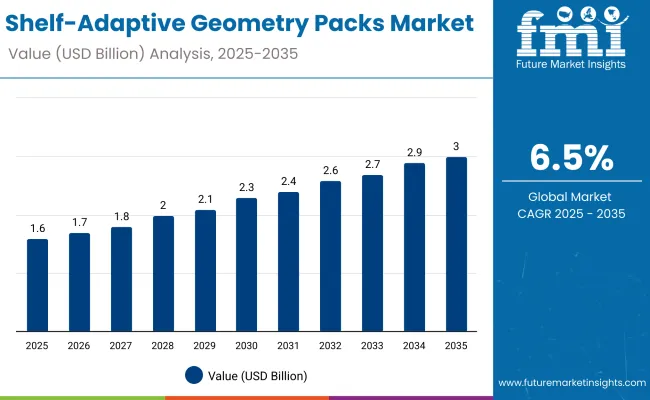
The global shelf-adaptive geometry packs market is entering a dynamic phase of growth, poised to nearly double in value over the coming decade as retailers, manufacturers and packaging innovators embrace flexible, efficient and sustainable packaging formats. With demand surging across retail, e-commerce and consumer goods industries, both established packaging giants and emerging market players are investing in technologies that reimagine how products are shipped, displayed and experienced on-shelf.
Serving as a crucial link between efficient logistics and compelling retail presentation, shelf-adaptive geometry packs combine modular design, collapsibility and shape-adaptive formats to deliver packaging that not only protects products but also enhances shelf visibility and minimizes waste. The increased adoption of these innovative packaging systems underscores an industry-wide shift toward smarter, environmentally aligned solutions that benefit manufacturers, retailers and consumers alike.
Market Growth Fueled by Retail Evolution and E-Commerce Expansion
The shelf-adaptive geometry packs market is forecast to register robust growth through the next decade, driven by rapid expansion in e-commerce fulfillment, automated retail systems and demand for space-efficient shelving solutions that adapt to diverse product sizes and retail formats. As omni-channel retailing becomes the norm, packaging that seamlessly transitions from fulfillment centers to store shelves without repackaging is increasingly prized by global brands and fast-growing retailers.
Retailers continue to prioritize modular formats that reduce handling time, enable easy shelf replenishment and improve visual merchandising — all while optimizing transport logistics and reducing carbon footprint. Flexible packaging formats that expand or collapse to suit various product configurations are gaining traction as essential tools in this transformation.
Established Leaders Strengthen Innovation and Global Footprint
Industry-leading manufacturers have been at the forefront of developing advanced geometry packs that merge functionality with sustainability. Long-standing packaging firms are investing heavily in R&D and manufacturing capability expansion to deliver solutions that cater to evolving market needs.
Key players renowned for their contributions in adaptive packaging include:
-
Smurfit Kappa, which continues to integrate cutting-edge design processes to support shelf-ready formats tailored for diverse retail segments.
-
Amcor, leveraging its global reach to deploy scalable geometry-responsive packaging solutions across fast-moving consumer goods.
-
Mondi and WestRock, both strategically advancing their portfolios with renewable and recyclable materials that align with rising environmental expectations.
-
DS Smith, known for its retail-ready packaging optimization services that improve shelf placement and logistics performance.
-
Packhelp and Great Northern Packaging, agile brands expanding their footprint by blending bespoke design services with modular packaging systems tailored for small and medium enterprises.
These established innovators are strengthening partnerships with major retailers and consumer goods manufacturers, helping to embed adaptive packaging into global supply chains and retail environments.
Emerging Players Drive Customization and Localized Growth
Alongside traditional packaging powerhouses, a new cadre of manufacturers is entering the shelf-adaptive geometry packs space, bringing fresh approaches, localized insight and tailored solutions. These emerging players are particularly effective in serving niche segments and regional markets where customization, rapid turnaround and cost-effective production are key competitive advantages.
Newer market entrants are leveraging digital design tools, advanced printing technologies and flexible modular components to develop highly customizable pack geometries that can be rapidly iterated based on brand requirements. This nimble innovation model empowers direct-to-consumer (D2C) brands and smaller retailers to differentiate their product displays and reduce inventory waste, even when operating with tighter budgets.
Innovators are also turning to sustainable substrates such as biodegradable films, molded paperboard composites and recyclable plastics that achieve performance parity with traditional materials while reducing environmental impact. These forward-thinking solutions resonate strongly with brands prioritizing circular economy principles and aiming to meet growing consumer demand for eco-friendly packaging.
Technology and Sustainability at the Core of Future Developments
At the heart of future growth lies the integration of technological advancements and sustainability imperatives. Manufacturers are exploring smart geometry packs that incorporate adaptive folding mechanisms and responsive materials capable of altering shape or rigidity based on usage context. These technologies reduce material waste, enable seamless automated assembly and shorten the time from factory to retail shelf.
Digital tools such as 3D packaging visualization, AI-driven design optimization and automated assembly systems are expediting product development cycles and lowering the barriers to high-quality custom designs. With retail environments becoming more dynamic, the ability to rapidly prototype, test and deploy adaptive packaging solutions is now a strategic differentiator.
Sustainability continues to be a guiding force, pushing both seasoned and emerging manufacturers to adopt recyclable laminates and biodegradable alternatives that minimize ecological footprint without compromising durability. The merging of sustainability with adaptive geometry presents a compelling value proposition for brands seeking to strengthen their environmental credentials while enhancing operational efficiency.




