The Radar & LiDAR Technology for Railways Application Market is set to expand from USD 1.84 billion in 2025 to USD 4.4 billion by 2035, reflecting a CAGR of 9.1% during the forecast period. The demand for enhanced safety, real-time monitoring, and automation in train operations is driving growth in radar and LiDAR technologies across global rail networks.
The Radar and LiDAR technology market for railway applications is gaining significant traction as rail operators increasingly adopt advanced sensing systems to enhance safety, optimize maintenance, and support the transition toward smart and autonomous railways. These technologies offer real-time, high-resolution environmental perception, enabling trains and infrastructure systems to operate with greater situational awareness and reliability. As railway modernization and automation accelerate globally, radar and LiDAR solutions are emerging as critical components of intelligent transportation ecosystems.
Elevating Safety Through Precision Sensing
Radar and LiDAR systems provide accurate, real-time detection of objects, obstacles, and track conditions—even in low visibility environments such as fog, darkness, or heavy rain. This enhances situational awareness for train operators and onboard systems, helping to prevent collisions, derailments, and other critical safety incidents. By monitoring the rail environment with high precision, these technologies reduce human error and improve operational safety margins.
Get Ahead with Our Report: Request Your Sample Now!
Enabling Predictive Maintenance and Infrastructure Monitoring
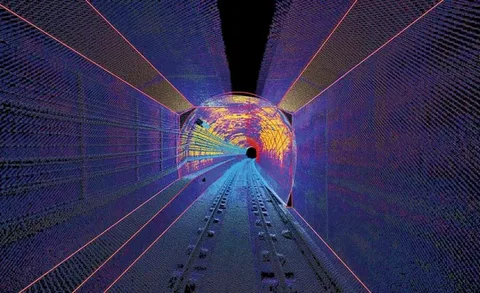
LiDAR and radar sensors are increasingly used to inspect and monitor railway infrastructure including tracks, overhead lines, tunnels, and bridges. Mounted on inspection trains or maintenance vehicles, these systems capture high-definition, 3D data that supports condition assessment, fault detection, and early intervention. By identifying wear and deformation in advance, operators can schedule targeted repairs, reduce downtime, and extend asset life.
Supporting Autonomous and Driver-Assistance Systems
As the rail industry explores autonomous train operations, radar and LiDAR technologies play a central role in enabling onboard perception systems. These sensors support obstacle detection, precise localization, and train-to-environment interaction, which are essential for semi-autonomous or fully automated transit. Their integration with AI and control systems lays the foundation for safe and efficient driverless rail transport.
Improving Efficiency of Train Operations
Real-time data from radar and LiDAR systems enhances the responsiveness of railway signaling, braking, and speed regulation systems. This contributes to smoother operations, reduced energy consumption, and more accurate arrival times. In urban metro systems, such capabilities enable higher train frequency and passenger throughput without compromising safety.
Enhancing Passenger Experience and Accessibility
Radar-based people detection and LiDAR-enabled environment mapping are being used in stations and onboard systems to improve passenger flow and accessibility. These technologies assist in detecting crowds, monitoring platform safety, and enabling automated doors and ramps for passengers with reduced mobility. Such innovations contribute to more inclusive, efficient, and user-friendly rail networks.
Integrating with Smart Rail Infrastructure
Radar and LiDAR systems are increasingly integrated into smart infrastructure, including intelligent signaling, automated barriers, and real-time monitoring platforms. This integration supports centralized control centers with actionable insights into network conditions, improving coordination, resource allocation, and incident response times. The result is a more agile and responsive railway ecosystem.
Facilitating Environmental Mapping and Route Planning
LiDAR’s 3D mapping capabilities enable detailed topographic surveys and environmental scans that support new rail route planning and infrastructure upgrades. These scans assist in terrain analysis, clearance verification, and vegetation monitoring, which are essential for both construction and ongoing operations. This geospatial data improves planning accuracy and environmental compliance.
Advancing Sustainability Through Efficiency Gains
By optimizing operations and reducing mechanical wear, radar and LiDAR systems contribute to a more sustainable rail network. Energy-efficient routing, fewer service interruptions, and predictive maintenance all reduce the environmental footprint of rail transport. These technologies align with broader goals of reducing carbon emissions and promoting green mobility.
Strengthening Security and Threat Detection
LiDAR and radar are also deployed for surveillance and perimeter monitoring at rail stations, depots, and along tracks. These systems help detect unauthorized access, suspicious behavior, and potential threats, supporting law enforcement and security teams in maintaining safe travel environments. Their ability to function in all weather conditions enhances reliability in critical scenarios.
Catapult Your Strategy: Secure Key Insights with Our Report Checkout!
Future Outlook
The market for radar and LiDAR technology in railway applications is poised for continued expansion as global transit systems modernize and digitalize. With advancements in sensor miniaturization, data analytics, and real-time processing, these technologies will become even more embedded in the fabric of intelligent rail systems. As railways evolve into safer, smarter, and more sustainable transportation solutions, radar and LiDAR will remain at the forefront of this transformation.
About Future Market Insights (FMI)
Future Market Insights, Inc. (ESOMAR certified, recipient of the Stevie Award, and a member of the Greater New York Chamber of Commerce) offers profound insights into the driving factors that are boosting demand in the market. FMI stands as the leading global provider of market intelligence, advisory services, consulting, and events for the Packaging, Food and Beverage, Consumer Technology, Healthcare, Industrial, and Chemicals markets. With a vast team of 400 analysts worldwide, FMI provides global, regional, and local expertise on diverse domains and industry trends across more than 110 countries.
Contact Us:
Future Market Insights Inc.
Christiana Corporate, 200 Continental Drive,
Suite 401, Newark, Delaware – 19713, USA
T: +1-845-579-5705
For Sales Enquiries: sales@futuremarketinsights.com
Website: https://www.futuremarketinsights.com
LinkedIn| Twitter| Blogs | YouTube