

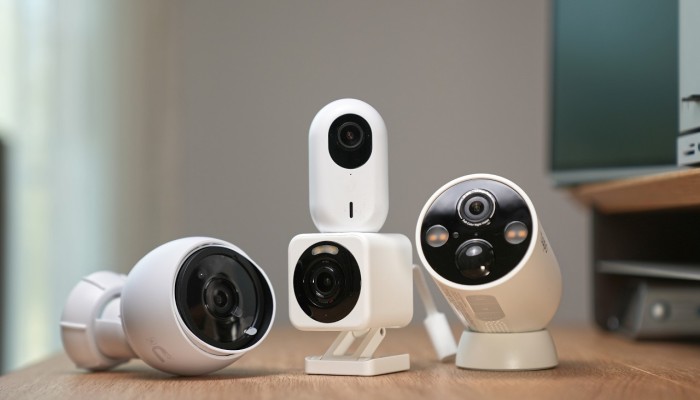
Smart cameras have moved far beyond being simple imaging devices. Today, they sit at the intersection of advanced sensor technology, edge computing, and artificial intelligence. While many buyers still assume that pricing is driven primarily by optics or housings, the reality is far more complex. For manufacturers—both established players and new entrants looking to scale—the true cost structure of smart cameras reveals where margins are won or lost.
Why Smart Camera Costs Go Beyond Sensors and Casings
At a glance, a smart camera may look like a rugged box with a lens and a circuit board. Under the hood, however, it represents the convergence of multiple high-value technologies. Unlike consumer cameras optimized for mass production, industrial smart cameras must deliver real-time processing, deterministic performance, and long-term reliability in harsh environments.
The largest cost contributor is typically the CMOS image sensor. Companies like Sony, Samsung, and OmniVision dominate this layer, with Sony’s IMX series becoming a benchmark for industrial machine vision. These sensors command premium pricing because they offer features such as global shutters, extended temperature ranges, and specialized spectral sensitivity—capabilities that consumer-grade sensors simply don’t provide.
Processing architecture is the second major cost driver. Modern smart cameras must not only capture images but also analyze them instantly. This has shifted manufacturing from basic assembly to complex system integration involving ARM-based processors, image signal processors (ISPs), AI accelerators, and high-speed memory. Platforms from Texas Instruments, NXP, NVIDIA, and Intel are now central to competitive positioning.
Processing Bottlenecks That Shape Pricing
Edge computing has fundamentally reshaped smart camera design. Instead of sending raw images to external PCs, today’s systems perform defect detection, object classification, and pattern recognition directly on the device.
ARM-based processors dominate this space because they strike a balance between performance, power efficiency, and ecosystem support. Texas Instruments’ AM62x and AM6xA processors, for example, integrate ARM Cortex-A cores with vision accelerators designed specifically for camera workloads. For more demanding applications, NVIDIA’s Jetson platform provides GPU acceleration for deep learning inference—though at a higher cost and power footprint.
These processing demands create cascading cost effects. More compute power requires faster DDR memory, advanced power management, and thermal solutions such as heat sinks or active cooling. As AI workloads increase, thermal management and power efficiency become just as important as raw processing capability.
How Chinese Manufacturers Are Reshaping Smart Camera Economics
Chinese manufacturers have proven that hardware parity is achievable. Companies like Hikvision and Dahua have leveraged their massive surveillance camera volumes to enter industrial machine vision with competitive pricing. By standardizing around ARM processors and commercial CMOS sensors, they reduce R&D and component sourcing costs.
Their advantage lies in vertical integration and supply chain proximity. Controlling everything from sensor procurement to final assembly allows these companies to move faster and operate with thinner margins. However, this approach shifts differentiation away from hardware and toward software algorithms, AI model optimization, and edge processing efficiency.
This disruption mirrors patterns seen in consumer electronics: once hardware becomes standardized, value migrates to software and services.
The AI Layer: Where New Value Is Being Created
Artificial intelligence introduces a new set of cost and performance trade-offs. Edge AI enables smart cameras to make decisions locally, reducing latency and bandwidth requirements. But it also demands additional processing power and memory.
Technologies like ARM’s Ethos Neural Processing Units (NPUs) offer more power-efficient AI acceleration than general-purpose CPUs. While they add design complexity, they reduce long-term costs by lowering power consumption and cooling requirements—critical factors for compact industrial cameras.
More importantly, AI shifts competitive advantage toward companies with strong software capabilities. Training data, algorithm tuning, and continuous model updates are not one-time costs; they are ongoing investments. Manufacturers that excel here build defensible positions that hardware-only competitors struggle to replicate.
What This Means for Competitive Positioning
The smart camera market is now split between two strategic paths:
- Volume-driven strategies, where manufacturers compete on price using standardized components and efficient manufacturing.
- Value-added strategies, where differentiation comes from AI performance, software ecosystems, and integration with industrial automation platforms.
Established players like Cognex, Keyence, Bosch, and Teledyne continue to protect margins by offering turnkey solutions, deep application expertise, and global support networks. Meanwhile, newer and cost-focused manufacturers are finding growth by targeting specific use cases and rapidly iterating on software-driven features.
Ultimately, processing architecture choices—ARM ecosystems versus proprietary platforms—will shape long-term competitiveness. Those who balance hardware efficiency with software innovation will be best positioned to scale, defend margins, and lead the next phase of smart camera evolution.
Read More About This Report Now: https://www.futuremarketinsights.com/articles/how-sony-and-hikvision-control-smart-camera-pricing-while-arm-and-nvidia-battle-for-processing-supremacy




