

NEWARK, Del., November 24, 2026 — The global packaged milkshake market is witnessing steady growth as consumers increasingly seek convenient, ready-to-consume beverages, diverse flavor options and innovative dairy-based nutritional products. Changing dietary preferences, expanding retail distribution networks and growing interest in premium beverage formulations are encouraging manufacturers to diversify their product portfolios and strengthen market penetration. Increasing availability through supermarkets, hypermarkets, convenience stores and online grocery platforms is further supporting packaged milkshake consumption across international markets.
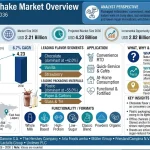
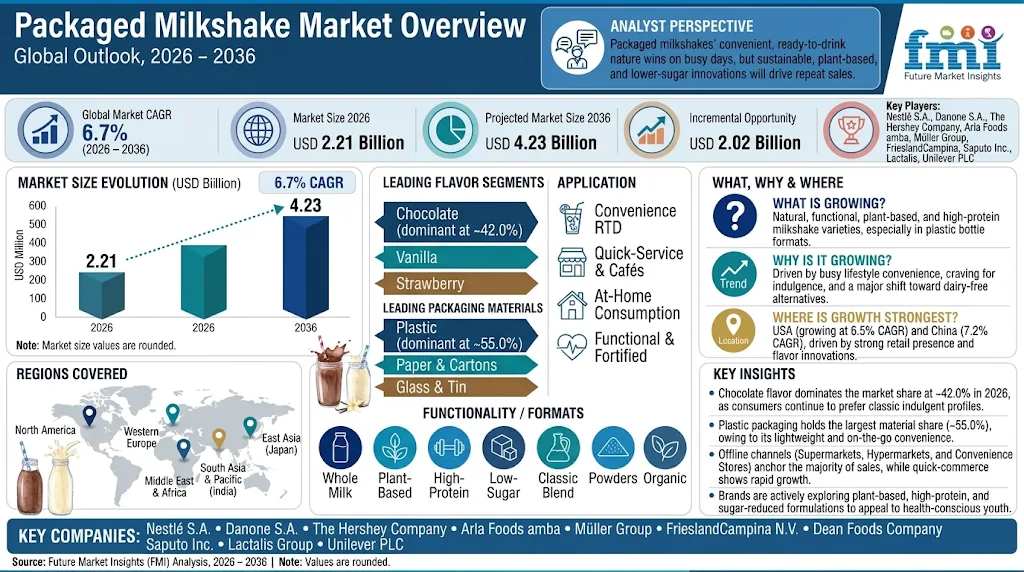
According to the latest market intelligence report published by Future Market Insights (FMI), the global packaged milkshake market is estimated at USD 2.21 billion in 2026 and is projected to reach USD 4.23 billion by 2036, registering a compound annual growth rate (CAGR) of 6.7% during the forecast period. The market was valued at USD 2.07 billion in 2025 and is expected to create an incremental opportunity of approximately USD 2.02 billion between 2026 and 2036.
The expansion reflects evolving consumer preferences, increasing demand for convenient beverage formats and growing opportunities for premium and functionally differentiated milkshake formulations. Manufacturers are focusing on flavor innovation, packaging diversification, cost optimization and multi-channel distribution to strengthen their competitive positioning.
Get Detailed Market Forecasts, Competitive Benchmarking & Industry Insights: Request a Sample Report https://www.futuremarketinsights.com/reports/sample/rep-gb-16618
Market Size & Growth Forecasts
The packaged milkshake market is projected to expand steadily through 2036 as consumer demand for convenient beverages, established flavor preferences and expanding retail accessibility support industry revenues.
- Market Size (2025): USD 2.07 Billion
- Market Size (2026): USD 2.21 Billion
- Forecast Value (2036): USD 4.23 Billion
- CAGR (2026–2036): 6.7%
- Incremental Opportunity: Approximately USD 2.02 Billion
- Leading Flavor Segment: Chocolate
- Leading Packaging Material: Plastic
- Leading Distribution Channel: Supermarkets and Hypermarkets
FMI’s report identifies chocolate as the leading flavor segment, accounting for approximately 42.0% of market revenue in 2026. Plastic packaging maintains a dominant position with a 55.0% share, while supermarkets and hypermarkets represent approximately 46.3% of distribution channel revenue.
Key Market Takeaways
- Market Valuation: The packaged milkshake market is estimated at USD 2.21 billion in 2026.
- Future Opportunity: The market is forecast to reach USD 4.23 billion by 2036.
- Growth Rate: The industry is projected to expand at a 6.7% CAGR from 2026 to 2036.
- Leading Flavor Segment: Chocolate accounts for approximately 42.0% of the flavor segment in 2026.
- Leading Packaging Material: Plastic represents approximately 55.0% of packaging material demand.
- Leading Distribution Channel: Supermarkets and hypermarkets account for approximately 46.3% of distribution channel revenue.
- Fastest-Growing Country: China is projected to record a 7.2% CAGR through 2036.
- United States Growth: The U.S. packaged milkshake market is expected to expand at a 6.5% CAGR through 2036.
What Is Driving Growth in the Packaged Milkshake Market?
- Changing Consumer Dietary Preferences and Beverage Consumption Habits
Changing dietary preferences and increasing interest in convenient beverage alternatives are supporting packaged milkshake consumption. Consumers are exploring different formulations, flavor combinations and product options that align with evolving food and beverage preferences. Manufacturers are responding through product diversification, alternative formulations and differentiated beverage positioning.
- Growing Demand for Premium and Functionally Positioned Products
Premiumization is creating opportunities for packaged milkshake manufacturers to introduce differentiated products with functional ingredients and clean-label formulations. Growing interest in protein content, nutritional benefits and ingredient transparency is encouraging companies to explore value-added formulations. These developments are supporting product differentiation and creating opportunities across premium retail categories.
- Expansion of Multi-Channel Retail Distribution
The expansion of supermarkets, hypermarkets, convenience stores and online grocery platforms is improving packaged milkshake accessibility. Established retail networks continue to support product visibility, while e-commerce and quick-commerce platforms are creating additional opportunities for manufacturers to reach consumers. Strong retail partnerships and multi-channel distribution capabilities are becoming important competitive advantages.
- Innovation in Packaging Materials and Product Formats
Packaging innovation is playing an important role in product differentiation and distribution efficiency. Plastic bottles, HDPE containers, glass bottles and paper cartons provide manufacturers with multiple packaging options. Investments in packaging formats, convenience-oriented designs and product presentation are helping brands address different consumer preferences and retail requirements.
Segment Analysis: Flavor, Packaging Material and Distribution Channel
By Flavor: Chocolate Maintains a Dominant Position
Chocolate accounts for approximately 42.0% of the packaged milkshake flavor segment in 2026. Its leading position reflects established consumer demand and broad product acceptance across major retail markets.
Key flavor categories include:
- Chocolate
- Vanilla
- Strawberry
- Others
Chocolate milkshakes include dark chocolate and milk chocolate formulations, offering opportunities for manufacturers to develop differentiated flavor profiles.
Vanilla milkshakes, including classic vanilla and French vanilla varieties, cater to consumers seeking traditional beverage options.
Strawberry formulations provide additional flavor diversification, while other varieties such as mango, coffee-based and caramel-flavored milkshakes create opportunities for product innovation and premium positioning.
By Packaging Material: Plastic Packaging Leads Market Demand
Plastic packaging represents approximately 55.0% of the packaging material segment in 2026. Its leading position reflects its established role in packaged beverage distribution and the availability of different container formats.
The packaging material segment includes:
- Plastic
- Glass
- Paper
- Tin
Plastic packaging includes PET bottles and HDPE containers, which provide manufacturers with established options for packaged beverage formats.
Glass packaging includes returnable glass bottles and premium glass bottles, offering opportunities for differentiated product presentation.
Paper packaging, including paper cartons and aseptic paper packs, provides additional packaging alternatives, while tin-based formats include aluminum cans and steel tins.
By Distribution Channel: Supermarkets and Hypermarkets Maintain Market Leadership
Supermarkets and hypermarkets account for approximately 46.3% of packaged milkshake distribution channel revenue in 2026. Their leadership reflects extensive retail reach, established beverage distribution networks and opportunities for product visibility and impulse purchases.
Key distribution channels include:
- Supermarkets and Hypermarkets
- Convenience Stores
- Online Retail
- Specialty Stores
Supermarkets and hypermarkets remain important sales channels for packaged milkshake brands through established retail networks and broad product assortments.
Convenience stores provide access to consumers seeking readily available beverage products. Online retail platforms and quick-commerce applications are creating additional opportunities through digital product discovery and convenient purchasing.
Specialty stores, including dairy specialty stores and dessert stores, offer opportunities for differentiated and premium milkshake products.
By Product Type: Ready-to-Drink Formats Support Convenience
The packaged milkshake market includes multiple product formats designed to address different consumer requirements and consumption occasions.
Key product types include:
- Ready-to-Drink Milkshakes
- Powdered Milkshakes
- Frozen Milkshakes
Ready-to-drink milkshakes include UHT milkshakes and chilled milkshakes, providing convenient consumption options.
Powdered milkshakes include instant mix powders and just-add-milk formulations, offering flexibility in preparation and storage.
Frozen milkshakes include ice cream-based and dessert-style formulations, creating opportunities across indulgent beverage and dessert categories.
By End Use: Household Consumption Represents an Important Market Application
Packaged milkshakes serve multiple consumption environments, including household consumption, foodservice and institutional buyers.
Key end-use categories include:
- Household Consumption
- Food Service
- Institutional Buyers
Household consumption includes products purchased for daily consumption and occasional treats.
Foodservice applications include quick-service restaurants, cafes and dessert chains, where packaged milkshake products can complement broader beverage and dessert offerings.
Institutional buyers include schools, colleges and corporate cafeterias, providing additional distribution opportunities.
Regional Growth Outlook
The global packaged milkshake market is benefiting from established beverage consumption patterns, evolving dietary preferences and expanding retail distribution infrastructure.
North America remains an important market, supported by established packaged beverage distribution networks and opportunities for premium and differentiated formulations.
Europe offers opportunities through established dairy product industries, diversified retail channels and increasing consumer interest in alternative and premium beverage formulations.
Asia-Pacific is emerging as an important growth region, supported by urbanization, changing consumer lifestyles, expanding retail infrastructure and increasing demand for convenient beverage products.
China is projected to record the fastest growth among the major country markets covered in FMI’s analysis, while the United States, South Korea and Germany also offer significant market opportunities.
Country-Level Growth Forecasts (2026–2036)
China: China is projected to record a 7.2% CAGR through 2036, making it the fastest-growing country market in FMI’s analysis. Urbanization, rising disposable incomes and increasing awareness of health-conscious dietary preferences are supporting market development. Expanding retail infrastructure and growing interest in diversified beverage formulations are creating additional opportunities for packaged milkshake manufacturers.
United States: The United States packaged milkshake market is expected to expand at a 6.5% CAGR through 2036. Established beverage distribution infrastructure, expanding retail availability and growing interest in convenient nutritional beverage options are supporting market growth. Manufacturers have opportunities to strengthen product portfolios through premium formulations and differentiated flavor offerings.
South Korea: South Korea is projected to register a 6.0% CAGR through 2036. Established retail infrastructure, increasing consumer awareness of health trends and openness to alternative food and beverage formulations are supporting market expansion. Convenience-oriented distribution and product innovation are expected to create additional opportunities.
Germany: Germany is anticipated to record a 5.8% CAGR through 2036. Consumer interest in sustainable products, established retail infrastructure and growing demand for differentiated beverage formulations are supporting market development. Manufacturers are focusing on product quality, alternative formulations and distribution efficiency.
United Kingdom: The United Kingdom packaged milkshake market is projected to grow at a 5.5% CAGR through 2036. Increasing adoption of plant-based dietary preferences, supermarket private-label expansion and demand for convenient beverage options are supporting category development.
Australia: Australia is expected to record a 5.3% CAGR through 2036. Expanding retail distribution and evolving consumer beverage preferences are creating opportunities for packaged milkshake manufacturers.
France: France is projected to register a 5.2% CAGR through 2036. Established food and beverage consumption patterns and demand for differentiated beverage formulations are supporting market opportunities.
New Zealand: New Zealand is expected to expand at a 5.1% CAGR through 2036, supported by opportunities across packaged beverage distribution and diversified product offerings.
Italy: Italy is projected to record a 4.9% CAGR through 2036. Established dairy and beverage consumption patterns and retail availability are supporting market development.
Japan: Japan is expected to register a 4.5% CAGR through 2036. Demand for convenient packaged beverages and diversified product formulations is creating opportunities for manufacturers.
Key Companies in the Packaged Milkshake Market
The competitive landscape includes established dairy manufacturers, global food and beverage companies and diversified consumer product suppliers. Market participants compete through product portfolio development, manufacturing capabilities, distribution partnerships, flavor innovation and differentiated formulations.
Key companies profiled include:
- Nestlé S.A.
- Danone S.A.
- The Hershey Company
- Arla Foods amba
- Müller Group
- FrieslandCampina N.V.
- Dean Foods Company
- Saputo Inc.
- Lactalis Group
- Unilever PLC
These companies participate across different areas of the packaged milkshake industry, including dairy-based beverages, flavored milk products and diversified packaged beverage portfolios.
Nestlé S.A. maintains a leading competitive position through integrated manufacturing capabilities and established distribution relationships.
Danone S.A. and The Hershey Company compete through diversified product portfolios and established market presence.
Arla Foods amba, Müller Group and FrieslandCampina N.V. leverage their dairy industry capabilities and established distribution networks.
Saputo Inc., Lactalis Group and Unilever PLC contribute to the competitive landscape through differentiated product offerings and broader food and beverage operations.
Growth Opportunities and Industry Challenges
Opportunities
- Premium Product Development: Growing consumer interest in premium formulations creates opportunities for differentiated packaged milkshake portfolios.
- Functional Ingredient Innovation: Protein content, functional ingredients and clean-label formulations can support product differentiation.
- Flavor Diversification: Chocolate, vanilla, strawberry, coffee and caramel-based formulations provide opportunities for new product development.
- Alternative Formulations: Increasing interest in plant-based and health-conscious dietary preferences creates opportunities for diversified beverage formulations.
- Multi-Channel Distribution: Expansion of online grocery, convenience stores and quick-commerce platforms can improve product accessibility.
- Packaging Innovation: PET bottles, HDPE containers, paper cartons and premium glass formats offer opportunities to address different packaging requirements.
- Emerging Market Expansion: Rising urbanization and retail infrastructure development in markets such as China and South Korea create opportunities for international manufacturers.
Challenges
- Raw Material Cost Volatility: Fluctuations in agricultural and dairy input prices can affect production expenses and profitability.
- Price Sensitivity: Consumers in value-conscious market segments may prioritize affordability, placing pressure on manufacturers’ margins.
- Competitive Pressure: Established global brands, regional manufacturers and private-label products compete for retail visibility and market share.
- Product Differentiation: Manufacturers must continuously innovate to maintain consumer interest and strengthen brand positioning.
- Distribution Complexity: Maintaining efficient distribution across supermarkets, convenience stores and online channels requires strong supply-chain capabilities.
- Regulatory Requirements: Compliance with food safety, nutritional labeling and product quality requirements adds operational complexity.
Recent Developments and Competitive Strategies in the Packaged Milkshake Market
FMI’s competitive analysis highlights product portfolio diversification, distribution expansion, premiumization and functional positioning as important strategic priorities for market participants.
- Product Portfolio Diversification: Leading companies are focusing on differentiated product formulations and expanding beverage portfolios to address changing consumer preferences.
- Premiumization Initiatives: Manufacturers are exploring premium product positioning, clean-label formulations and functional ingredients to strengthen product differentiation.
- Distribution Expansion: Companies are strengthening relationships with retail networks and exploring online grocery and convenience store channels.
- Manufacturing and Cost Optimization: Established players are prioritizing operational efficiency, procurement management and supply-chain capabilities to improve competitiveness.
Explore the Full Packaged Milkshake Market Report: https://www.futuremarketinsights.com/reports/packaged-milkshake-market
Related Food & Beverage Industry Reports
About Future Market Insights (FMI)
Future Market Insights (FMI) is a market research and consulting organization providing industry intelligence, market forecasts and strategic insights to businesses across global markets. FMI’s research supports manufacturers, investors, suppliers and decision-makers in evaluating market opportunities, understanding competitive environments and developing informed business strategies.
Media Contact
Rahul Singh
AVP – Marketing and Growth Strategy
Future Market Insights (FMI)
Phone: +91 8600020075
Sales: sales@futuremarketinsights.com
Media: Rahul.singh@futuremarketinsights.com
Website: https://www.futuremarketinsights.com