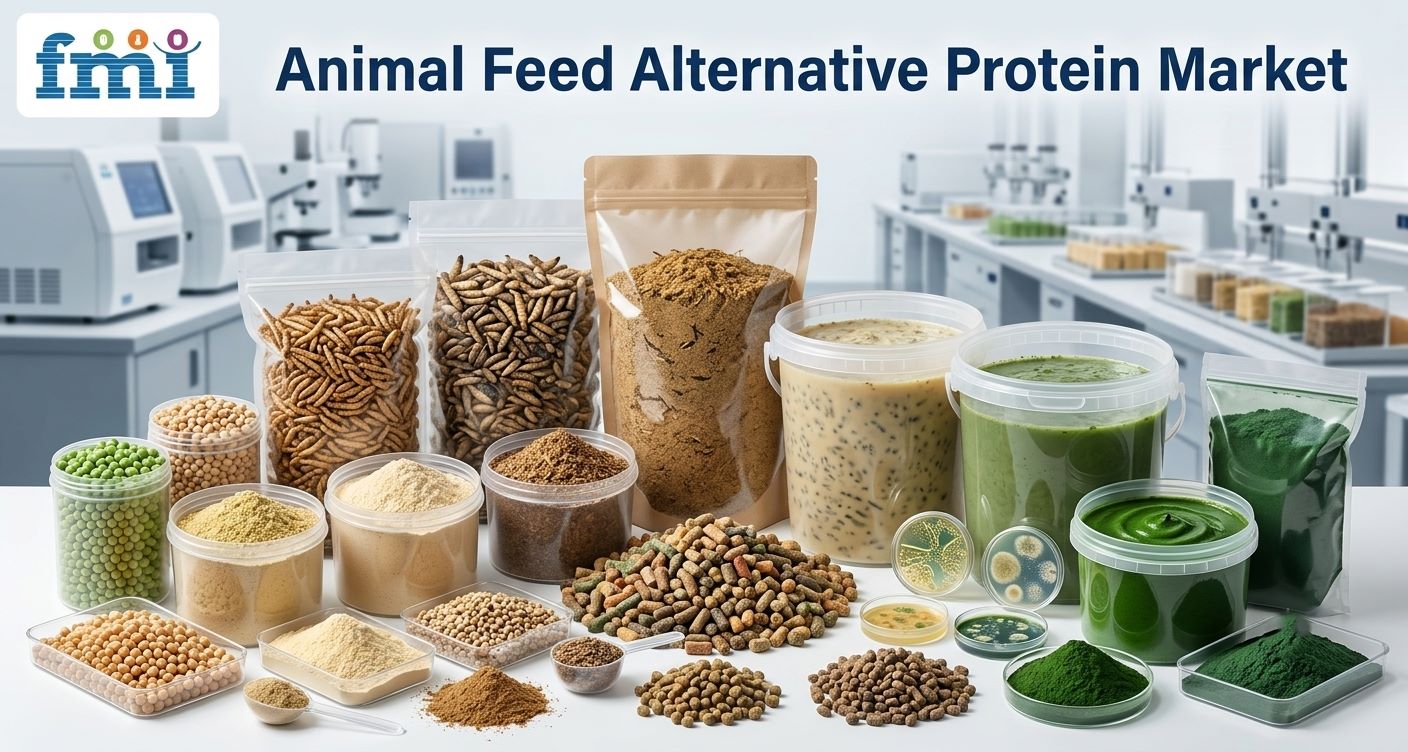
The animal feed alternative protein market is gaining momentum as feed manufacturers increasingly explore sustainable, cost-effective, and nutritionally effective alternatives to conventional protein ingredients. Insect-based, single-cell, and plant-based proteins are attracting attention for their potential to support livestock performance, improve gut health, reduce dependence on conventional protein sources, and address environmental concerns across animal nutrition.
The market is valued at USD 11.6 billion in 2025 and is expected to reach USD 18.1 billion by 2035, growing at a compound annual growth rate (CAGR) of 4.5% from 2025 to 2035. Plant-based proteins are projected to account for 35% of the market in 2025, while poultry is expected to represent 31% of livestock demand. Growing interest in alternative feed ingredients, supply-chain diversification, and sustainable animal nutrition is supporting market development.
Market Outlook
The animal feed alternative protein market is entering a more commercially focused phase as manufacturers evaluate alternative ingredients based on nutritional performance, production costs, regulatory compliance, and supply reliability. While plant-based proteins continue to lead due to established sourcing and processing infrastructure, insect-based and single-cell proteins are creating new opportunities across aquaculture, poultry, pet food, and specialty animal nutrition.
Insect Protein Creates New Opportunities in Animal Nutrition
Insect protein is attracting growing attention as an alternative to conventional feed ingredients such as soymeal and fishmeal. Black soldier fly larvae, mealworms, and other insect sources offer opportunities to convert selected organic by-products into protein meal and oil, supporting resource efficiency and circular-economy initiatives.
Manufacturers are exploring insect-based ingredients for their potential nutritional and functional benefits, including digestibility, palatability, and gut health support. Aquaculture, poultry, and pet food represent promising applications where alternative protein ingredients can address specific nutritional requirements and sustainability objectives.
Price Competitiveness Shapes Market Adoption
Cost remains one of the most significant factors influencing the adoption of alternative protein ingredients. Feed manufacturers operate in a price-sensitive environment where ingredient selection depends on digestible protein value, amino acid composition, feed conversion performance, and overall formulation economics.
Insect protein currently faces pricing challenges compared with established ingredients such as soymeal, fishmeal, and oilseed meals. Consequently, its adoption is expected to gain traction first in premium aquafeed, specialty poultry nutrition, young animal feed, and pet food applications, where functional benefits and differentiated product positioning can justify higher ingredient costs.
Regulatory Approval and Feed Safety Influence Market Expansion
Regulatory approval is another important factor shaping the development of the animal feed alternative protein market. Feed ingredients must meet safety, quality, and nutritional requirements before being introduced into specific animal feed applications.
Insect protein producers must demonstrate compliance with requirements concerning production substrates, processing methods, microbial controls, contaminant levels, and ingredient specifications. Regulatory conditions can also differ across geographical markets and animal categories, creating varying adoption opportunities for aquaculture, poultry, swine, and pet food applications.
Processing Capacity and Supply Consistency Drive Commercial Scale-Up
Commercial-scale processing capacity is essential for expanding the availability of alternative protein ingredients. Insect protein production involves multiple stages, including breeding, rearing, harvesting, drying, defatting, milling, packaging, and quality testing.
Manufacturers must maintain consistent nutritional specifications, microbial safety, shelf life, and ingredient quality to meet the requirements of commercial feed producers. Limited processing infrastructure and high capital requirements can restrict production volumes and affect supply reliability.
Aquaculture, Poultry, and Pet Food Create Growth Opportunities
Aquaculture is emerging as an important application area for alternative proteins, particularly as feed manufacturers explore alternatives to conventional fishmeal. Insect-based ingredients offer potential opportunities in aquafeed formulations where nutritional performance and sustainable sourcing are increasingly important.
Pet food is another promising segment because manufacturers can use novel protein ingredients to develop differentiated nutrition products and premium formulations. Insect protein may support product positioning around alternative sourcing, ingredient diversity, and sustainability.
Blended Protein Formulations Strengthen Market Potential
Alternative proteins are increasingly being considered as complementary ingredients rather than complete replacements for conventional feed proteins. Plant-based proteins continue to provide an established supply base, while insect-based and single-cell proteins offer additional formulation possibilities.
Feed manufacturers can combine different protein sources based on amino acid profiles, digestibility, energy requirements, palatability, and cost considerations. Such blended formulations allow companies to introduce alternative ingredients at targeted inclusion levels while maintaining nutritional performance and managing formulation expenses.
Market Challenges
The market faces challenges related to production costs, regulatory restrictions, processing infrastructure, and supply-chain consistency. Insect protein producers must demonstrate economic viability while maintaining reliable nutritional specifications and meeting feed safety requirements.
Competition from established plant-based proteins, single-cell proteins, algae-based ingredients, and conventional protein meals may also influence market expansion.
Future Outlook
The animal feed alternative protein market is positioned for continued growth through 2035 as feed manufacturers increasingly prioritize protein diversification, nutritional efficiency, and sustainable sourcing. Plant-based proteins are expected to maintain their established position, while insect-based and single-cell proteins create additional opportunities across aquaculture, poultry, pet food, and specialty animal nutrition.
The commercial success of insect protein will depend on improvements in production economics, regulatory approvals, processing capacity, and nutritional consistency. Manufacturers that combine cost-effective production with reliable supply chains and scientifically supported performance benefits can strengthen their competitive positioning.
FMI Custom Research: Strategic Intelligence for Confident Decision-Making
In today’s rapidly evolving business environment, leadership teams need more than market data—they need clear, actionable intelligence tailored to their strategic objectives. FMI’s Custom Research solutions are designed around the specific business questions organizations need answered, enabling executives to evaluate growth opportunities, validate investments, assess competitive dynamics, and reduce uncertainty before making critical decisions. By combining deep industry expertise, primary research, and proprietary market intelligence, FMI delivers insights that help organizations move from assumptions to evidence-based strategies with greater speed and confidence.
Key Executive Benefits
- Decision-Ready Insights: Research tailored to your specific business challenges, growth plans, and investment priorities.
- Reduced Strategic Risk: Validate market opportunities, customer demand, and competitive positioning before committing resources.
- Market Entry Confidence: Assess opportunity size, regulatory barriers, channel dynamics, and competitive landscapes with precision.
- Competitive Advantage: Gain proprietary intelligence unavailable through syndicated reports or internal datasets.
- Faster Growth Decisions: Accelerate expansion, product development, portfolio optimization, and investment planning.
- Primary Market Validation: Access real-world customer, buyer, and stakeholder insights that support high-confidence decision-making.
- Global Industry Expertise: Powered by 100+ analysts, 20,000+ published reports, and 1.6 million+ hours of research experience.
- Proven Track Record: Over 7,000 market-entry engagements completed across six regions and 14 industry sectors with strong client retention.
Business Impact
FMI helps organizations transform market complexity into strategic clarity, enabling leadership teams to identify growth opportunities faster, optimize resource allocation, strengthen competitive positioning, and make high-stakes business decisions with confidence.
To explore how FMI Custom Research can support your strategic priorities, please connect with our team at – sales@futuremarketinsights.com
About Future Market Insights (FMI)
Future Market Insights is a leading provider of market intelligence, consulting services, and syndicated research reports. FMI delivers actionable insights across food and beverage, healthcare, consumer goods, biotechnology, chemicals, industrial products, and emerging technologies, helping organizations identify growth opportunities and make informed strategic decisions in evolving global markets.
Contact Us:
Future Market Insights Inc.
Christiana Corporate, 200 Continental Drive,
Suite 401, Newark, Delaware – 19713, USA
T: +1-347-918-3531
Why FMI: https://www.futuremarketinsights.com/why-fmi
For Sales Enquiries: sales@futuremarketinsights.com
Website: https://www.futuremarketinsights.com