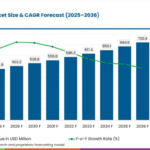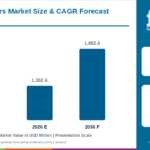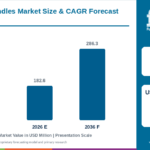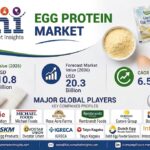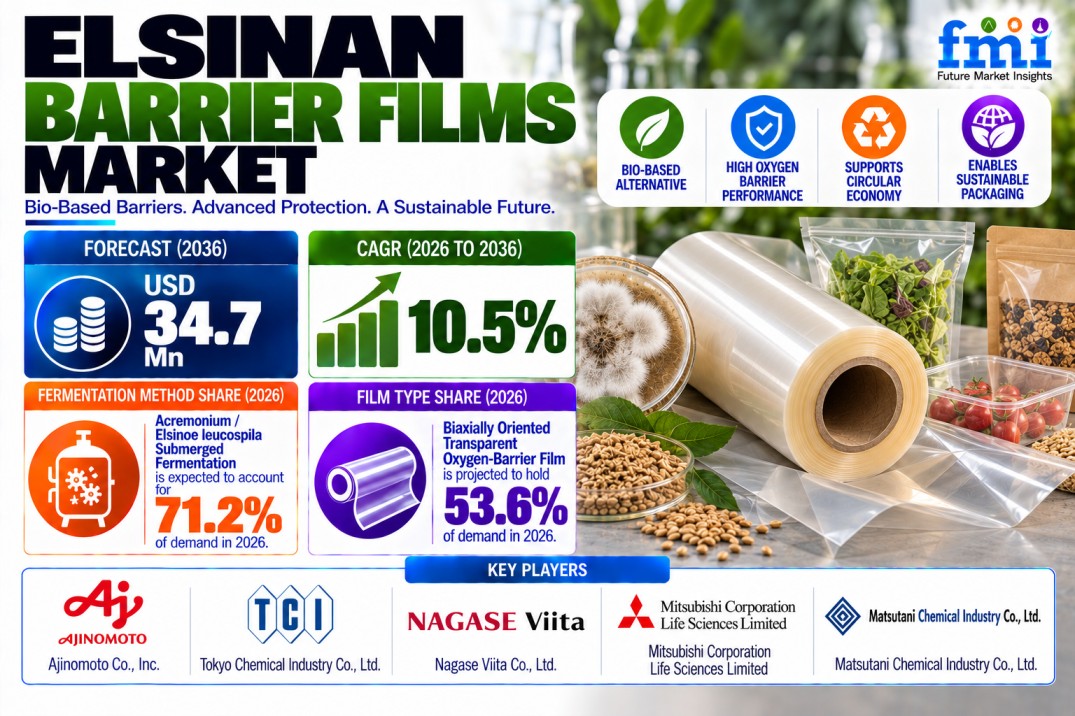
The global Elsinan Barrier Films Market is projected to increase from US$12.8 million in 2026 to US$34.7 million by 2036, registering a compound annual growth rate (CAGR) of 10.5% over the forecast period, according to Future Market Insights (FMI). The market was valued at US$11.6 million in 2025. The forecast represents an increase of US$21.9 million in annual market value between 2026 and 2036.
Demand is being supported by interest in fungal alpha-glucan materials for oxygen-sensitive food, seasoning sachet, coffee, and nutraceutical packaging. These applications require barrier performance to protect product quality while addressing concerns about conventional multilayer packaging and the recyclability of mixed-material structures.
Elsinan Barrier Films Market: Key Forecast Highlights
- Market size in 2026: US$12.8 million
- Forecast market size by 2036: US$34.7 million
- CAGR (2026–2036): 10.5%
- Market size in 2025: US$11.6 million
- Leading fermentation strain segment: Acremonium / Elsinoe leucospila submerged fermentation, projected at 71.2% in 2026
- Leading film casting format: Biaxially oriented transparent oxygen-barrier film, estimated at 53.6% in 2026
- Leading end-use application: Oily snack, coffee, and dehydrated soup pouches, projected at 48.4% in 2026
- Fastest-growing profiled country: South Korea, with a projected 11.8% CAGR through 2036
>> Get Detailed Market Forecasts, Competitive Benchmarking, and Pricing Trends: https://www.futuremarketinsights.com/reports/sample/rep-gb-35979
What Is Driving the Elsinan Barrier Films Market?
Food manufacturers and packaging converters need materials that limit oxygen exposure and help protect products containing oils, aromas, and oxidation-sensitive ingredients. FMI identifies instant-noodle seasoning sachets, roasted-coffee packaging, oily snack pouches, and nutraceutical overwraps as important potential applications for elsinan barrier films.
Fungal alpha-glucan materials are attracting attention because they can combine oxygen-barrier properties with controlled dissolution in hot water. This combination may support packaging concepts such as seasoning sachets designed to dissolve during food preparation, as well as barrier layers for dry-food products.
The shift toward alternative packaging materials is another growth driver. Conventional multilayer laminates can be difficult to recycle when their components cannot be separated efficiently. Elsinan-based materials offer converters a potential route to redesign selected packaging formats, provided the finished structure meets performance, food-contact, and applicable certification requirements.
However, adoption is not without challenges. FMI identifies fermentation-broth viscosity, melanin removal, and purification costs as important constraints. Film producers must balance barrier performance, clarity, machinability, and price before these materials can compete in more cost-sensitive applications.
Leading Segments and Technology Trends
By fungal fermentation strain, Acremonium / Elsinoe leucospila submerged fermentation is projected to account for 71.2% of the segment in 2026. FMI attributes this position to established cultivation approaches using hydrolyzed starch syrups and the recovery of extracellular alpha-glucans.
Biaxially oriented transparent oxygen-barrier film is estimated to represent 53.6% of the film casting format segment in 2026. Biaxial orientation can support mechanical performance and barrier-film applications, while compatibility with existing converting equipment remains important for commercial adoption.
Oily snack, coffee, and dehydrated soup pouches are projected to account for 48.4% of end-use packaging application demand in 2026. These applications require protection against oxygen ingress to preserve oils, flavors, and product quality.
FMI also projects that ultra-high oxygen-barrier grades, defined in the report as below 1.0 cc/m²·day, will account for 55.8% of the oxygen-barrier grade segment in 2026. High-speed rotary roll-fed HFFS and VFFS webs are forecast to represent 61.5% of the converting equipment format segment, reflecting the importance of integration with automated packaging lines.
Food-contact GRAS and Novel Food Certified Edible Grade products are expected to account for 68.0% of the regulatory and compostability certification segment in 2026.
Regional Opportunities: South Korea Leads Growth Forecasts
FMI’s country-level outlook identifies Asian markets as important growth opportunities for elsinan barrier films, particularly where instant-food packaging, fermentation capabilities, and nutraceutical manufacturing support demand.
- South Korea: Projected CAGR of 11.8% from 2026 to 2036, driven by edible seasoning sachet conversion and supplement packaging applications.
- Singapore: Projected CAGR of 11.4%, supported by precision fermentation and pharmaceutical and nutraceutical packaging demand.
- Thailand: Projected CAGR of 11.2%, with cassava-based fermentation feedstocks and export-oriented food packaging among the identified growth factors.
- United States: Projected CAGR of 10.3%, supported by opportunities in specialty coffee, oily snack packaging, and nutraceuticals.
- Japan: Projected CAGR of 10.1%, reflecting fermentation expertise and food-packaging research.
- France: Projected CAGR of 9.8%, with packaging sustainability initiatives and pharmaceutical applications contributing to the outlook.
For manufacturers, these forecasts can help prioritize commercial development, technical partnerships, and customer qualification efforts. Investment decisions should also account for local regulations, feedstock availability, production costs, and the maturity of the target packaging applications.
Top Players in the Elsinan Barrier Films Market
FMI identifies the following notable companies in the market:
- Nagase Viita Co., Ltd.
- Mitsubishi Corporation Life Sciences Limited
- Matsutani Chemical Industry Co., Ltd.
- Nissin Foods Holdings
- Ajinomoto Co., Inc.
- Tokyo Chemical Industry Co., Ltd.
The competitive landscape includes fungal polysaccharide and ingredient suppliers, food companies developing packaging applications, and specialty chemical businesses supplying high-purity materials and analytical standards. The report does not establish a ranked list of these companies by market share.
Commercial opportunities will depend on the ability to scale fermentation, control pigmentation and purification, supply consistent film quality, and demonstrate compatibility with customers’ converting processes. Food and supplement brands will also need to validate barrier performance, shelf life, and relevant food-contact or certification requirements before moving from pilot trials to large-scale use.
>> Access Detailed Market Insights: https://www.futuremarketinsights.com/reports/elsinan-barrier-films-market
Strategic Implications for Packaging Decision-Makers
Three priorities stand out for businesses assessing this emerging market.
First, validate performance in the intended application. Oxygen transmission, moisture sensitivity, heat-sealing performance, and dissolution behavior should be tested under actual storage and processing conditions.
Second, evaluate production economics early. Fermentation yields, decolorization, purification, and rollstock conversion costs can influence whether a material is commercially viable beyond premium or specialized applications.
Third, prioritize partnerships and targeted markets. Collaboration between material producers, packaging converters, and food or nutraceutical brands can help qualify new formats. South Korea, Singapore, and Thailand offer comparatively high projected growth rates in FMI’s country forecasts, while the United States, Japan, and France provide additional application opportunities.
Commenting on the material’s potential, Nandini Roy Choudhury, Principal Consultant at Future Market Insights, said: “Elsinan bridges a critical performance gap between water-sensitive pullulan and non-edible synthetic ethylene vinyl alcohol films by combining ultra-low oxygen permeability with controlled hot-water dissolution. Fungal polysaccharide producers that breed melanin-free high-yield strains and supply pre-plasticized rollstock for rotary form-fill-seal machines will capture durable contracts across East Asia ramen sachet and Western nutraceutical packagers.”
MEDIA CONTACT
Contact Person: Media Relations Team
Designation: Corporate Communications
Email: sales@futuremarketinsights.com
Phone: +1-347-918-3531
Website: https://www.futuremarketinsights.com/
ABOUT FUTURE MARKET INSIGHTS
Future Market Insights, Inc. (FMI) is an ESOMAR-certified market research and consulting firm headquartered in Delaware, USA, with offices in the United Kingdom, the United Arab Emirates, and India. FMI delivers syndicated and custom research across food and beverage, healthcare, chemicals, technology, packaging, consumer goods, and industrial sectors. Its research helps organizations assess market opportunities, understand industry developments, and make informed strategic decisions.