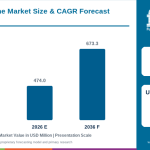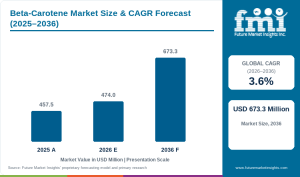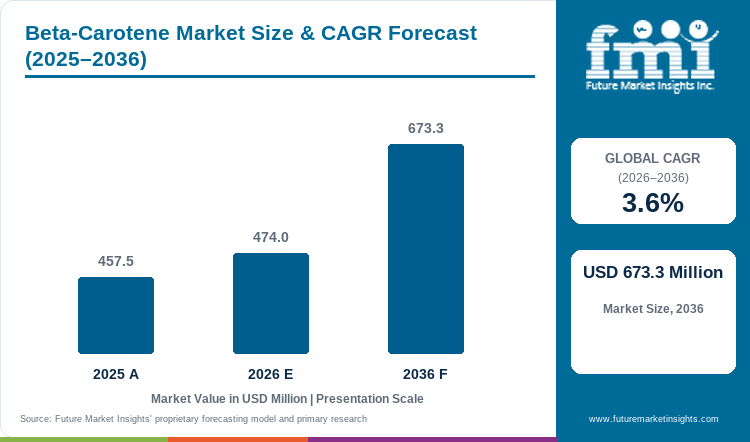
NEWARK, Del., October 14, 2026 — The global Beta-Carotene Market is gaining traction as food manufacturers increasingly use beta-carotene for yellow-orange coloration and provitamin A functionality. Growing interest in food reformulation, nutritional fortification, and ingredient performance is supporting demand across food and beverage, cosmetics, pharmaceutical, animal feed, and dietary supplement applications. According to the latest market intelligence report published by Future Market Insights (FMI), the market is estimated at USD 474.0 million in 2026 and is projected to reach USD 673.3 million by 2036. The industry is anticipated to expand at a compound annual growth rate (CAGR) of 3.6% over the forecast period.
Beta-Carotene Market Key Market Takeaways
- Market Valuation: USD 474.0 million in 2026, rising to USD 673.3 million by 2036.
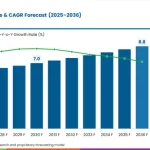
- Growth Rate: Expanding at a 3.6% CAGR from 2026 to 2036.
- Leading End-Use Segment: Food is projected to account for 32.0% of the market in 2026.
- Leading Source Segment: Synthetic beta-carotene is expected to represent 58.0% of the market in 2026.
- Fastest-Growing Country: Germany is projected to lead the profiled country markets with a 5.0% CAGR.
- Core Growth Drivers: Demand for multifunctional food ingredients, nutritional fortification, color reformulation, consistent product specifications, and improved delivery systems that support ingredient stability.
👉 Get Detailed Market Forecasts, Competitive Benchmarking & Industry Insights: https://www.futuremarketinsights.com/reports/sample/rep-gb-905
Industry Shifts & Market Dynamics
The beta-carotene market is evolving as food manufacturers and ingredient suppliers respond to demand for colorants that also offer nutritional functionality. Beta-carotene provides yellow-to-orange coloration and serves as a provitamin A ingredient, making it useful in a range of commercial formulations. Its applications extend across food and beverages, cosmetics, pharmaceuticals, poultry and pet feed, aquaculture feed, and dietary supplements.
Food remains an important application area because manufacturers use beta-carotene in products that require consistent color, nutritional fortification, and reliable processing performance. Beverage producers may select emulsified or water-dispersible formats to improve dispersion, while dry-mix manufacturers can use powders or beadlets for controlled incorporation. The choice of formulation depends on processing conditions, product characteristics, and shelf-life requirements.
Source selection is another important factor shaping market competition. Synthetic beta-carotene remains commercially significant because controlled production can support consistent specifications, predictable supply, and repeatable performance. Natural-source alternatives derived from fruits, vegetables, algae, and fungi provide additional options for manufacturers seeking particular ingredient origins or product positioning.
However, beta-carotene is sensitive to environmental and processing conditions, including light, heat, and oxygen exposure. These factors can affect stability and increase the need for appropriate carriers, protective packaging, and application-specific testing. Manufacturers must also comply with applicable food-additive and labeling requirements in their target markets.
As companies seek to improve ingredient performance and formulation efficiency, suppliers that combine reliable product specifications, suitable delivery formats, technical support, and regulatory documentation are positioned to strengthen their market presence.
Key Players Influencing the Beta-Carotene Market: dsm-firmenich, BASF, Allied Biotech Corporation, Divi’s Laboratories Limited, Fenchem Biotek, Lycored, Oterra, Sensient Technologies Corporation, Camlin Fine Sciences Limited, and San-Ei Gen F.F.I., Inc.
Recent Developments in the Beta-Carotene Market
- In November 2025, Lycored introduced its VAS microencapsulated starch beadlet platform, with beta-carotene among the available active ingredients. The platform supports formulation development across several finished-product formats, including tablets, gummies, powdered beverages, and capsules.
- In 2025, ingredient suppliers continued to develop specialized delivery formats and application solutions intended to improve the incorporation, stability, and performance of carotenoid ingredients in commercial formulations.
- During 2025–2026, food manufacturers increasingly evaluated alternative coloring ingredients as color-reformulation initiatives gained attention. These developments highlighted the importance of matching color performance, processing stability, and applicable regulatory requirements when selecting beta-carotene.
Regional Market Summary
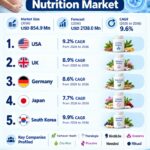
According to Future Market Insights, country-level growth varies with regulatory frameworks, formulation requirements, and the pace at which manufacturers qualify ingredients for commercial use. Germany is projected to record the highest CAGR among the profiled countries, followed by the United States and Japan. The United Kingdom and South Korea are also included in the report’s country-level assessment.
- Germany: The beta-carotene market is projected to grow at a CAGR of 5.0% from 2026 to 2036. Food-additive compliance, ingredient documentation, and application-specific qualification are important considerations for manufacturers.
- United States: The market is forecast to expand at a CAGR of 4.0% during the assessment period. Food-color reformulation initiatives and interest in ingredients that combine coloration with nutritional functionality support market opportunities.
- Japan: The market is projected to register a CAGR of 4.0% through 2036. Food-additive standards, analytical specifications, and quality documentation remain important factors in ingredient selection.
- United Kingdom: The beta-carotene market is anticipated to grow at a CAGR of 3.0% from 2026 to 2036. Demand is influenced by food-color requirements, formulation performance, and the need to meet applicable regulatory standards.
- South Korea: The market is expected to record a CAGR of 3.0% over the forecast period. Functional food and dietary supplement applications require attention to ingredient specifications, permitted uses, and labeling requirements.
Analyst Insights
“Beta-carotene earns repeat business through proven stability under the buyer’s processing and storage conditions. Source positioning carries commercial weight with matching technical performance and local regulatory documentation for the same product brief,” stated Nandini Roy Choudhury, Principal Consultant at Future Market Insights.
The market outlook reflects the importance of consistent ingredient quality, formulation compatibility, and technical validation. As manufacturers evaluate synthetic and natural-source options, suppliers that demonstrate reliable performance under actual processing and storage conditions can strengthen their position in commercial procurement programs.
Frequently Asked Questions
Q: What is the projected size of the beta-carotene market by 2036?
A: The global beta-carotene market is estimated at USD 474.0 million in 2026 and is projected to reach USD 673.3 million by 2036, growing at a CAGR of 3.6%.
Q: Which segment holds the leading market share?
A: Food is the leading end-use segment, accounting for an estimated 32.0% of the market in 2026. Synthetic beta-carotene is the leading source category, with a projected share of 58.0%.
Q: Which country is projected to record the highest growth rate?
A: Germany is projected to record the highest CAGR among the profiled countries at 5.0% from 2026 to 2036. The United States and Japan are each forecast to grow at 4.0%.
Q: What are the major applications of beta-carotene?
A: Major applications include food and beverages, cosmetics, pharmaceuticals, poultry and pet feed, aquaculture feed, and dietary supplements.
Q: What factors are driving the beta-carotene market?
A: Market growth is supported by demand for food coloring, provitamin A functionality, nutritional fortification, reformulation initiatives, and ingredient delivery systems designed to improve dispersion and stability.
Q: What challenges affect beta-carotene adoption?
A: Sensitivity to light, heat, and oxygen can complicate processing and storage. Manufacturers must select suitable delivery formats, validate shelf-life performance, and comply with applicable ingredient and labeling regulations.
👉 Related Food & Nutrition Future Market Insights Industry Reports
Phytonutrients Market: https://www.futuremarketinsights.com/reports/phytonutrients-market
Carotenoids Market: https://www.futuremarketinsights.com/reports/carotenoids-market
Antioxidants Market: https://www.futuremarketinsights.com/reports/antioxidants-market
Food Fortification Market: https://www.futuremarketinsights.com/reports/food-fortification-market
About Future Market Insights
Future Market Insights (FMI) is an ESOMAR-certified market research and consulting firm providing syndicated, customized, investment, and social media research across industries, including food and beverage, healthcare, chemicals, and technology. FMI delivers market intelligence, competitive analysis, and strategic insights to help organizations evaluate emerging opportunities and make informed business decisions. The company has offices in the United States, the United Kingdom, the UAE, and India.
Media Contact
For Press & Corporate Inquiries
Rahul Singh
AVP – Marketing and Growth Strategy
Future Market Insights, Inc.
Phone: +91 8600020075
For Sales: sales@futuremarketinsights.com
For Media: Rahul.singh@futuremarketinsights.com
Website: https://www.futuremarketinsights.com/