

The global sports nutrition market is undergoing a structural expansion, transitioning from a niche category tailored to elite athletes into an integrated wellness ecosystem. Driven by widening consumer participation across everyday fitness segments, sports nutrition is no longer structured around a single price ladder. Instead, it operates as a format-led marketplace where product valuation, margins, and repeat-use behaviors are governed explicitly by packaging physics and cost-per-serving dynamics.
While traditional powder formulations maintain an iron grip on the market’s volume center of gravity, specialized alternative formats like Ready-to-Drink (RTD) liquids, nutrition bars, gels, and functional snacks are aggressively locking down high-margin premium spaces. These products command their pricing power not simply through branding, but by charging for the systematic removal of preparation friction.
Featured Snippet: Key Market Answer
Q: Why do powder formats maintain volume dominance in sports nutrition, and how do alternative convenience formats justify premium pricing?
A: Powder dominates because it aligns with the strict baseline economics of macro-nutrient delivery—stripping out water weight to optimize shipping costs while providing consumers with the lowest cost-per-serving and maximum dosing flexibility. Convenience formats like RTDs, bars, and functional gels protect premium pricing by shifting the purchase criteria from price-per-ounce to immediate utility. They absorb high processing, temperature-stabilization, and specialized packaging overheads to offer targeted, on-the-go nutrition that requires zero user preparation or cleanup.
Quick Stats of the Sports Nutrition Market
- Core Growth Theme: Precision Lifestyle Nutrition and Frictionless Performance Delivery
- Dominant Product Type: Protein Supplements (accounting for 46.0% of total market value)
- Primary Product Form: Powder (commanding a 52.0% volume share)
- Key Consumer Application: Muscle building, strength training, and immediate post-workout recovery
- Crucial Logistical Variable: Net product density (freight cost of shipping active payload vs. inactive water weight)
Market Overview: Formats Dictate the Margin Structure
The sports nutrition sector has evolved into a highly specialized matrix spanning protein isolates, amino acids, performance enhancers, and hydration blends. Each format operates under entirely distinct production realities, cost-to-serve economics, and shelf-space dynamics.
As mainstream consumers enter the active lifestyle space, procurement logic has shifted. Mainstream fitness participants calculate precise cost-per-utility metrics, balancing shelf price against lifestyle compatibility. This systemic maturation forces sports nutrition manufacturers to match their raw material architectures with highly specific use-cases such as mid-commute refueling, office snacking, or targeted pre-workout stimulation.
Key Growth Drivers Across Formats
Broadening Consumer Base & Lifestyle Conversion
The transition of sports supplements into everyday wellness routines has structurally expanded the total addressable market. Everyday consumers increasingly adopt performance nutrition principles such as regular protein intake for weight management and muscle upkeep previously reserved for professional ranks.
Precision Around Use Occasions
Market expansion is directly tied to targeted lifestyle and species-specific training windows. Heavy five-pound powder tubs serve as the cost-efficient value anchor for early morning home routines, whereas single-serve RTD liquids, gels, and sports foods target immediate intra-workout hydration or urgent office meal bridges.
The Trade-off of Preparation Friction
While core gym enthusiasts historically accepted the preparation friction of powders measuring scoops, handling clumps, and cleaning shaker bottles mainstream active lifestyle consumers willingly absorb higher unit costs. Bypassing manufacturing preparation steps and post-consumption cleanups completely outweighs the initial premium price of pre-mixed formats.
Strategic Channel Alignment
Ingredient physics and product stability heavily dictate commercial distribution pathways. High-density dry powders thrive across e-commerce networks and large-scale mass retail chains due to their exceptional cargo density and long shelf life. Conversely, sensitive functional RTDs and texture-dependent snacks require specialized regional brick-and-mortar retail slots, local gym placements, and convenience store networks to catch spontaneous impulse buyers.
Technical & Ingredient Economics Balancing Act
Raw material choices heavily dictate baseline profitability and manufacturing stability across different formulation lines:
- The Formulation Matrix: Active ingredients like whey isolates, creatine monohydrate, caffeine, and branch-chain amino acids (BCAAs) carry variable cost-in-use profiles. Products promising a robust 25 grams of protein per serving carry a completely different cost base and strict flavor-masking overhead compared to lifestyle sports snacks with modest protein fortification.
- The Plant-Based Formulation Tax: Navigating alternative protein networks like soy, pea, and rice isolates allows brands to capture vegan and allergen-conscious consumer segments. However, botanical variants introduce severe processing hurdles, often presenting bitter off-notes, high grittiness, and a chalky mouthfeel that require advanced, expensive texturizing agents and complex flavor-masking systems to remain palatable.
- Stability and Processing in Liquids and Snacks: Manufacturing ready-to-drink fluids and baked sports bars demands absolute mastery over physical and sensory stability. Delicate amino acids and milk proteins face severe degradation risks under standard high-heat pasteurization and baking profiles, forcing heavy commercial investment into cold-chain operations, aseptic packaging lines, or advanced, temperature-stable raw materials.
Segment Deep Dive: Powder vs. Alternative Formats
Multi-Serve Powders: The Value Anchor
Standard bulk tubs and bag configurations maintain total volume leadership. From a logistics standpoint, dry powders strip out inactive liquid weight, maximize ingredient payload per square inch of cargo space, and guarantee long-term stability without refrigeration. For routine fitness consumers, the powder format remains the undisputed cost engine for baseline daily ration construction.
RTDs & Functional Liquids: The Premium Challenger
Ready-to-Drink beverages represent the high-margin frontier for sports nutrition brands. By removing all mixing friction, these liquids command premium shelf placements at gyms and convenience checkout lines. However, operating a liquid distribution network demands precision aseptic processing infrastructure, durable packaging structures, and high retail slotting fees while absorbing the freight penalty of shipping heavy water weight.
Bars, Gels, and Edible Snacks: The Portability Play
Specialized protein bars, energy gels, and functional snacks compete directly for pocket-share in active lifestyle nutrition. Commercial victory in this segment depends heavily on structural formulation design preventing bars from drying out or turning medicinal over time while delivering a rich texture and optimized macronutrient profile that matches confectionery flavor expectations.
Regional Market Dynamics
North America
North America maintains structural market scale and leadership, backed by an extensive network of commercial fitness centers, high per capita spending on wellness supplements, and advanced domestic dairy infrastructure that guarantees a steady throughput of raw whey components.
Europe
The European marketplace is heavily steered by rigorous regulatory oversight regarding health claims, clean-label compliance, and strict environmental tracking. Brands operating here focus intensively on sugar reduction, sustainable alternative proteins, and fully transparent, traceable supply chains.
Asia-Pacific
Asia-Pacific represents the fastest-growing geographical region. Driven by rapid urban sports modernization initiatives and an surging youth demographic entering fitness spaces in powerhouse growth markets like China and India, the region is scaling up volume demand for high-efficiency protein formulations and accessible, functional sports foods.
Competitive Differentiation Strategies
To protect premium margins and secure valuable retail shelf allocations, top-tier manufacturers focus on technical validation rather than basic product marketing:
- Third-Party Testing & Purity Verification: With rising consumer awareness regarding banned substances, heavy metals, and label inaccuracies, independent laboratory certifications are mandatory to secure consumer trust and entry into premium retail channels.
- Flavor Optimization Systems: Advanced flavor engineering allows brands to mask the natural bitterness of botanical isolates or heavy amino acid strings, letting functional bars, gummies, and pre-workout drinks achieve mass-market confectionery taste standards.
- Advanced Delivery Formats: Leading companies are adopting novel delivery mechanisms such as stable creatine gummies, micro-encapsulated caffeine beads, and post-pelleting functional liquid sprays to offer clear, targeted performance delivery that sets them apart from basic bulk commodities.
Industry FAQs
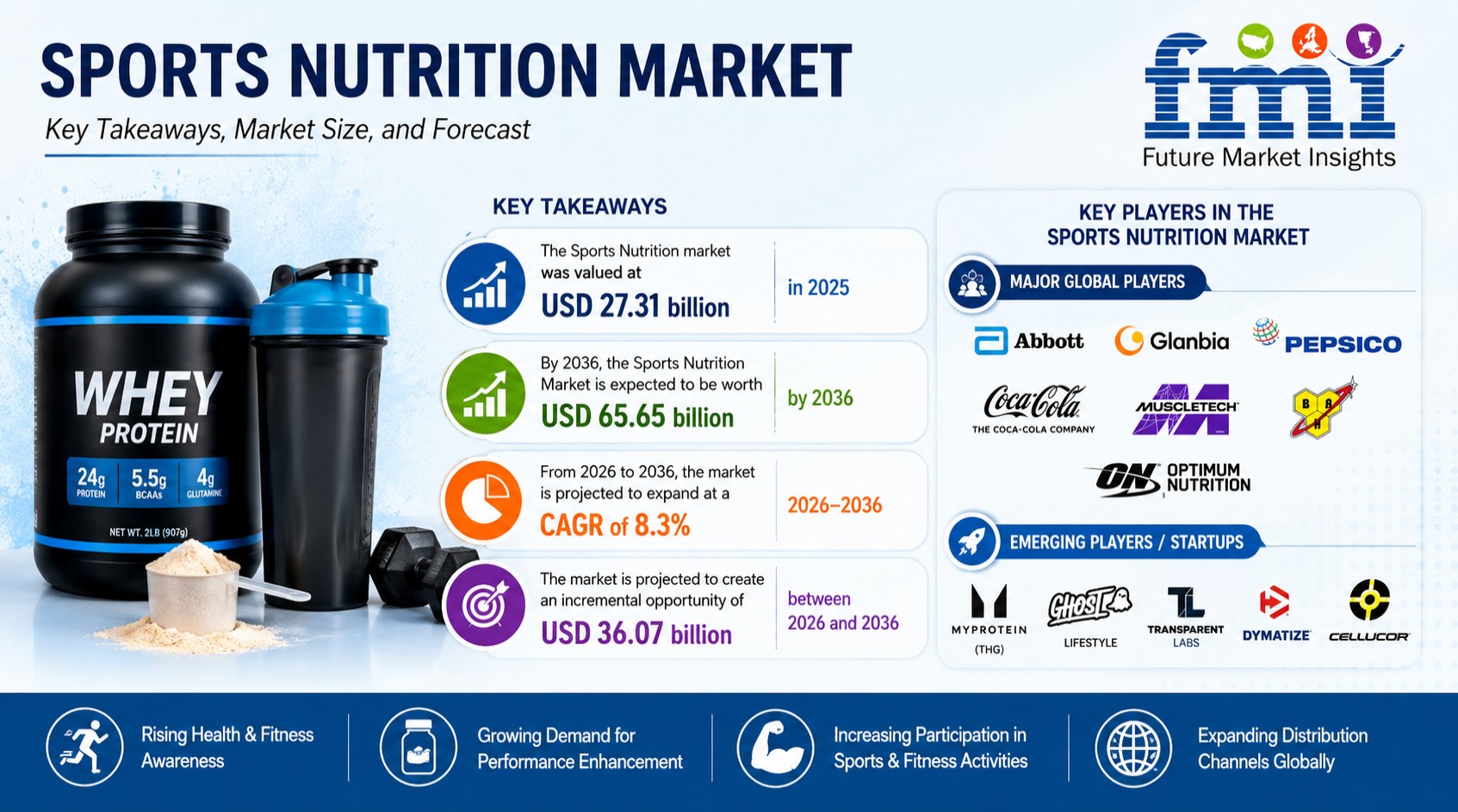
What is the projected size of the global sports nutrition market? The global sports nutrition market was valued at USD 27.3 billion in 2025 and is projected to reach USD 65.6 billion by 2036, expanding at a compound annual growth rate (CAGR) of 8.3%, driven by the normalization of performance nutrition across mainstream lifestyle consumers.
Why does powder remain the leading format despite the rise of convenience alternatives? Powder is highly defensible due to basic physics and supply chain math. It strips out unnecessary water weight, maximizes active ingredient density per square inch of cargo space, offers long-term shelf stability, and provides routine, high-volume consumers with the lowest possible cost-per-serving.
What are the primary operational risks when moving from powders into liquid RTDs? Brands migrating into RTDs must manage massive spikes in freight costs (shipping water weight), strictly regulate liquid temperature stability to prevent protein sedimentation, navigate high shelf-space slotting fees in physical retail, and carefully design shelf-stable flavor systems to prevent active ingredient degradation.
How is the Asia-Pacific region impacting global market strategy? Led by high value-based growth in powerhouse markets like China and India, Asia-Pacific is driving major volume for entry-level functional formats, pulling forward global brand upgrades, and accelerating market demand for lifestyle-friendly, portable sports snacks.
Conclusion
The future architecture of the sports nutrition market will not be defined by alternative delivery formats completely displacing classic powders. Instead, commercial victory belongs to suppliers that treat format execution and functional validation as a core economic strategy.
Standard bulk materials will maintain their undisputed status as the volume engines for everyday baseline ration requirements. Concurrently, specialized convenience formats like RTDs, protein bars, and performance gels will continue to lock down high-margin premium spaces by charging for the systematic reduction of consumer effort. Success requires aligning raw formulation costs, processing constraints, and packaging physics directly with the exact lifestyle occasion the consumer expects at each specific stage of their fitness routine.
Related Research Reports
- Protein Powder Market – Strategic market assessment of whey, plant-based, and blended protein powders across global distribution networks.
- Sports Nutrition Ingredients Market – Technical and commercial analysis mapping price volatility and demand across macro-nutrients and botanical extracts.
- Sports Food Market – Comprehensive evaluation of protein bars, cookies, energy gels, and fortified functional snacks.
FMI Custom Research: Strategic Intelligence for Confident Decision-Making
In today’s rapidly evolving business environment, leadership teams need more than market data they need clear, actionable intelligence tailored to their strategic objectives. FMI’s Custom Research solutions are designed around the specific business questions organizations need answered, enabling executives to evaluate growth opportunities, validate investments, assess competitive dynamics, and reduce uncertainty before making critical decisions. By combining deep industry expertise, primary research, and proprietary market intelligence, FMI delivers insights that help organizations move from assumptions to evidence-based strategies with greater speed and confidence.
Key Executive Benefits
- Decision-Ready Insights: Research tailored to your specific business challenges, growth plans, and investment priorities.
- Reduced Strategic Risk: Validate market opportunities, customer demand, and competitive positioning before committing resources.
- Market Entry Confidence: Assess opportunity size, regulatory barriers, channel dynamics, and competitive landscapes with precision.
- Competitive Advantage: Gain proprietary intelligence unavailable through syndicated reports or internal datasets.
- Faster Growth Decisions: Accelerate expansion, product development, portfolio optimization, and investment planning.
- Primary Market Validation: Access real-world customer, buyer, and stakeholder insights that support high-confidence decision-making.
- Global Industry Expertise: Powered by 100+ analysts, 20,000+ published reports, and 1.6 million+ hours of research experience.
- Proven Track Record: Over 7,000 market-entry engagements completed across six regions and 14 industry sectors with strong client retention.
Business Impact
FMI helps organizations transform market complexity into strategic clarity, enabling leadership teams to identify growth opportunities faster, optimize resource allocation, strengthen competitive positioning, and make high-stakes business decisions with confidence.
To explore how FMI Custom Research can support your strategic priorities, please connect with our team at – sales@futuremarketinsights.com
About Future Market Insights (FMI)
Future Market Insights is a leading provider of market intelligence, consulting services, and syndicated research reports. FMI delivers actionable insights across food and beverage, healthcare, consumer goods, biotechnology, chemicals, industrial products, and emerging technologies, helping organizations identify growth opportunities and make informed strategic decisions in evolving global markets.
Contact Us:
Future Market Insights Inc.
Christiana Corporate, 200 Continental Drive,
Suite 401, Newark, Delaware – 19713, USA
T: +1-347-918-3531
Why FMI: https://www.futuremarketinsights.com/why-fmi
For Sales Enquiries: sales@futuremarketinsights.com
Website: https://www.futuremarketinsights.com