

Protein Diversification Is Reshaping the Plant-Based Ingredient Landscape
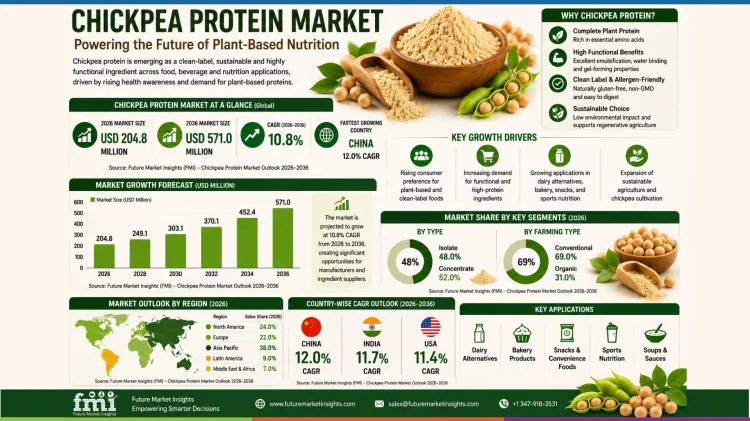
According to the latest insights by Future Market Insights, the global Chickpea Protein Market is entering a new phase as food manufacturers increasingly move beyond single-source protein strategies. While pea protein remains a dominant ingredient across plant-based applications, chickpea protein is gaining momentum due to its sensory advantages, clean-label appeal, and formulation flexibility.
Food manufacturers are increasingly adopting multi-protein strategies to achieve:
- Improved flavor performance
• Clean-label positioning
• Better formulation flexibility
• Supply chain diversification
• Enhanced nutritional profiles
• Application-specific functionality
Industry analysts highlight that the future of plant protein competition will not be defined by one ingredient replacing another. Instead, manufacturers are focusing on selecting the right protein combination based on product requirements.
Chickpea Protein Becomes a Strategic Formulation Solution
The plant protein industry has historically relied on leading ingredients such as pea protein because of:
- High protein content
• Processing efficiency
• Established supply networks
• Consumer familiarity
• Strong application performance
However, as plant-based categories expand into mainstream food markets, manufacturers are increasingly evaluating proteins based on specific functional advantages.
Chickpea protein supports:
- Mild sensory profile
• Protein enrichment
• Clean-label formulation
• Texture improvement
• Ingredient familiarity
• Product differentiation
The strongest opportunities will come from proteins that deliver targeted value rather than competing only on scale.
Pea Protein Maintains Its Industry Leadership
Pea protein has become a preferred plant-based ingredient due to its strong balance of nutrition, functionality, and commercial availability.
Its growth accelerated with increasing demand for:
- Plant-based meat alternatives
• Sports nutrition products
• Protein beverages
• Ready meals
• Nutritional foods
Pea protein continues to benefit from:
- Mature processing infrastructure
• Reliable supply chains
• High production capacity
• Established formulation expertise
These advantages allow pea protein to remain a key ingredient across high-protein applications.
Chickpea Protein Gains Attention Through Sensory Advantages
Despite pea protein’s strong market position, formulators are exploring chickpea protein because of challenges associated with some pulse proteins.
Manufacturers often evaluate:
- Flavor characteristics
• Consumer acceptance
• Label simplicity
• Product experience
Chickpea protein is gaining traction because it offers:
- Neutral taste profile
• Consumer-recognized ingredient positioning
• Clean-label benefits
• Flexible application potential
This makes chickpea protein attractive for products where sensory performance plays a critical role.
Dairy Alternatives Create New Growth Opportunities
The rise of the Dairy Alternatives Market is creating new demand for chickpea protein applications.
Plant-based dairy products require strong sensory performance because consumers expect:
- Smooth texture
• Pleasant taste
• High nutritional value
• Traditional dairy-like experience
Chickpea protein is increasingly being evaluated in:
- Plant-based milk
• Yogurt alternatives
• Creamers
• Functional beverages
• Dairy-free desserts
Its mild flavor characteristics allow manufacturers to improve protein content while maintaining product quality.
Manufacturers Shift Toward Protein Blending Strategies
The future of plant protein development is increasingly moving toward diversification rather than replacement.
Food manufacturers are combining different proteins to achieve:
- Better amino acid balance
• Improved texture performance
• Greater formulation stability
• Reduced sourcing risks
• Optimized production economics
Protein blends including:
- Pea protein
• Chickpea protein
• Soy protein
• Rice protein
• Oat protein
• Fava bean protein
are becoming more important as companies seek customized solutions.
Clean Label Trends Support Chickpea Protein Adoption
Consumer demand for recognizable ingredients is influencing product development across the Food Ingredients Market.
Modern consumers increasingly prefer:
- Simple ingredient lists
• Familiar food sources
• Transparent formulations
• Functional nutrition
Chickpea protein benefits from strong ingredient recognition, supporting its adoption in:
- Snacks
• Bakery products
• Functional foods
• Plant-based beverages
• Nutrition products
Supply Chain Diversification Becomes a Competitive Priority
Global food manufacturers are increasingly focused on reducing dependency on limited protein sources.
Key priorities include:
- Reliable raw material availability
• Stable pricing
• Manufacturing scalability
• Consistent quality standards
• Long-term ingredient security
Protein diversification allows companies to manage:
- Supply disruptions
• Commodity price changes
• Market uncertainty
• Consumer preference shifts
Suppliers with broad protein capabilities are expected to gain competitive advantages.
The Future of Plant Protein Competition
The future of the Chickpea Protein Market and broader plant protein industry will depend on balancing:
- Functional performance
• Sensory quality
• Cost efficiency
• Supply reliability
• Consumer expectations
Pea protein will continue to play an important role due to its established infrastructure and proven applications.
However, chickpea protein is creating new opportunities by supporting cleaner labels, improved sensory experiences, and flexible formulation strategies.
The next stage of plant protein growth will not be about choosing one winning protein — it will be about developing smarter protein systems that deliver better food experiences.
FMI Custom Research: Strategic Intelligence for Confident Decision-Making
In today’s rapidly evolving business environment, leadership teams need more than market data—they need clear, actionable intelligence tailored to their strategic objectives.
FMI’s Custom Research solutions are designed around the specific business questions organizations need answered, enabling executives to evaluate growth opportunities, validate investments, assess competitive dynamics, and reduce uncertainty before making critical decisions.
By combining deep industry expertise, primary research, and proprietary market intelligence, FMI delivers insights that help organizations move from assumptions to evidence-based strategies with greater speed and confidence.
Key Executive Benefits
- Decision-Ready Insights
• Reduced Strategic Risk
• Market Entry Confidence
• Competitive Advantage
• Faster Growth Decisions
• Primary Market Validation
• Global Industry Expertise
• Proven Track Record
Business Impact
FMI helps organizations transform market complexity into strategic clarity, enabling leadership teams to identify opportunities faster, strengthen competitive positioning, optimize investments, and make confident business decisions.
To explore how FMI Custom Research can support your strategic priorities, connect with our team at: sales@futuremarketinsights.com
Explore More Related Studies Published by FMI Research:
Plant-Based Protein Market: Global Industry Analysis and Opportunity Assessment, 2036
Dairy Alternatives Market: Global Industry Analysis and Opportunity Assessment, 2036
Food Coating Ingredients Market: Global Industry Analysis and Opportunity Assessment, 2036
Plant-Based Food Market: Global Industry Analysis and Opportunity Assessment, 2036
Alternative Protein Market: Global Industry Analysis and Opportunity Assessment, 2035
Sports Nutrition Market: Global Industry Analysis and Opportunity Assessment, 2036
About Future Market Insights (FMI)
Future Market Insights, Inc. (FMI) is an ESOMAR-certified, ISO 9001:2015 market research and consulting organization, trusted by Fortune 500 clients and global enterprises.
With operations in the U.S., UK, India, and Dubai, FMI provides data-backed insights and strategic intelligence across 30+ industries and 1200 markets worldwide.
Contact Us:
Future Market Insights Inc.
Christiana Corporate, 200 Continental Drive,
Suite 401, Newark, Delaware – 19713, USA
T: +1-347-918-3531
Why FMI: https://www.futuremarketinsights.com/why-fmi
Website: https://www.futuremarketinsights.com
LinkedIn| Twitter| Blogs | YouTube