

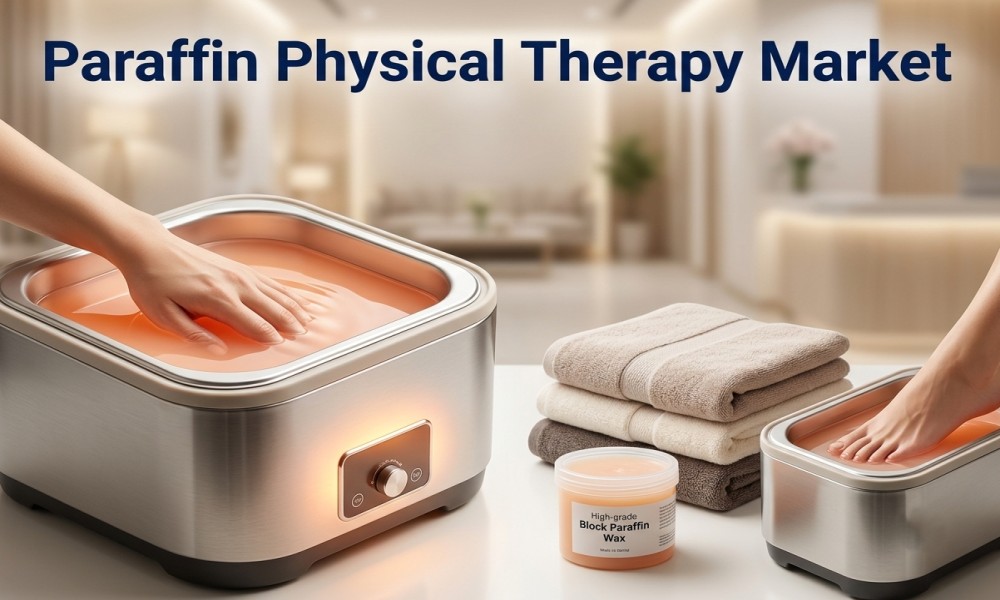
The global paraffin physical therapy market is witnessing steady expansion as healthcare systems increasingly prioritize non-invasive, low-cost, and accessible treatment options for managing chronic pain, arthritis, and long-term rehabilitation needs. Once viewed primarily as a supportive or auxiliary modality, paraffin therapy has evolved into a widely accepted component of structured rehabilitation programs, particularly for patients suffering from joint stiffness, musculoskeletal conditions, and reduced mobility.
This shift is being shaped by broader structural changes in healthcare delivery, including rising chronic disease prevalence, growing demand for outpatient rehabilitation services, and increasing interest in home-based care models. As providers seek therapies that balance clinical effectiveness with operational simplicity, paraffin-based heat therapy continues to maintain relevance across multiple care environments.
Market Outlook
The paraffin physical therapy market is projected to expand steadily over the forecast period, supported by consistent demand from rehabilitation clinics, hospitals, and emerging home-care settings. Unlike technology-driven medical segments that depend on rapid innovation cycles, this market is anchored in long-established clinical practices and predictable patient needs.
Its growth trajectory reflects sustained integration into rehabilitation protocols rather than disruptive transformation, with adoption driven by affordability, ease of use, and compatibility with existing physical therapy workflows.
Arthritis Care Remains the Primary Growth Engine
A key driver of market expansion is the increasing global burden of arthritis and related degenerative joint conditions. Osteoarthritis, rheumatoid arthritis, and similar disorders continue to affect large patient populations and require ongoing symptom management and functional support.
Paraffin therapy plays an important role in this context by delivering localized heat therapy that helps reduce joint stiffness, improve circulation, and support mobility—particularly in the hands and smaller joints. Its inclusion in rehabilitation programs is largely due to its simplicity, patient tolerance, and consistent clinical utility in chronic pain management.
Rise of Outpatient Rehabilitation and Home-Based Care
The ongoing shift from inpatient to outpatient care models is creating new opportunities for paraffin therapy adoption. Healthcare systems are increasingly emphasizing decentralized rehabilitation services that reduce hospital dependency while maintaining treatment continuity.
Within this framework, paraffin therapy is widely used in physiotherapy clinics and outpatient rehabilitation centers as part of structured recovery programs for post-surgical patients, injury rehabilitation cases, and individuals with chronic musculoskeletal conditions.
Challenges Facing the Market
Despite its steady adoption, the market faces several constraints. Reimbursement coverage for paraffin therapy remains inconsistent across healthcare systems, limiting its financial attractiveness for some providers. In addition, competing rehabilitation modalities such as ultrasound therapy, electrical stimulation, and laser-based treatments continue to influence equipment purchasing decisions.
Another key challenge is uneven awareness and adoption across emerging markets, where rehabilitation infrastructure and physical therapy accessibility are still developing. While demand for pain management solutions is rising globally, delivery capabilities remain fragmented in several regions.
Segmentation Highlights
Arthritis remains the leading application area for paraffin physical therapy, supported by its widespread use in managing chronic joint pain and stiffness. Additional application areas include rheumatic conditions, inflammation management, soft tissue injuries, and general pain relief therapies.
From an end-user perspective, hospitals continue to represent a major segment due to their structured rehabilitation departments and high patient inflow. However, physiotherapy clinics, outpatient rehabilitation centers, home-care environments, and wellness facilities are playing an increasingly important role in expanding the market footprint.
Regional Trends
North America continues to be a leading market, supported by a well-established rehabilitation ecosystem, high prevalence of arthritis, and strong integration of physical therapy into standard care pathways.
Europe also holds a significant position, driven by widespread adoption of physiotherapy services and comprehensive rehabilitation frameworks within public healthcare systems.
Meanwhile, Asia-Pacific is emerging as a high-potential growth region. Expanding healthcare infrastructure, rising awareness of physical rehabilitation, and increasing incidence of chronic musculoskeletal disorders are collectively driving demand. Countries such as China and India are expected to play a central role in future market expansion as access to rehabilitation services continues to improve.
Competitive Landscape and Future Outlook
The paraffin physical therapy market remains moderately fragmented, with manufacturers focusing on improving device usability, portability, safety features, and maintenance efficiency. Innovation in the sector is largely incremental, centered on enhancing patient convenience and expanding applicability across diverse care environments rather than introducing disruptive technological change.
Looking ahead, the market is expected to remain stable and structurally supported by long-term demographic and epidemiological trends. Aging populations, rising chronic disease prevalence, and sustained demand for non-invasive pain management solutions will continue to reinforce its relevance within the global rehabilitation landscape.
While not characterized by rapid technological disruption, the market’s strength lies in its clinical familiarity, cost-effectiveness, and consistent utility in everyday rehabilitation practice.
Explore More Related Studies Published by FMI Research:
Aseptic Formulation Processing Market
3D-Printed Prosthetic Implants Market
Circadian Rhythm Sleep Disorders Market
Have specific requirements or need assistance on report pricing or limited budget? Please contact us – sales@futuremarketinsights.com
About Future Market Insights (FMI)
Future Market Insights, Inc. (FMI) is an ESOMAR-certified, ISO 9001:2015 market research and consulting organization, trusted by Fortune 500 clients and global enterprises. With operations in the U.S., UK, India, and Dubai, FMI provides data-backed insights and strategic intelligence across 30+ industries and 1200 markets worldwide.