

According to the latest insights by Future Market Insights, the global animal healthcare industry is entering a new phase of growth as pet humanization, premium healthcare spending, and biologic innovation reshape veterinary medicine. In 2026, pharmaceutical companies, veterinary clinics, and healthcare providers are increasingly investing in monoclonal antibodies, recombinant vaccines, advanced manufacturing capabilities, and subscription-based care models to improve treatment outcomes and capture long-term revenue opportunities.
Industry analysts note that while traditional pharmaceuticals continue to play an important role, the future competitiveness of animal healthcare companies will increasingly depend on biologic innovation, manufacturing scalability, regulatory expertise, and recurring care programs. Organizations that successfully optimize these factors are expected to strengthen their position across companion animal healthcare markets worldwide.
Key Market Statistics
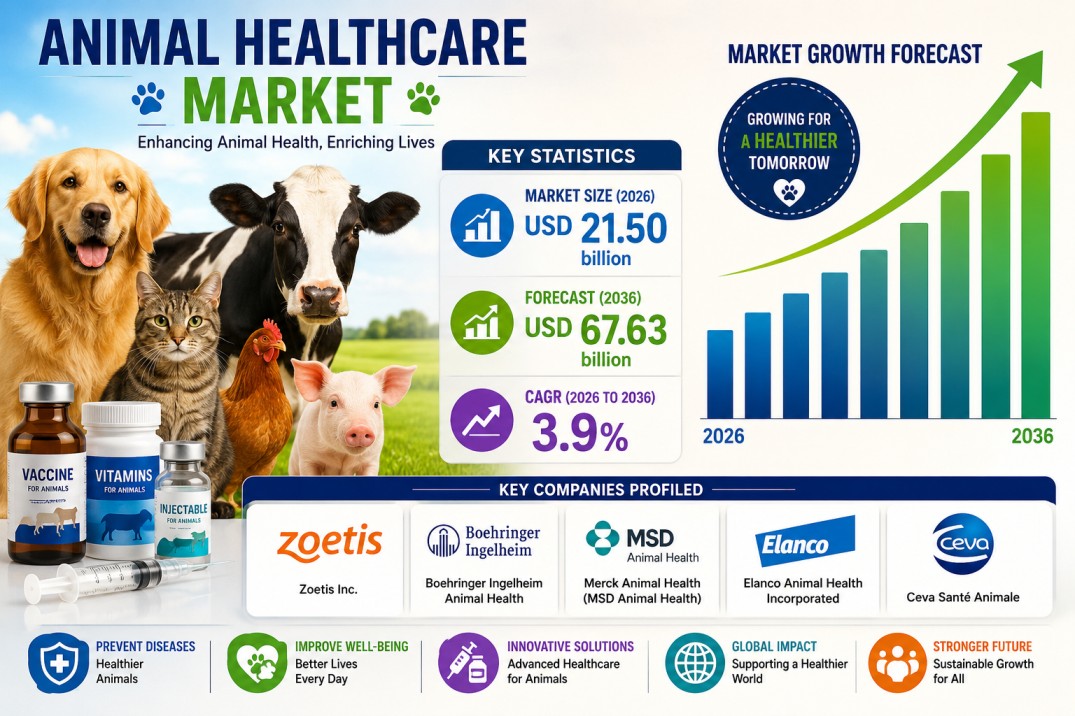
- Market Size (2025): USD 44.40 Billion
- Market Size (2036): USD 67.63 Billion
- CAGR (2026–2036): 3.9%
- Incremental Opportunity: USD 21.50 Billion
- Leading Product Type (2026): Feed Additives (30.0% market share)
- Fastest Growing Markets: South Korea (4.2%) and European Union (3.9%)
- Historical Period: 2016–2025
- Base Year: 2025
- Forecast Period: 2026–2036
Biologic Therapies Emerge as a Strategic Competitive Advantage
Biologic medicines are rapidly transforming companion animal healthcare by providing targeted treatment solutions for chronic diseases that previously relied on symptom management.
Monoclonal antibodies have emerged as one of the fastest-growing therapeutic categories due to their ability to precisely target disease pathways while minimizing systemic side effects. Products designed for conditions such as osteoarthritis, allergic skin disease, and atopic dermatitis are demonstrating significant clinical benefits for both dogs and cats.
Recombinant vaccines are also expanding their role in preventive healthcare, offering improved immune protection and supporting disease management strategies across veterinary practices.
As pet owners increasingly seek advanced treatment options, biologic therapies are becoming a critical determinant of market competitiveness and long-term growth.
Premium Pet Spending Drives Market Expansion
Rising pet ownership expenditures continue to support demand for advanced veterinary care.
Demographic and cultural shifts have transformed pets into integral family members, encouraging owners to pursue higher-quality healthcare solutions. Growing numbers of consumers are willing to invest in life-extending treatments, chronic disease management, and preventive healthcare programs for companion animals.
Several trends are accelerating premium spending:
- Growing pet humanization globally
• Rising disposable income among pet-owning households
• Increased awareness of chronic disease management
• Expansion of veterinary specialty services
• Higher acceptance of advanced biologic therapies
As emotional attachment to pets strengthens, spending decisions increasingly resemble those made for human healthcare, creating favorable conditions for premium therapeutic adoption.
Manufacturing Scale and Cold Chain Infrastructure Shape Market Economics
Manufacturing capability remains one of the most important factors influencing the commercial success of veterinary biologics.
Production of monoclonal antibodies requires sophisticated cell culture systems, strict quality controls, and highly regulated manufacturing environments. These processes demand significant capital investment and operational expertise.
Manufacturers are increasingly investing in:
- Advanced cell culture facilities
• High-capacity purification systems
• Fill-finish manufacturing capabilities
• Quality assurance infrastructure
• Temperature-controlled logistics networks
Cold chain reliability remains particularly important, as many biologic therapies require storage between 2°C and 8°C throughout distribution and administration.
Companies capable of scaling production while maintaining product quality and regulatory compliance are expected to achieve stronger pricing flexibility and broader market penetration.
Regulatory Pathways Influence Commercialization Strategies
Veterinary biologics operate within specialized regulatory frameworks that significantly impact product development timelines and launch strategies.
Regulatory agencies continue to refine approval processes for monoclonal antibodies, recombinant vaccines, and other biologic products. Companies must demonstrate safety, efficacy, purity, and potency through rigorous clinical and manufacturing evaluations before commercialization.
Manufacturers are increasingly focusing on:
- Early regulatory engagement
• Clinical evidence generation
• Post-approval surveillance programs
• Product lifecycle management
• Global regulatory harmonization initiatives
Conditional approvals and accelerated pathways for therapies addressing unmet medical needs are helping companies bring innovative treatments to market more efficiently while maintaining patient safety standards.
Subscription Models Transform Revenue Generation
Recurring treatment schedules are reshaping veterinary business models and creating predictable revenue streams throughout the animal healthcare ecosystem.
Many biologic therapies require monthly or periodic administration, naturally supporting subscription-based healthcare programs. Veterinary clinics are increasingly bundling biologic treatments with preventive care services, wellness exams, diagnostics, and nutritional support.
Benefits of subscription-based models include:
- Improved treatment compliance
• Enhanced client retention
• Greater lifetime customer value
• Predictable clinic revenue
• Stronger veterinarian-client relationships
For chronic conditions such as osteoarthritis and dermatological disorders, long-term biologic treatment programs can generate years of recurring healthcare engagement while improving animal quality of life.
Companion Animal Healthcare Drives Innovation-Led Growth
The growing prevalence of chronic conditions among companion animals is creating demand for highly specialized therapeutic solutions.
Manufacturers are expanding research and development efforts across:
- Osteoarthritis management
• Dermatology and allergy treatments
• Immune-mediated disorders
• Pain management therapies
• Preventive biologic solutions
As veterinary medicine continues to adopt precision-treatment approaches, biologic innovation is expected to become a primary driver of industry differentiation and value creation.
Future Outlook
The future of the animal healthcare industry will increasingly be shaped by premium pet spending, biologic innovation, manufacturing scalability, and recurring care models. Companies are expected to accelerate investments in monoclonal antibodies, recombinant vaccines, advanced manufacturing technologies, and subscription-based healthcare programs to strengthen market competitiveness and support sustainable growth.
Growing demand for chronic disease management, preventive care, and personalized veterinary treatment is expected to create substantial opportunities across global companion animal healthcare markets. Organizations that successfully combine biologic innovation with efficient manufacturing, regulatory excellence, and customer-focused care models will be best positioned to capitalize on evolving industry dynamics.
As the industry continues to modernize, therapeutic specialization, operational efficiency, and long-term patient engagement are expected to remain the defining factors driving success in the global animal healthcare market.
Related Reports:
The demand for animal antibiotics and antimicrobials is estimated to grow to USD 5.66 billion in 2026 and USD 9.16 billion by 2036. FMI projects a CAGR of 4.9% during the forecast period.
The Animal Microchip Implant Market will move stupendous from a valuation of USD 686.1 million by 2025 to reach the value of USD 1,172 million by 2035 growing at a CAGR of 5.5% over the forecast period.
About Future Market Insights (FMI)
Future Market Insights is a leading provider of market intelligence and consulting services, serving clients in over 150 countries. Headquartered in Newark, with a global delivery center in Pune and offices in the United Kingdom and United Arab Emirates, FMI delivers actionable insights across industries including food & beverage, healthcare, chemicals, and consumer goods.
An ESOMAR-certified organization, FMI provides data-driven insights to support strategic decision-making for global businesses.
Contact Us
Future Market Insights Inc.
Christiana Corporate, 200 Continental Drive,
Suite 401, Newark, Delaware – 19713, USA
T: +1-347-918-3531
For Sales Enquiries: sales@futuremarketinsights.com