Market Overview: Growth Driven by Sustainability, Bio-Materials Innovation, and Food Packaging Demand
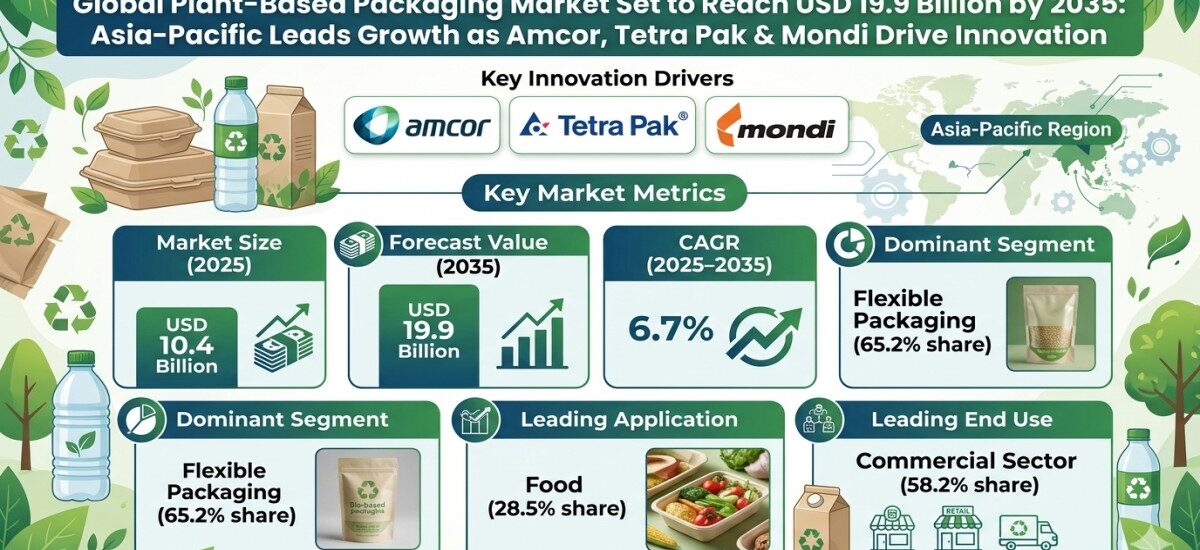
The global plant-based packaging market is experiencing strong momentum, projected to expand from USD 10.4 billion in 2025 to USD 19.9 billion by 2035, registering a CAGR of 6.7% during the forecast period. This growth reflects a global shift toward eco-friendly, biodegradable, and renewable packaging solutions as industries move away from conventional plastic materials.
Plant-based packaging utilizes bio-derived materials such as cellulose, starch blends, and biopolymers, offering a sustainable alternative without compromising performance. Increasing environmental concerns, regulatory pressures, and corporate sustainability commitments are accelerating adoption across sectors including food, personal care, healthcare, and retail.
As brands focus on improving ESG metrics and reducing carbon footprints, plant-based packaging is becoming a strategic priority. Technological advancements in bio-materials and scalable production methods are further enhancing market viability and expanding application scope.
Key Market Metrics
- Market Size (2025): USD 10.4 Billion
• Forecast Value (2035): USD 19.9 Billion
• CAGR (2025–2035): 6.7%
• Dominant Segment: Flexible Packaging (65.2% share)
• Leading Application: Food (28.5% share)
• Leading End Use: Commercial Sector (58.2% share)
Get detailed market forecasts, competitive benchmarking, and pricing trends:
https://www.futuremarketinsights.com/reports/sample/rep-gb-13623
Key Demand Drivers
- Rising Demand for Sustainable Packaging Solutions
Increasing environmental awareness and regulatory bans on single-use plastics are pushing companies toward biodegradable and compostable alternatives. Plant-based packaging aligns with these sustainability goals.
- Growth in Food and Beverage Industry
The food segment dominates due to rising demand for safe, non-toxic, and eco-friendly packaging. Plant-based materials offer excellent barrier properties and help maintain product freshness.
- Advancements in Bio-Polymer Technologies
Innovations in bioplastics, cellulose-based films, and fiber blends are improving durability, flexibility, and performance, making plant-based packaging competitive with traditional materials.
- Increasing Consumer Preference for Eco-Friendly Products
Consumers are actively choosing brands that use sustainable packaging, encouraging companies to adopt plant-based solutions to enhance brand value and customer loyalty.
Supply Chain Analysis: Who Supplies Whom
The plant-based packaging market operates within a sophisticated and evolving value chain:
- Raw Material Suppliers: Provide bio-based feedstocks such as starch, cellulose, and sugarcane
• Material Manufacturers: Develop biopolymers and plant-based films
• Packaging Producers: Convert materials into flexible and rigid packaging formats
• Distributors: Manage logistics and supply chain operations
• End Users: Food companies, retailers, healthcare providers, and personal care brands
This interconnected ecosystem supports innovation, scalability, and global distribution of sustainable packaging solutions.
Pricing Trends & Cost Dynamics
- Raw Material Costs: Bio-based materials may have higher initial costs
• Technology Investment: Advanced processing technologies increase upfront expenses
• Economies of Scale: Increasing production is reducing cost gaps with plastics
• Sustainability Premium: Eco-friendly packaging often commands higher pricing
Segmentation Insights
By Type
- Flexible Packaging (Leading Segment – 65.2%)
• Rigid Packaging
By Application
• Food (28.5%)
• Bakery & Confectionery
• Meat, Fish & Poultry
• Fruits & Vegetables
• Dairy Products
• Industrial Supplies
• Healthcare
• Personal Care
By End Use
• Commercial (58.2%)
• Industrial
Regional Analysis
Asia-Pacific: The Growth Engine
Asia-Pacific is emerging as the fastest-growing region due to rapid urbanization, expanding food industries, and increasing awareness of sustainable packaging. Countries like India and China are witnessing strong adoption driven by regulatory shifts and consumer demand.
North America: Innovation and Early Adoption
North America leads in technological innovation and product development, with companies investing heavily in bio-based packaging solutions.
Europe: Sustainability-Focused Market
Europe continues to dominate in sustainability initiatives, supported by strict environmental regulations and high consumer awareness regarding eco-friendly packaging.
Unlock 360° insights for strategic decision making and investment planning:
https://www.futuremarketinsights.com/checkout/13623
Competitive Landscape
The plant-based packaging market is highly competitive, with leading global players focusing on sustainability, innovation, and strategic expansion.
Key Players
• Evergreen Packaging
• Sealed Air
• Berry Global
• The Coca-Cola Company
• Amcor
• Vegware
• Tetra Pak International SA
• Mondi Group PLC
• BASF
Strategic Focus Areas
- Development of biodegradable and compostable packaging solutions
• Investment in bio-polymer research and innovation
• Expansion into emerging markets
• Partnerships for sustainable supply chains
• Enhancement of product performance and scalability
Technology & Innovation Trends
- Bio-Polymer Development: Enhanced durability and flexibility
• Nanotechnology Integration: Improved barrier properties
• Lightweight Packaging Designs: Reduced material usage
• Smart Packaging Features: Traceability and sustainability labeling
• Recyclable and Compostable Materials: Supporting circular economy
Challenges
- Higher Initial Costs Compared to Conventional Plastics
• Limited Recycling Infrastructure in Some Regions
• Performance Limitations in Certain Applications
• Supply Chain Constraints for Bio-Based Raw Materials
Opportunities & Investment Outlook
- Rising Demand for Sustainable and Green Packaging
• Expansion in Emerging Markets
• Growth in Food and Beverage Applications
• Increasing Corporate Sustainability Commitments
• Innovation in Bio-Based Materials and Technologies
Speak to Analyst: Customize insights for your business strategy:
https://www.futuremarketinsights.com/customization-available/rep-gb-13623
Future Outlook (2025–2035)
The plant-based packaging market is set to become a cornerstone of sustainable packaging within the chemical and materials industry. Over the next decade, the market will witness:
- Increased adoption of biodegradable and compostable materials
• Expansion of flexible and lightweight packaging solutions
• Integration of advanced bio-material technologies
• Rising demand from food, retail, and healthcare sectors
• Strong alignment with global sustainability and circular economy goals
By 2035, companies that successfully combine sustainability, innovation, and scalability will lead the transformation of the global packaging landscape toward a greener future.
Why FMI: https://www.futuremarketinsights.com/why-fmi
About Future Market Insights (FMI)
Future Market Insights, Inc. (FMI) is an ESOMAR-certified, ISO 9001:2015 market research and consulting organization, trusted by Fortune 500 clients and global enterprises. With operations in the U.S., UK, India, and Dubai, FMI provides data-backed insights and strategic intelligence across 30+ industries and 1200 markets worldwide.
Contact Us:
Future Market Insights Inc., Christiana Corporate, 200 Continental Drive, Suite 401, Newark, Delaware – 19713, USA
T: +1-347-918-3531
For Sales Enquiries: sales@futuremarketinsights.com
Website: https://www.futuremarketinsights.com
LinkedIn| Twitter| Blogs | YouTube