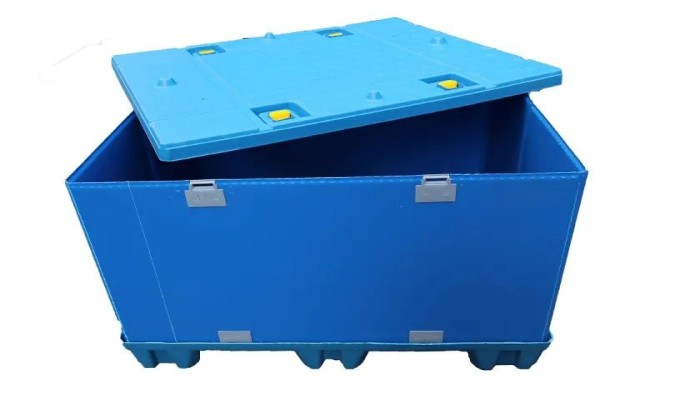
The global collapsible sleeve containers market is entering a phase of steady, value-driven growth, fueled by the increasing need for reusable, space-efficient, and cost-optimized packaging solutions across industrial supply chains. According to the latest market analysis, the market is projected to grow from USD 1.5 billion in 2025 to USD 2.2 billion by 2035, registering a CAGR of 3.9%. With revenues already reaching USD 1.3 billion in 2024, the sector is demonstrating consistent adoption across logistics, automotive, agriculture, and food industries.
This upward trajectory reflects a broader shift in global supply chains—from disposable packaging models toward circular, returnable systems that improve operational efficiency while reducing environmental impact.
Supply Chain Efficiency and Sustainability Drive Market Momentum
The growing complexity of global logistics networks is compelling companies to rethink packaging strategies. Collapsible sleeve containers are gaining traction as they offer a unique combination of durability, reusability, and space optimization.
Get detailed market forecasts, competitive benchmarking, and pricing trends:
https://www.futuremarketinsights.com/reports/sample/rep-gb-12892
Key growth drivers include:
- Rising demand for returnable transit packaging (RTP) in automotive and industrial sectors
- Cost savings in reverse logistics, with up to 65% reduction in backhaul volume
- Regulatory pressure to reduce single-use plastics and packaging waste
- Expansion of e-commerce and third-party logistics (3PL) networks
Unlike rigid containers, collapsible sleeve designs significantly reduce storage footprint when empty, enabling companies to lower transportation costs and improve warehouse utilization.
Innovation and Smart Packaging Trends Reshape the Market
Manufacturers are increasingly integrating advanced materials and digital technologies to enhance product performance and lifecycle value.
Notable trends include:
- Use of recycled polymers such as HDPE and polypropylene (PP) for improved sustainability
- Integration of RFID tracking systems for real-time inventory visibility
- Modular and automation-compatible designs for smart warehouses
- Lightweight engineering to improve handling and reduce carbon footprint
These innovations are aligning collapsible sleeve containers with Industry 4.0 initiatives, making them a critical component of next-generation logistics ecosystems.
Plastic Segment Dominates, Agriculture Emerges as Key End-Use Sector
Plastic-based containers are expected to account for over 58% of the market by 2025, driven by their superior durability, resistance to environmental conditions, and long lifecycle performance. Their ability to withstand repeated folding cycles without degradation makes them ideal for closed-loop supply chains.
Meanwhile, the agriculture and allied industries segment is projected to capture over 31% market share, supported by:
- Growing demand for bulk transport of perishable goods
- Increasing mechanization of farm logistics
- Expansion of agri-export supply chains
Collapsible sleeve containers are proving especially valuable in seasonal agricultural operations, where efficient storage and return logistics are critical.
Regional Insights: Developed Markets Lead, Asia Gains Momentum
- United States: A mature yet growing market, driven by strong adoption in automotive and retail logistics, supported by sustainability mandates and advanced warehouse systems.
- Europe: Regulatory frameworks targeting packaging waste reduction are accelerating the shift toward reusable containers across Germany, France, and Italy.
- Japan and South Korea: High adoption driven by automation, space constraints, and advanced logistics infrastructure.
- South Asia & Pacific: Emerging as a high-potential region, supported by rapid industrialization, expanding e-commerce, and increasing awareness of sustainable packaging solutions.
Competitive Landscape: Strategic Acquisitions and Innovation Intensify Competition
The market remains moderately consolidated, with leading players focusing on product innovation, sustainability, and strategic partnerships to strengthen their positions.
Key companies operating in the market include:
Schoeller Allibert, ORBIS Corporation (Menasha Corporation), DS Smith Plc, IPL Plastics, Rehrig Pacific Company, CABKA Group, Greif, Inc., Buckhorn Inc., SSI Schaefer Group, Flexcon Container, Inc.
A notable industry development includes Greif, Inc.’s acquisition of Ipackchem Group SAS, enhancing its capabilities in high-performance rigid plastic packaging and expanding its global footprint. The integration is expected to unlock operational synergies and strengthen Greif’s position in sustainable industrial packaging.
Analyst Perspective: Circular Logistics to Define the Next Decade
Industry analysts highlight that collapsible sleeve containers are no longer viewed as niche solutions but are becoming integral to supply chain transformation strategies.
“Organizations are increasingly aligning packaging decisions with sustainability goals and cost efficiency metrics. Collapsible sleeve containers deliver both, making them a strategic asset in modern logistics,” noted a senior market analyst.
The convergence of circular economy principles, automation, and digital supply chain visibility is expected to further accelerate adoption across industries.
Future Outlook: Opportunities in Smart Logistics and Sustainable Packaging
Despite challenges such as high initial investment and limited reverse logistics infrastructure in developing regions, the market outlook remains positive.
Emerging opportunities include:
- Expansion of reusable packaging pools in global supply chains
- Adoption in pharmaceuticals and food sectors requiring hygienic transport solutions
- Integration with IoT-enabled tracking and warehouse automation systems
- Development of ultra-lightweight and fully recyclable materials
As sustainability transitions from compliance to competitive advantage, collapsible sleeve containers are expected to play a central role in enabling low-carbon, high-efficiency logistics.
Why FMI: https://www.futuremarketinsights.com/why-fmi
About Future Market Insights (FMI)
Future Market Insights, Inc. (FMI) is an ESOMAR-certified, ISO 9001:2015 market research and consulting organization, trusted by Fortune 500 clients and global enterprises. With operations in the U.S., UK, India, and Dubai, FMI provides data-backed insights and strategic intelligence across 30+ industries and 1200 markets worldwide.
Contact Us:
Future Market Insights Inc.
Christiana Corporate, 200 Continental Drive,
Suite 401, Newark, Delaware – 19713, USA
T: +1-347-918-3531
For Sales Enquiries: sales@futuremarketinsights.com
Website: https://www.futuremarketinsights.com
LinkedIn| Twitter| Blogs | YouTube