

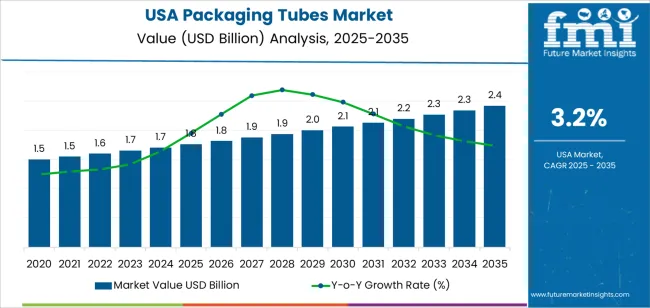
The United States packaging tubes market is gearing up for robust expansion through the next decade as manufacturers — both established leaders and emerging innovators — position themselves to meet rising demand across cosmetics, pharmaceuticals, food, and personal care sectors. With the overall market projected to grow significantly from 2025 through 2035, industry participants are focusing on new technologies, sustainable materials, and strategic growth initiatives to capitalize on evolving consumer preferences.
Market Growth & Demand Trends
The U.S. packaging tubes market is forecast to increase steadily over the next ten years, reflecting steady demand driven by convenience, hygiene, and sustainability. Manufacturers across segments are benefiting from the rising consumer emphasis on premium quality, ease of use, and environmentally responsible packaging options. These factors continue to support the expanding use of packaging tubes for products including creams, gels, lotions, toothpaste, and other daily essentials.
Industry analysts highlight that laminated tubes remain the most widely adopted format due to their advanced barrier performance, durability, and visibility for high-value products. The ability of these tubes to protect sensitive contents — while offering smooth, high-quality decoration — reinforces their appeal across fast-moving consumer goods and regulated products alike.
Leadership from Established Manufacturers
Leading global companies are actively shaping the U.S. pack tubes landscape through innovation, production scale, and strategic market reach. Well-known names like CCL Industries, Amcor plc, Albéa, Berry Global Group, and Huhtamaki Oyj have maintained strong footholds due to diversified product portfolios and established manufacturing networks.
These industry veterans are not only advancing their core offerings but also prioritizing sustainability and custom design. Innovations include tubes with enhanced anti-tamper features, improved barrier properties for extended shelf life, and advanced decorative finishes that elevate brand presence on retail shelves. Several of these players have also expanded capacity in the U.S., allowing brands to reduce lead times and benefit from localized production.
Emerging Players & New Technology Adoption
Alongside the traditional leaders, a new wave of manufacturers is entering or expanding within the U.S. packaging tubes market. These nimble firms bring fresh perspectives, specialized capabilities, and innovative technologies that complement the larger ecosystem. From companies offering biodegradable and compostable tube formats to those focused on AI-enabled smart manufacturing, the competitive landscape is becoming richer and more dynamic.
Technological advancements are playing a vital role in this evolution. For example, the industry is embracing smart packaging technologies that support digital traceability, interactive consumer features, and improved supply-chain transparency. Enhanced digital printing techniques allow for highly customized tube designs that strengthen brand recognition and consumer engagement — particularly important for niche and premium brands looking to differentiate themselves.
In addition, recyclability and responsible material sourcing have become central pillars for emerging enterprises. New entrants are often highly focused on plant-based resins, post-consumer recycled content, and other eco-friendly materials that resonate with eco-conscious customers and meet stringent regulatory expectations.
Sustainability as a Competitive Edge
Across the sector, sustainability is more than a trend — it’s a strategic imperative. Manufacturers are increasingly aligning product development with environmental goals, offering tubes that reduce plastic usage without sacrificing performance. Recyclable and biodegradable options are opening new market segments, especially among brands that prioritize circular economy principles.
Several firms are also improving manufacturing processes to minimize waste and energy consumption, reinforcing their commitments to responsible production. Sustainable tube solutions are now frequently spotlighted in brand marketing campaigns, underscoring their importance in contemporary consumer choice dynamics.
Industry Collaboration & Strategic Partnerships
Partnerships between established players and specialized innovators are gaining traction as companies seek to accelerate innovation and market penetration. Collaborations with local converters, material science innovators, and digital technology firms are enabling manufacturers to adopt cutting-edge solutions more rapidly and cost-effectively.
Such alliances are helping global companies tailor their offerings for specific regional requirements, reduce logistical complexities, and respond swiftly to shifting end-use trends. Whether it’s integrating new barrier technologies or co-developing tube formats for niche applications, these collaborative efforts are creating synergies that benefit the broader packaging ecosystem.
Outlook & Future Opportunities
Looking ahead, the U.S. packaging tubes market is expected to maintain a positive growth trajectory supported by consumer demand for high-quality, customizable, and sustainable packaging. While growth rates may moderate as the market matures, innovation — particularly in materials and technology — will continue to unlock opportunities for both major manufacturers and emerging players.
Companies that actively invest in sustainability, digital capabilities, and strategic partnerships will be best positioned to thrive in this competitive environment. With expanding use cases in healthcare, beauty, food, and specialty consumer goods, packaging tubes are set to remain a core component of the packaging landscape for years to come.




