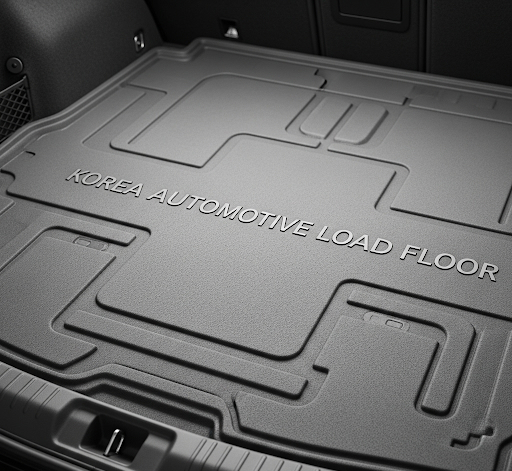
The South Korean automotive load floor market is on the cusp of a transformative decade, with its value projected to grow from USD 86.4 million in 2025 to USD 131.63 million by 2035, at a steady CAGR of 4.3%. This growth is fueled by rising demand for lightweight, durable, and modular load floor solutions—particularly for SUVs, light commercial vehicles (LCVs), and electric vehicles (EVs).
As automakers respond to evolving consumer lifestyles, sustainability mandates, and e-commerce-driven logistics, both established giants and ambitious new entrants are setting the stage for a dynamic competitive landscape.
Uncover Essential Data – Get A Sample Copy https://www.futuremarketinsights.com/reports/sample/rep-gb-18646
A Market in Transition: From Conventional Designs to Smart Load Floors
In 2024, South Korea’s auto industry faced a significant shift. Consumers moved away from traditional sedans and embraced SUVs and crossovers, creating demand for more complex, modular cargo solutions. Meanwhile, the rapid rise of e-commerce added pressure on automakers to develop durable, impact-resistant load floors for delivery vans and fleet vehicles.
Government incentives for EVs further accelerated demand. Korean carmakers began experimenting with composites, honeycomb polypropylene, and bio-based materials to reduce vehicle weight while enhancing durability and sustainability. This transition is shaping not only manufacturing practices but also long-term R&D investments.
“Load floors are no longer just panels at the back of the car,” explained an FMI industry analyst. “They are evolving into multifunctional, customizable systems that help drivers organize space more efficiently, while supporting Korea’s green mobility agenda.”
Survey Insights: What Industry Stakeholders Are Saying
- 72% of respondents already use advanced lightweight materials such as composites and honeycomb structures.
- 60% identified high material costs as the biggest barrier to adoption.
- 65% cited government regulations on weight reduction and emissions as a critical driver of innovation.
- Over 50% of manufacturers plan to incorporate customizable and foldable load floors, especially in SUVs and commercial vans.
The survey also revealed that partnerships between automakers and material suppliers will be essential for overcoming supply chain challenges and meeting sustainability goals.
Regional Dynamics: Provinces Powering Innovation
- South Gyeongsang remains a hub of OEM activity, pushing for composites and modular floor systems in SUVs and LCVs.
- North Jeolla leverages government EV incentives, focusing on recycled composites and fluted polypropylene.
- South Jeolla is emerging as a hotspot for after-market modifications and sliding load floor innovations, particularly for e-commerce fleets.
- Jeju is setting the benchmark with bio-based, recyclable load floor solutions, aligning with its zero-emission vehicle (ZEV) policies.
- Across the rest of Korea, large automakers in Seoul, Incheon, and Busan are embracing smart, multipurpose load floors for both passenger and fleet vehicles.
Segment Highlights
- By Material Type: Composites dominate, but honeycomb polypropylene is the fastest-growing material due to its strength and lightness.
- By Application: Load floor systems lead the pack, followed by cargo solutions designed for e-commerce logistics.
- By Operation: Fixed load floors remain the majority, but sliding and modular designs are gaining traction in SUVs and vans.
- By Vehicle Type: SUVs are the largest consumers of advanced load floors, while LCVs and vans are the fastest-growing segment.
Competition Analysis: Established Players and New Entrants
The market structure features a blend of global giants and Korean innovators:
- Hyundai Mobis (~35% share): Leading with lightweight composite load floors tailored for EVs.
- TS TECH (~20%): Expanding capacity to serve hybrid and EV markets in Korea.
- Magna International (~15%): Partnering with local automakers to deliver next-generation EV load floor solutions.
- Hanwha Advanced Materials (~12%): Introducing green, recyclable load floors, positioning itself as a sustainability leader.
- IAC Group (~10%): Strengthening local R&D to design sophisticated modular systems.
- Other players (~8%), including niche Korean manufacturers like Seoyon E-Hwa, SL Corporation, Toray Advanced Materials Korea, and Kolon Industries, are targeting high-spec and sustainable materials.
This combination of established expertise and agile innovation is fostering healthy competition, pushing the industry toward rapid transformation.
Recent Developments
- Hyundai Mobis unveiled composite-based lightweight load floors for EVs.
- TS TECH increased production capacity in Korea to meet hybrid and EV demand.
- Magna International formed a strategic partnership with a Korean automaker for next-gen EV load floors.
- Hanwha Advanced Materials launched eco-friendly, recyclable load floors, in line with green mandates.
- IAC Group expanded its local R&D hub to develop advanced modular solutions.
Opportunities for New Entrants
For startups and smaller suppliers, the future is equally promising. EV growth, urban logistics, and government-backed sustainability programs are creating space for niche innovations.
- Focus Areas: EV-specific load floors, foldable cargo systems, and bio-based materials.
- Strategic Locations: Establish production units in South Gyeongsang and North Jeolla, where EV clusters and OEMs are concentrated.
- Partnerships: Collaborate with automakers and fleet operators to secure long-term contracts.
- Competitive Edge: Invest in smart, modular, and recyclable designs to meet consumer demand and regulatory expectations.
“New players who align with Korea’s green mobility vision and prioritize modularity will find opportunities to scale quickly,” FMI analysts noted.
Macro-Economic Outlook
The Korean automotive load floor industry is deeply tied to macroeconomic forces such as:
- GDP growth and automotive exports, with Korea being a global hub.
- Government sustainability mandates, including carbon neutrality by 2050.
- Rising EV penetration, demanding lighter and more efficient materials.
- Urbanization and e-commerce, driving demand for durable cargo floors in LCVs and vans.
Material price volatility—particularly for plastics, carbon fiber, and polymers—remains a challenge. Yet, ongoing investments in composites and recyclable materials are expected to offset cost pressures over time.
Strategic Recommendations
- For established players: Double down on R&D for composites, honeycomb polypropylene, and modular systems.
- For new entrants: Target EVs, LCVs, and fleet applications with customizable, sustainable solutions.
- For policymakers: Strengthen support for material innovation and recycling initiatives.
Stay Ahead – Grab the Report: https://www.futuremarketinsights.com/checkout/18646
About Future Market Insights (FMI)
Future Market Insights, Inc. (ESOMAR certified, recipient of the Stevie Award, and a member of the Greater New York Chamber of Commerce) offers profound insights into the driving factors that are boosting demand in the market. FMI stands as the leading global provider of market intelligence, advisory services, consulting, and events for the Packaging, Food and Beverage, Consumer Technology, Healthcare, Industrial, and Chemicals markets. With a vast team of over 400 analysts worldwide, FMI provides global, regional, and local expertise on diverse domains and industry trends across more than 110 countries.
Contact Us:
Future Market Insights Inc.
Christiana Corporate, 200 Continental Drive,
Suite 401, Newark, Delaware – 19713, USA
T: +1-347-918-3531
For Sales Enquiries: sales@futuremarketinsights.com
Website: https://www.futuremarketinsights.com
LinkedIn| Twitter| Blogs | YouTube