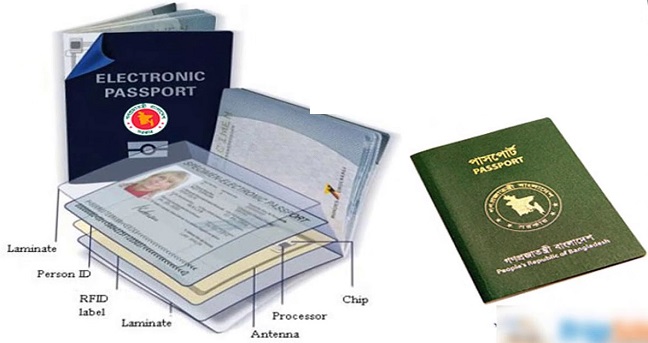
The e-passport market demonstrates substantial growth potential, with projections indicating a remarkable expansion from USD 69.6 billion in 2025 to USD 479.0 billion by 2035, reflecting a Compound Annual Growth Rate (CAGR) of 23.8%. This robust upward trend is fueled by a mix of global travel recovery, rising security threats, and a proactive push from governments toward digitization and biometric verification systems.
As countries modernize their border control infrastructure, the adoption of e-passports—embedded with electronic chips storing biometric data—is becoming a global norm. These smart travel documents offer enhanced protection against identity theft and unauthorized data manipulation, creating an essential asset in national security and identity management.
Explore Key Trends in the Market: Request Your Sample Report! https://www.futuremarketinsights.com/reports/sample/rep-gb-8987
Driving Forces Behind Market Growth
- Rising International Travel
- Post-pandemic recovery in international tourism is generating renewed demand for secure and verifiable travel documents.
- A growing global middle class, especially in Asia-Pacific and Africa, is boosting outbound tourism.
- Advanced Biometric Security Integration
- Biometric technology, such as fingerprint and facial recognition, is now embedded into most e-passports, drastically reducing fraud.
- ICAO (International Civil Aviation Organization) standards mandate such features for seamless interoperability.
- Government Modernization Initiatives
- Countries are investing in digital identity infrastructure, border automation, and smart immigration systems.
- Examples include the EU’s Entry/Exit System (EES) and India’s e-passport rollout with embedded chips.
- Increased Focus on Border Security and Anti-Fraud Measures
- Concerns over illegal immigration, terrorism, and identity theft are pushing governments to deploy e-passports with robust encryption.
- Real-time passenger identification and verification help enhance national security.
- Tech Advancements in NFC and RFID
- The adoption of contactless Near Field Communication (NFC) and Radio-Frequency Identification (RFID) boosts e-passport usability and processing speed at immigration checkpoints.
Market Challenges & Strategic Responses
- High Initial Implementation Costs
- Infrastructure upgrades for e-passport issuance and border management require heavy investment.
- Response: Governments are increasingly entering public-private partnerships and leveraging vendor expertise to ease financial burdens.
- Privacy and Data Security Concerns
- Biometric and personal information stored on chips raises concerns about data breaches and misuse.
- Response: Implementation of blockchain-based identity verification and AES encryption to protect personal data.
- Standardization and Interoperability Issues
- Not all countries follow the same protocols or formats, causing delays and complications during global travel.
- Response: Collaboration with ICAO to align with international e-passport compliance standards.
- Counterfeit and Clone Threats
- Hackers and counterfeiters constantly evolve their methods to replicate e-passport data.
- Response: Use of secure microprocessors, holographic images, and Machine Readable Zones (MRZs) to ensure authenticity.
Regional Market Outlook
- North America
- The U.S. and Canada are leading with high biometric adoption and seamless border technology integration.
- U.S. Department of State issues over 20 million e-passports annually.
- Europe
- The EU is accelerating its e-passport upgrades under the Schengen Visa modernization initiative.
- Strong demand expected from Germany, France, and the UK due to rising international mobility.
- Asia-Pacific
- Fastest-growing region with a surge in outbound travelers from China, India, and Southeast Asia.
- Indian government’s push to provide chip-enabled e-passports by 2027 will significantly increase regional adoption.
- Middle East & Africa
- The UAE and Saudi Arabia are investing in smart immigration technologies as part of digital transformation agendas.
- African nations like Nigeria and South Africa are adopting ICAO-compliant e-passports to combat identity fraud.
- Latin America
- Brazil, Mexico, and Argentina are expected to see steady growth with tourism and modernization initiatives taking shape.
Market Share Insight:
- The top five vendors collectively hold over 55% of the market share.
- Companies with government contracts for national passport issuance enjoy long-term revenue stability.
- R&D investment in AI-powered border control and chip miniaturization is shaping future competition.
Share Forecast Outlook (2025–2035)
- 2025: USD 69.6 billion
- 2035: USD 479.0 billion
- CAGR (2025–2035): 23.8%
- B2G (Business-to-Government) will dominate the market share, accounting for over 70% of total revenue.
- B2C (Business-to-Citizen) models, where citizens pay directly for premium or expedited services, will see moderate growth.
The Road Ahead
- AI-Powered Border Management
- Integration of AI and facial recognition systems at immigration checkpoints for real-time, contactless verification.
- Blockchain-Based Digital Identity Systems
- Potential to replace physical e-passports with decentralized digital travel credentials on smartphones.
- Eco-Friendly Passport Materials
- Shift toward biodegradable and recyclable materials in passport production.
- Cross-border Digital Identity Standards
- Global frameworks being developed to ensure mutual recognition of e-passport credentials.
- Expansion in Emerging Markets
- Huge untapped potential in Africa and Southeast Asia as governments digitize citizen identity systems.
- Integration with Travel Apps and Wallets
- Future e-passports may be linked with digital wallets, travel insurance, and health records for seamless journeys.
Key players in the E-passport Industry
- Thales Group
- IDEMIA
- Entrust Corporation
- Veridos GmbH
- HID Global
- Infineon Technologies AG
- Gemalto (A Thales Company)
- De La Rue plc
- Oberthur Technologies
- Giesecke+Devrient (G+D)
E-passport Market Segmentation
By Solution:
In terms of solution, the segment is divided into RFID ePassport Chip, ePassport PKI Software, ePassport Signing & Validation Software Modules and Services.
By Application:
In terms of application, the segment is segregated into Business Travel and Leisure Travel.
By Security:
In terms of security, the segment is segregated into Basic Access Control, Password Authenticated Connection Establishment, Supplemental access Control and Extended Access Control.
By Region:
A regional analysis has been carried out in key countries of North America, Latin America, East Asia, South Asia & Pacific, Western Europe, Eastern Europe and Middle East and Africa (MEA), and Europe.
Buy Now: https://www.futuremarketinsights.com/checkout/8987
About Future Market Insights (FMI)
Future Market Insights, Inc. (ESOMAR certified, recipient of the Stevie Award, and a member of the Greater New York Chamber of Commerce) offers profound insights into the driving factors that are boosting demand in the market. FMI stands as the leading global provider of market intelligence, advisory services, consulting, and events for the Packaging, Food and Beverage, Consumer Technology, Healthcare, Industrial, and Chemicals markets. With a vast team of over 400 analysts worldwide, FMI provides global, regional, and local expertise on diverse domains and industry trends across more than 110 countries.
Contact Us:
Future Market Insights Inc.
Christiana Corporate, 200 Continental Drive,
Suite 401, Newark, Delaware – 19713, USA
T: +1-347-918-3531
For Sales Enquiries: sales@futuremarketinsights.com
Website: https://www.futuremarketinsights.com