The aircraft exterior lighting market is projected to experience steady growth between 2025 and 2035, driven by increasing demand for enhanced aviation safety, improved night visibility, energy-efficient lighting systems, and advancements in LED technology. The market is expected to expand from USD 191.5 million in 2025 to USD 362.9 million by 2035, reflecting a CAGR of 6.6% over the forecast period.
Aircraft exterior lighting plays a critical role in aviation safety, visibility, and identification—enabling secure operations during all phases of flight, especially in low-visibility or night conditions. As the aerospace industry pushes toward greater efficiency, automation, and sustainability, the aircraft exterior lighting market is evolving with advanced technologies, durable materials, and smart systems that support both performance and compliance.
From navigation and landing lights to anti-collision and logo lighting, the market is experiencing a transformation that aligns with modern aviation’s increasing demands for lightweight construction, improved energy efficiency, and digital integration.
Get Ahead with Our Report: Request Your Sample Now!
Safety and Visibility at the Forefront
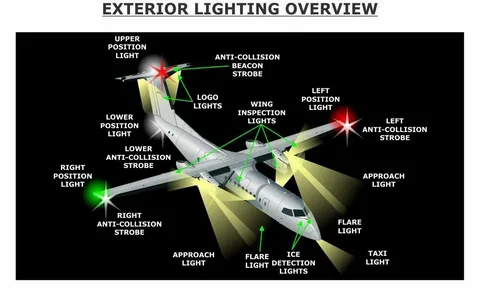
Exterior lighting systems are vital for ensuring the safety of aircraft, passengers, and ground personnel. Each lighting type has a specific purpose—navigation lights indicate the aircraft’s position and direction, anti-collision strobes improve visibility to other aircraft, landing and taxi lights aid pilots during approach and ground movement, and logo lights enhance brand visibility at night.
With strict international regulations governing lighting intensity, beam angles, and operational reliability, manufacturers are focusing on high-performance lighting systems that meet aviation standards while offering superior functionality.
Shift Toward LED and Solid-State Technologies
One of the most significant shifts in the market is the widespread adoption of LED (light-emitting diode) technology. LEDs offer several advantages over traditional halogen and incandescent systems, including lower power consumption, longer lifespan, reduced maintenance, and improved resistance to shock and vibration.
LED-based systems also enable more compact and aerodynamic lighting assemblies, contributing to reduced drag and overall fuel efficiency. Their ability to maintain consistent light output over time makes them ideal for commercial, military, and business aviation sectors alike.
Integration with Smart and Connected Systems
Modern aircraft are increasingly integrating lighting systems with onboard electronics and digital controls. Intelligent lighting solutions can adapt automatically to environmental conditions, flight phases, or pilot commands, enhancing operational safety and energy optimization.
These systems can be monitored in real-time through aircraft health monitoring platforms, enabling predictive maintenance and reducing downtime. Digital interfaces also allow for better fault diagnostics and control customization based on aircraft type or mission requirements.
Exhaustive Market Report: A Complete Study
Customization and Aesthetic Branding
Beyond functionality, exterior lighting also contributes to an airline’s visual identity. Logo lights and wingtip illuminations enhance brand presence, especially during boarding, taxiing, or nighttime operations. Custom lighting configurations are being developed to match aircraft liveries and create distinctive silhouettes on the tarmac and in the air.
OEMs and lighting suppliers are collaborating closely to offer integrated lighting solutions that not only comply with airworthiness standards but also meet the aesthetic preferences of operators and carriers.
Sustainability and Efficiency in Focus
As sustainability becomes a central focus in aviation, energy-efficient lighting is seen as a contributing factor to reducing emissions and operational costs. By switching to LED and low-draw electronic systems, aircraft operators can achieve measurable energy savings—an important step in fleet modernization and environmental compliance.
In addition, the reduced weight and longer lifespan of advanced lighting systems contribute to lower maintenance frequency and material waste, aligning with broader environmental goals.
Applications Across Commercial, Military, and General Aviation
While commercial aviation represents a major share of the market, exterior lighting is equally critical in military and general aviation. Military aircraft require rugged lighting systems that perform under extreme conditions, including night missions and tactical operations. General aviation aircraft, meanwhile, benefit from compact, modular lighting kits that enhance safety and regulatory compliance for private pilots.
The growing use of drones and urban air mobility platforms is also opening new opportunities for miniaturized, high-performance exterior lighting designed for autonomous or semi-autonomous operation.
Challenges in Standardization and System Integration
Despite the benefits, the market faces challenges in ensuring uniform performance across different aircraft platforms and operating environments. Certification requirements vary by region and aircraft type, necessitating robust testing, documentation, and quality assurance processes.
Integration with existing avionics and structural components also requires careful design to avoid electromagnetic interference and ensure compatibility with flight control systems.
Guiding the Flight Path Ahead
The aircraft exterior lighting market is advancing rapidly, driven by a combination of regulatory compliance, technological innovation, and growing demand for operational efficiency. As lighting systems evolve from basic fixtures to smart, connected components, they are playing a more strategic role in flight safety, brand expression, and sustainability.
With the rise of next-generation aircraft, urban air mobility, and increasingly digitized fleets, the market is poised to illuminate the future of aviation—one flight at a time.
Catapult Your Strategy: Secure Key Insights with Our Report Checkout!
About Future Market Insights (FMI)
Future Market Insights, Inc. (ESOMAR certified, recipient of the Stevie Award, and a member of the Greater New York Chamber of Commerce) offers profound insights into the driving factors that are boosting demand in the market. FMI stands as the leading global provider of market intelligence, advisory services, consulting, and events for the Packaging, Food and Beverage, Consumer Technology, Healthcare, Industrial, and Chemicals markets. With a vast team of 400 analysts worldwide, FMI provides global, regional, and local expertise on diverse domains and industry trends across more than 110 countries.
Contact Us:
Future Market Insights Inc.
Christiana Corporate, 200 Continental Drive,
Suite 401, Newark, Delaware – 19713, USA
T: +1-845-579-5705
For Sales Enquiries: sales@futuremarketinsights.com
Website: https://www.futuremarketinsights.com
LinkedIn| Twitter| Blogs | YouTube