

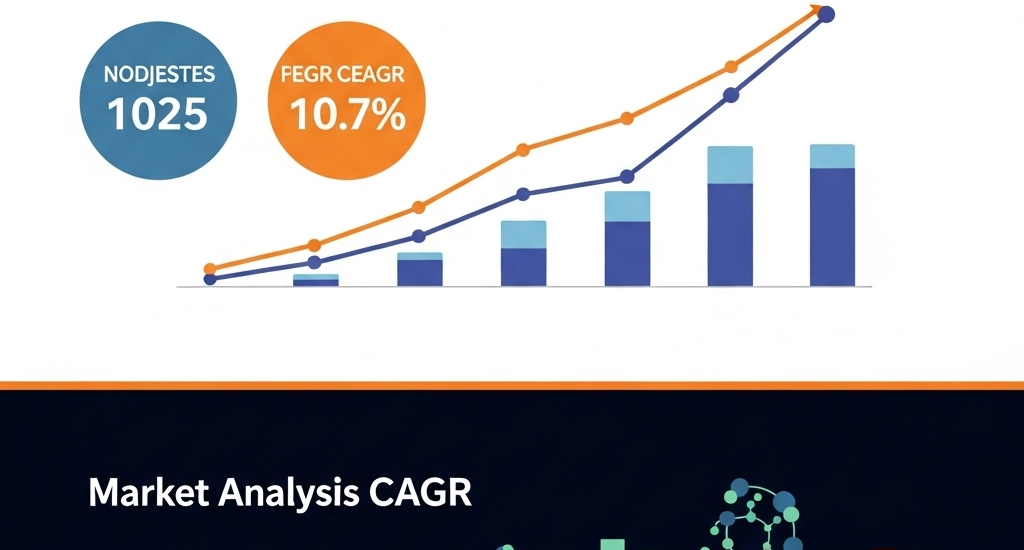
According to Future Market Insights, the global proteomics outsourcing market is exploding—driven by drug development pressure, rising research complexity, and the insane cost of doing it all in-house. The reasoning is simple: it’s faster, cheaper, and way easier to send out your samples and get the data back, neatly packaged and analysis-ready.
The proteomics outsourcing market is experiencing rapid expansion, projected to grow from USD 3.3 billion in 2025 to USD 9.3 billion by 2035, reflecting a CAGR of 10.7%.
Get Sample Report: – https://www.futuremarketinsights.com/reports/sample/rep-gb-22379
We’re Handing Over the Hardest Science
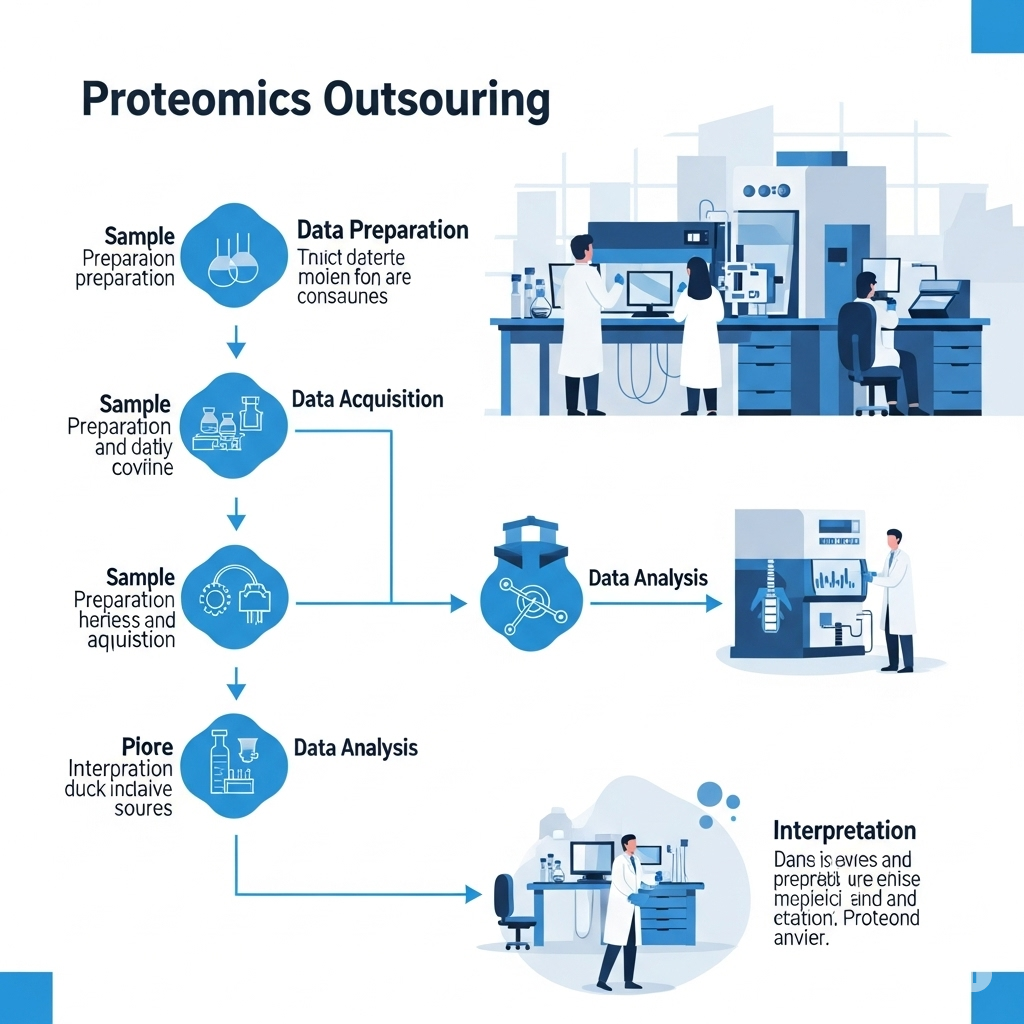
Mass spectrometry. Protein isolation. High-throughput screening. Bioinformatics. These aren’t just services—they’re the intellectual core of modern biomedicine. And more and more, we’re handing that core to someone else.
Why? Because most labs can’t afford the machines. They can’t hire the specialists. They’re squeezed by funding deadlines, clinical targets, and commercial pressure. So they outsource.
It’s understandable. But it’s also dangerous.
Outsourcing Has a Quality Problem
Not every lab is created equal. Yet when you outsource proteomics, you’re betting your research on processes you don’t control. If their calibration is off, your data is off. If their analysis pipeline is opaque, your conclusions could be flawed—and you may never know.
The FMI report highlights North America as the global leader in outsourcing uptake. No surprise. U.S. institutions are under pressure to deliver more with less. But here’s the problem: while outsourcing explodes, oversight doesn’t. There are no universal standards. No shared benchmarks. No regulatory framework that says: this is the minimum acceptable quality for outsourced proteomics.
That’s unacceptable. And frankly, it’s reckless.
We’re building personalized medicine on outsourced foundations we barely inspect. That should worry anyone who cares about reproducibility, scientific integrity, or patient safety.
This Isn’t Just a Workflow Problem—It’s a Power Shift
Here’s what nobody’s saying out loud: outsourcing creates dependence. The more you rely on one vendor, one workflow, one analysis engine—you’re locked in. If they fail, you fail. If they change pricing, you pay. And if they disappear, your research is left hanging.
We’ve seen this before in software. In manufacturing. Now it’s happening in science. And proteomics—the very frontier of biology—is being quietly swallowed up by vendors with profit motives that don’t always align with scientific ones.
We Need a Hard Reset
Here’s what needs to happen:
- Mandatory benchmarking. If you’re analyzing human samples, you need to prove your methods are reproducible and transparent. No excuses.
- Hybrid models. Labs must retain some in-house capabilities—not just to control quality, but to keep institutional memory and scientific independence alive.
- Funding agencies need to wake up. Grants that rely entirely on outsourcing should trigger stricter review. We need to stop incentivizing fragility disguised as efficiency.
Explore In-Depth Analysis-Click Here to Access the Report:- https://www.futuremarketinsights.com/reports/proteomics-outsourcing-market
Proteomics Outsourcing Market Analyzed by Key Investment Segments
By Services:
The segmentation is into protein identification & quantification, sample preparation services, post-translational modification, protein-protein interaction studies, structural proteomics, custom antibody development & validation, and target discovery & biomarker services.
By Application:
The segmentation is into drug discovery & development, biomarker discovery, clinical diagnostics, personalized medicine research, and others.
By End User:
The segmentation is into pharmaceutical companies, biopharmaceutical companies, academic & research institutions, clinical diagnostic companies, and agricultural & environmental research.
By Region:
The regions covered in the report include North America, Latin America, Asia Pacific, Middle East and Africa(MEA), and Europe.




