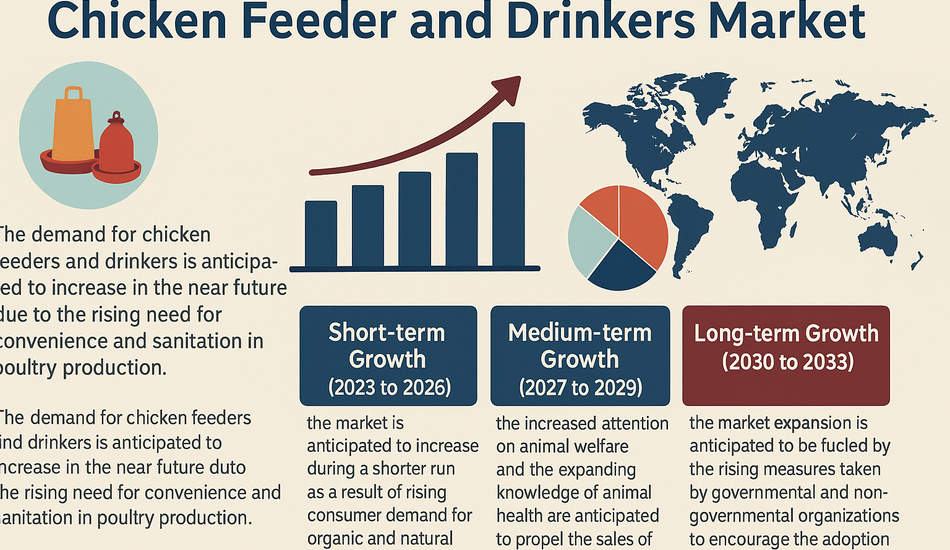
The global chicken feeders and drinkers market is projected to witness steady and sustained growth over the next decade, driven by technological advancements, increasing focus on farm process optimization, and heightened awareness of animal welfare standards. According to a recent market analysis by Future Market Insights (FMI), the market is forecast to expand at a consistent compound annual growth rate (CAGR) of 4% from 2023 to 2033, increasing its revenue share from USD 3,573 million in 2023 to USD 5,289 million by 2033.
This robust growth trajectory indicates that the chicken feeders and drinkers industry is set to expand by 1.48 times over the assessment period, supported by a combination of automation trends, stringent biosecurity measures, and growing consumer demand for high-quality poultry products.
Request a Sample Report Here: https://www.futuremarketinsights.com/reports/sample/rep-gb-16299
Key Points Highlighted:
- Market value expected to reach USD 5.3 billion by 2033.
- CAGR of 4% during 2023–2033.
- Automation driving efficiency and biosecurity.
- Focus on animal welfare and sustainability.
- Distinct short-, medium-, and long-term growth trends.
- Opportunities for innovation and regional market penetration.
Increasing Automation Redefining Poultry Feeding Systems
Modern poultry farmers are increasingly investing in automated chicken feeders and drinkers to streamline operations, improve feed management efficiency, and reduce manual labor costs. Automated systems have become a preferred choice due to their ability to deliver feed with high precision, minimize wastage, and provide real-time data on feed intake. This data-driven approach enables farmers to monitor flock health more effectively and respond promptly to any nutritional or health-related issues.
Moreover, the integration of smart technologies reduces human contact with feed and drinkers, thereby significantly lowering the risk of cross-contamination and the spread of diseases. This is a critical factor in an industry where maintaining flock health directly impacts productivity and profitability.
Browse Full Report Here: https://www.futuremarketinsights.com/reports/chicken-feeder-and-drinkers-market
Leading Companies in the Chicken Feeder and Drinkers Industry
- SKA Poultry Equipment
- Kenpoly Manufacturers Limited
- INDIV USA
- Browser
- AZA International SRL
- Big Dutchman
- Chore-Time
- Exafan
Focus on Animal Welfare Boosts Adoption
Growing awareness about animal welfare is playing a pivotal role in shaping purchasing decisions in the poultry equipment market. Governments and industry bodies worldwide are implementing stringent regulations to ensure ethical treatment of livestock. As a result, poultry farmers are prioritizing equipment that supports animal health and promotes hygienic feeding environments.
Automated feeders and drinkers facilitate consistent and timely feed distribution, which contributes to uniform flock growth and minimizes stress among birds. This aligns with the global shift towards sustainable and responsible poultry production practices.
Segmented Growth Outlook
- Short-term Forecast (2023–2026): Demand is expected to surge in the immediate term as consumers increasingly prefer organic and naturally sourced poultry products. This trend compels poultry farmers to adopt modern feeders and drinkers that maintain feed quality and cleanliness, thereby supporting organic certification requirements.
- Medium-term Forecast (2027–2029): Rising attention to animal welfare and a heightened understanding of flock nutrition are anticipated to further accelerate the sales of advanced poultry feeding systems.
- Long-term Forecast (2030–2033): Initiatives by governmental and non-governmental organizations promoting biosecure, automated poultry farming are expected to sustain market growth into the next decade.
Latest Manufacturing Equipment Reports: https://www.futuremarketinsights.com/industry-analysis/manufacturing-equipment
Opportunities for Industry Players
Manufacturers of chicken feeders and drinkers stand to benefit from the expanding appetite for automated and smart feeding solutions. Companies that invest in R&D to enhance the functionality, durability, and affordability of their products are likely to gain a competitive edge. Furthermore, developing region-specific solutions tailored to small and medium-sized poultry farms can unlock significant untapped potential in emerging markets.
Conclusion
The chicken feeders and drinkers market is evolving rapidly in response to technological innovations, consumer preferences, and regulatory frameworks aimed at promoting sustainability and animal welfare. The steady market expansion projected through 2033 underscores a fertile ground for investment, collaboration, and product innovation in the global poultry equipment industry.