

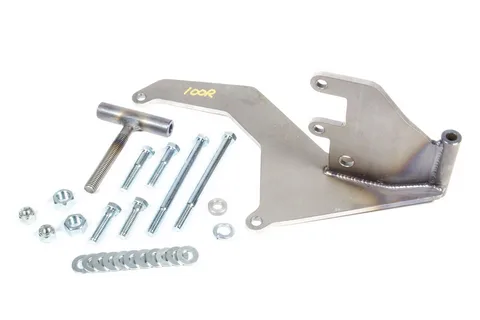
The global automotive brackets industry was valued at USD 20 billion in 2022 and is projected to grow to USD 20.68 billion in 2023. The market is expected to expand at a compound annual growth rate (CAGR) of 5.1% from 2023 to 2033, reaching an estimated USD 34 billion by 2033. This growth is fueled by increasing demand for durable, lightweight, and efficient components that enhance vehicle structural integrity and overall performance.
The automotive brackets market is poised for significant growth as automotive manufacturers focus more on lightweight, durable, and versatile components that improve vehicle performance and efficiency. Automotive brackets are essential parts that support and secure various vehicle components, contributing to the vehicle’s structural integrity and functionality. The demand for advanced bracket solutions is driven by technological advances, the adoption of lightweight materials, and the rise in hybrid and electric vehicle (EV) architectures.
Key manufacturers are focusing on using materials such as high-strength steel, aluminum, and composites to produce brackets that not only offer high resilience but also help reduce vehicle weight. This contributes to better fuel efficiency and lower emissions. Additionally, the growing prevalence of electric and hybrid vehicles has created a need for specialized brackets that can accommodate the unique configurations and components of modern EV powertrains.
Key Takeaways:
- Demand for Lightweight and High-Strength Materials: The industry’s shift toward lightweight materials like aluminum and composites for automotive brackets supports goals of fuel efficiency and emission reduction.
- Growing Use in Electric and Hybrid Vehicles: The rise of electric and hybrid vehicles is driving manufacturers to develop specialized brackets designed for unique EV components and battery configurations, opening up new market opportunities.
- Advancements in Cost-Effective Manufacturing Techniques: Innovations in manufacturing methods, such as stamping and injection molding, are enabling the production of durable and precise brackets at a lower cost.
- Enhanced Vehicle Performance and Safety: Automotive brackets are vital in ensuring vehicle stability, safety, and durability by securely mounting essential components, contributing to optimal performance.
- Increased Aftermarket Demand: The aftermarket for automotive brackets is growing, with consumers seeking replacement parts that meet original equipment manufacturer (OEM) standards for long-term reliability.
Request Your Sample and Stay Ahead with Our Insightful Report!
Key Manufacturers of Automotive Brackets:
Some of the prominent manufacturers and suppliers in the market include:
- Allena Group
- Toyo Tires
- MISUMI Corporation
- Cooper-Standard Holdings Inc.
- Hangzhou Ekko Auto Parts Co., Ltd
- Aztec Manufacturing
- Hancock Industrial Ltd
- Sumitomo Riko Company Ltd
- Yamashita Rubber Co., Ltd
- Nissin Kogyo Co., Ltd
- ACE International
- Xiamen Woricha Auto Parts Co. Ltd
Key Segments of the Automotive Brackets Market:
By Application:
- Engines
- Bumpers
- Suspension
- Footrest
- Headlights
- Wheels
- Others
By Product Type:
- Passive Elastomeric Bracket
- Hydraulic Bracket
- Active Engine Bracket
By Vehicle Type:
- Passenger Cars
- Compact
- Mid-Size
- SUVs
- Luxury
- Commercial Vehicles
- Heavy Commercial Vehicles (HCV)
- Light Commercial Vehicles (LCV)
By Sales Channel:
- Original Equipment Manufacturers (OEM)
- Aftermarket
By Region:
- North America (USA, Canada)
- Europe (Germany, Italy, France, United Kingdom, Spain, BENELUX, Russia, Nordics)
- East Asia (China, Japan, South Korea)
- South Asia & Pacific (India, ASEAN Countries, Oceania)
- Latin America (Brazil, Mexico)
- Middle East and Africa (GCC Countries, Turkey, Northern Africa, South Africa)




