

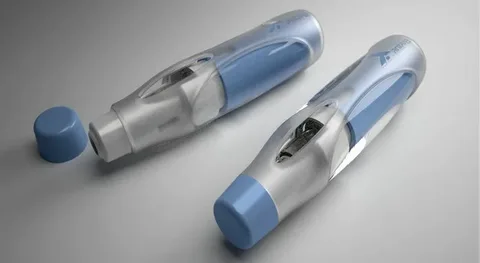
The global auto-injectors market is set to reach a significant valuation of US$ 30,578.2 million in 2023, marking a strong position within the healthcare industry. What truly stands out, however, is the impressive growth forecast for the next decade. By 2033, the market is expected to soar to US$ 67,200.1 million, reflecting the increasing reliance on auto-injectors for effective medication delivery.
The auto-injector market is projected to grow at a CAGR of 8.2% from 2023 to 2033, underscoring the rising demand for these devices across various therapeutic areas, from life-saving drugs to biologics. The ability of auto-injectors to offer patients a convenient, reliable, and precise method of administering injections is fueling their widespread adoption in both homecare and clinical settings.
Adoption Analysis of the Auto-Injectors
- Autoinjectors have gained substantial adoption in recent years, primarily driven by their convenience and effectiveness in delivering critical medications.
- Adrenaline autoinjectors, such as EpiPen, Anapen, Jext, Twinject, Auvi-Q, Allerject, Adrenaclick, and Emerade, have become indispensable for individuals with severe allergies, ensuring rapid response during anaphylactic emergencies.
- Extensive autoinjector training programs have been initiated to educate users on the correct autoinjector administration, emphasizing the importance of quick and precise action during emergencies.
- While the efficacy of autoinjectors is well-recognized, users must be aware of potential autoinjector side effects and consider them when using these devices.
- The autoinjector cost can vary, prompting some users to seek autoinjector insurance coverage to manage expenses effectively.
- The medical community and regulatory bodies play a crucial role in defining autoinjector laws and ensuring compliance with safety standards. Any issues related to safety may lead to an autoinjector recall, prompting users to seek autoinjector alternatives.
- Consumers often search for places to buy autoinjector devices or order autoinjector refills online, emphasizing the need for user-friendly platforms to facilitate these transactions.
- A significant aspect of the adoption process is the ability to compare autoinjectors in terms of features, pricing, and efficacy, aiding users in making informed choices.
- Consumers also seek reliable sources to find autoinjector devices, read autoinjector manufacturers’ reviews, and explore the advancements in autoinjector research and development.
- Autoinjector clinical trials assess the safety and effectiveness of these devices, influencing their adoption and regulatory approvals.
- Ensuring autoinjector safety and efficacy remains paramount in building trust among users and healthcare providers, further promoting their adoption.
Key Market Insights:
- Market Valuation: Set to reach US$ 30,578.2 million in 2023, with projections to rise to US$ 67,200.1 million by 2033.
- CAGR: The market is expected to grow at an 8.2% CAGR from 2023 to 2033, following an accelerated 11.6% CAGR from 2018 to 2022.
- Growth Drivers: Rising demand for self-administration of medication, increasing prevalence of chronic diseases, and the expansion of biologics treatments.
- Product Innovation: Continuous advancements in auto-injector technologies, including improvements in user experience, portability, and safety features.
The auto-injector market is witnessing significant growth as both patients and healthcare providers turn to these devices for efficient, safe, and timely medication delivery. As demand continues to rise, the market’s expansion underscores its growing role in modern healthcare, especially in the management of chronic conditions and biologic therapies.
Key Trends Influencing Auto-Injectors Market
- Biologics and Biosimilars Delivery: Auto-injectors are increasingly designed to administer biologics and biosimilar medications, meeting the demand for precise dosing and ease of use in complex therapies.
- Pediatric-Friendly Auto-Injectors: Manufacturers are focusing on creating auto-injectors tailored specifically for pediatric patients, addressing their unique needs and ensuring safe and accurate dosing.
- Connected Smart Auto-Injectors: The market is witnessing a rise in smart auto-injectors equipped with connectivity features, enabling remote monitoring and data collection for improved patient management.
- Online Pharmacies’ Influence: The proliferation of online pharmacies is making auto-injectors more accessible, particularly benefiting patients in remote or underserved areas by offering a convenient purchase and refill option.
- Enhanced Safety Mechanisms: Auto-injectors integrate advanced safety features such as needlestick prevention mechanisms, tamper-evident packaging, and user-friendly indicators to boost user confidence and minimize misuse risks.
- Patient Education Initiatives: Pharmaceutical companies and healthcare providers invest in patient education and training programs, empowering patients to self-administer medications confidently and correctly.
Key Companies in the Market
- Becton, Dickinson, and Company
- Sanofi
- Pfizer, Inc
- Mylan N.V.
- Novartis AG
- Bayer AG
- Janssen Global Services, LLC
- Antares Pharma, Inc.
- Amgen Inc
- Eli Lilly and Company
- Teva Pharmaceutical
- Merck KgaA
- GlaxoSmithKline plc
- Ypsomed
- SHL Medical
- Gerresheimer AG
- Midas Pharma GmbH
- Aptar Pharma
- Solteam Medical
- Stevanato Group
- E3D
- West Pharmaceutical Services, Inc
Full Report Revealed
Key Segments
By Product:
- Prefilled Auto-Injectors
- Fillable Auto-Injectors
By Indication:
- Anaphylaxis
- Multiple Sclerosis
- Rheumatoid Arthritis
- Others
By Distribution Channel:
- Hospital Pharmacies
- Retail Pharmacies
- Online Pharmacies
- Drug Stores
By Region:
- North America
- Latin America
- Europe
- South Asia
- East Asia
- Oceania
- The Middle East and Africa
Author By:
Sabyasachi Ghosh (Associate Vice President at Future Market Insights, Inc.) holds over 12 years of experience in the Healthcare, Medical Devices, and Pharmaceutical industries. His curious and analytical nature helped him shape his career as a researcher.
Identifying key challenges faced by clients and devising robust, hypothesis-based solutions to empower them with strategic decision-making capabilities come naturally to him. His primary expertise lies in areas such as Market Entry and Expansion Strategy, Feasibility Studies, Competitive Intelligence, and Strategic Transformation.
Holding a degree in Microbiology, Sabyasachi has authored numerous publications and has been cited in journals, including The Journal of mHealth, ITN Online, and Spinal Surgery News.
About Future Market Insights (FMI)
Future Market Insights, Inc. (ESOMAR certified, recipient of the Stevie Award, and a member of the Greater New York Chamber of Commerce) offers profound insights into the driving factors that are boosting demand in the market. FMI stands as the leading global provider of market intelligence, advisory services, consulting, and events for the Packaging, Food and Beverage, Consumer Technology, Healthcare, Industrial, and Chemicals markets. With a vast team of over 400 analysts worldwide, FMI provides global, regional, and local expertise on diverse domains and industry trends across more than 110 countries.
Contact Us:
Future Market Insights Inc.
Christiana Corporate, 200 Continental Drive,
Suite 401, Newark, Delaware – 19713, USA
T: +1-347-918-3531
For Sales Enquiries: sales@futuremarketinsights.com
Website: https://www.futuremarketinsights.com
LinkedIn| Twitter| Blogs | YouTube




