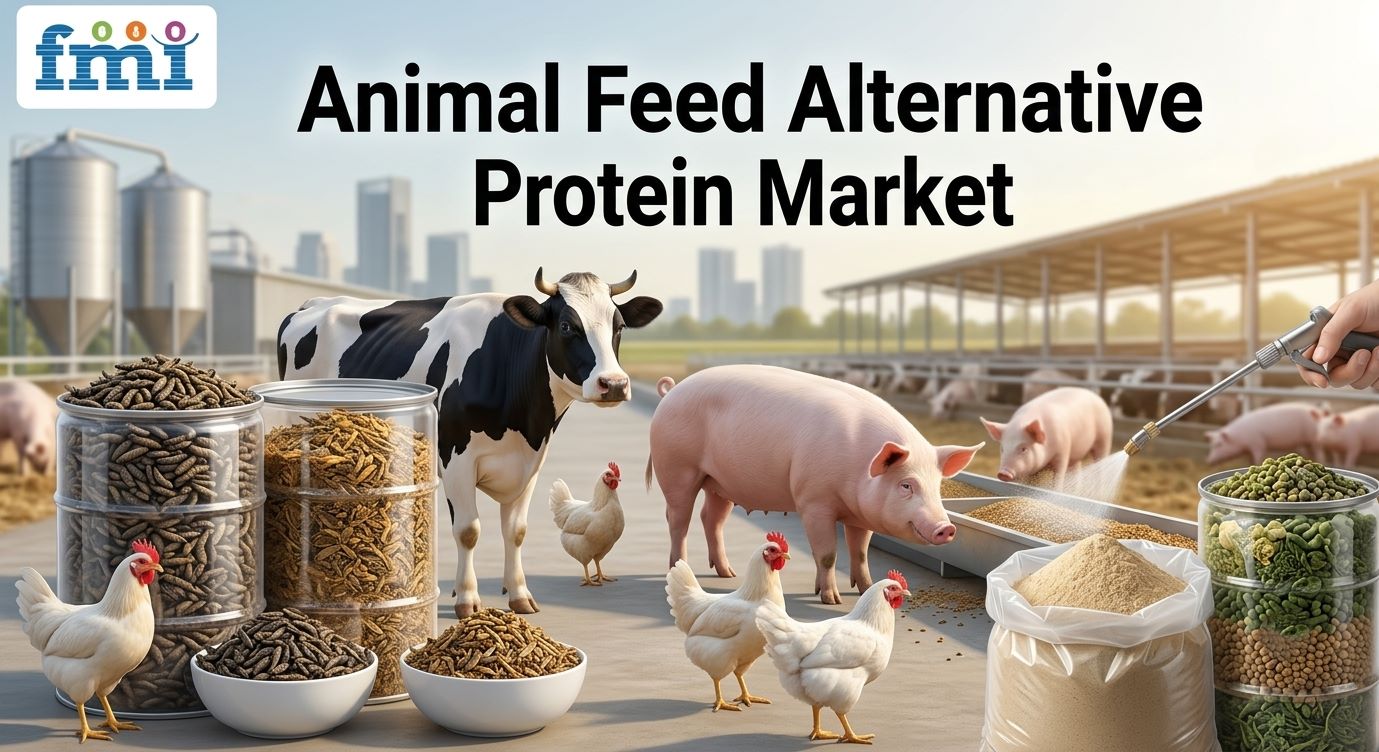
The animal feed alternative protein market is growing as livestock producers seek cost-effective alternatives to conventional feed proteins. Plant-based, insect, algae, and microbial proteins are gaining attention for their nutritional and supply-chain benefits.
The market is projected to grow from USD 11.6 billion in 2025 to USD 18.1 billion by 2035, at a 4.5% CAGR. Plant-based proteins are expected to lead with a 35% market share, while poultry accounts for 31% of livestock demand in 2025.
Animal Feed Alternative Protein Market Overview
The animal feed alternative protein market is gaining commercial importance as feed manufacturers seek cost-effective alternatives to conventional proteins, reduce price volatility, and strengthen supply-chain reliability.
Plant-based proteins lead adoption due to established supply networks, familiar nutritional profiles, and easy formulation. Soy, pea, canola, sunflower, and corn proteins offer practical alternatives for livestock and aquaculture feed.
Why Plant-Based Proteins Lead the Cost Equation
Plant-based proteins benefit from established agricultural production and procurement networks. Feed manufacturers are familiar with bulk plant meals, oilseed by-products, grain-based protein fractions, and vegetable protein concentrates. This familiarity allows easier integration into existing sourcing, storage, formulation, and quality-control processes.
Since feed is a major operating cost, manufacturers prioritise competitive pricing, digestibility, amino acid balance, feed efficiency, and reliable supply. Soy remains a key ingredient, while pea, canola, and sunflower proteins help diversify sourcing and manage price fluctuations.
Role of Poultry in Alternative Protein Demand
Poultry is an important application area for alternative feed proteins because of its large production base and emphasis on feed conversion efficiency. The segment is projected to account for 31% of livestock demand in 2025, making it a significant opportunity for ingredient suppliers.
Poultry feed manufacturers evaluate alternative proteins based on digestibility, amino acid composition, growth performance, and formulation costs. Plant-based ingredients benefit from established nutritional documentation and familiarity among feed nutritionists.
Where Plant-Based Protein Suppliers Can Win
Plant-based protein suppliers can strengthen their market positions through consistent nutritional quality, reliable logistics, competitive pricing, and proven digestibility. Locally sourced pea, canola, and sunflower proteins also help manufacturers diversify procurement and reduce dependence on imported protein meals.
Blended formulations combining plant proteins with insect meal, microbial proteins, algae, and amino acids offer another way to balance nutrition, costs, and sustainability goals.
Why Sustainability Alone Will Not Decide Adoption
Sustainability is gaining importance in feed procurement, but purchasing decisions still depend on cost efficiency, animal performance, nutritional consistency, and reliable supply.
Alternative proteins must deliver measurable commercial benefits and meet customer requirements. Partial substitution and targeted inclusion remain more practical than replacing conventional ingredients across all applications.
Competitive Pressure from Insect, Algae, and Single-Cell Proteins
Insect proteins offer circular production benefits but face challenges related to cost, regulation, and scalability. Algae-based and single-cell proteins show potential in aquaculture, pet food, and specialised nutrition.
In the near term, these alternatives are likely to complement plant-based proteins, which provide the main volume and cost foundation, while emerging proteins serve specialised, higher-value applications.
Strategic Implications for Feed Manufacturers
Feed manufacturers should approach alternative protein adoption as a diversified formulation strategy. Ingredient selection needs to account for nutritional suitability, price competitiveness, regulatory acceptance, sourcing risks, and species-specific requirements.
Suppliers that provide detailed documentation covering crude protein, amino acid profiles, digestibility, anti-nutritional factors, contaminants, processing conditions, and shelf life can strengthen buyer confidence.
Market Challenges and Risks
The market faces challenges from commodity price volatility, inconsistent nutritional quality, and high production costs for emerging proteins. Plant-based ingredients remain exposed to crop yields, weather, trade flows, and supply disruptions, while manufacturers must ensure sourcing transparency and traceability.
Insect, algae, and microbial protein producers must also improve production economics and ensure reliable supply to support wider adoption.
Future Outlook
The animal feed alternative protein market is expected to grow through 2035 as manufacturers focus on nutritional flexibility, diversified sourcing, and supply-chain resilience.
Plant-based proteins are likely to maintain their lead due to established availability, competitive costs, and formulation acceptance. Insect, algae, and single-cell proteins may gain ground in specialised applications as production costs improve.
Companies offering competitive pricing, proven nutritional quality, reliable supply, and transparent sourcing will be better positioned for long-term growth. Feed performance and commercial viability will remain key adoption factors.
FMI Custom Research: Strategic Intelligence for Confident Decision-Making
In an evolving animal nutrition industry, leadership teams need actionable intelligence to evaluate alternative protein opportunities, assess sourcing risks, and identify competitive advantages. Future Market Insights (FMI) Custom Research solutions are designed around specific business requirements, helping organizations evaluate market opportunities, validate investments, understand competitive dynamics, and develop evidence-based strategies.
Key Executive Benefits
- Decision-Ready Insights: Research tailored to business challenges, growth plans, and investment priorities.
- Reduced Strategic Risk: Evaluate ingredient demand, procurement challenges, and competitive positioning before committing resources.
- Market Entry Confidence: Assess market opportunities, regulatory requirements, distribution channels, and competitive conditions.
- Competitive Advantage: Gain industry intelligence to support product development and commercial planning.
- Faster Growth Decisions: Support expansion, portfolio optimization, and investment strategies.
- Primary Market Validation: Understand buyer requirements, supplier capabilities, and industry developments.
- Global Industry Expertise: Access FMI’s research capabilities across multiple industries and international markets.
Business Impact
FMI helps organizations translate market complexity into strategic clarity, enabling leadership teams to identify growth opportunities, optimize resource allocation, strengthen competitive positioning, and make informed business decisions.
To explore how FMI Custom Research can support your strategic priorities, please connect with our team at – sales@futuremarketinsights.com
About Future Market Insights (FMI)
Future Market Insights is a market intelligence and consulting organization providing research, market forecasts, competitive analysis, and strategic insights across industries. FMI delivers actionable insights across food and beverage, healthcare, consumer goods, biotechnology, chemicals, industrial products, and emerging technologies, helping organizations identify growth opportunities and make informed strategic decisions.
Contact Us:
Future Market Insights Inc.
Christiana Corporate, 200 Continental Drive,
Suite 401, Newark, Delaware – 19713, USA
T: +1-347-918-3531
For Sales Enquiries: sales@futuremarketinsights.com