

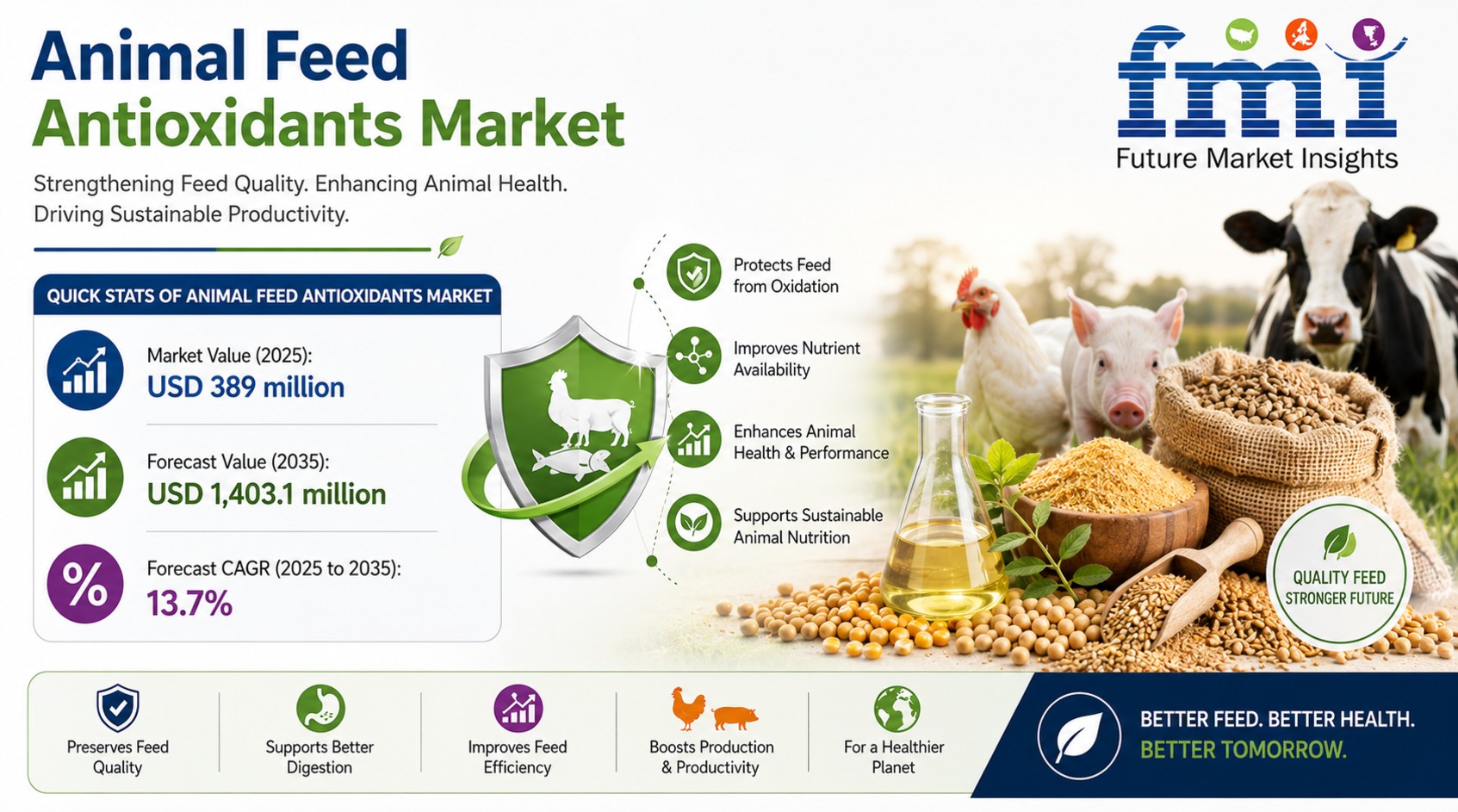
The global animal feed antioxidants market is entering a more selective phase of value creation. Buyers are no longer evaluating antioxidants only by inclusion rate, oxidation control, or price per kilogram. Increasingly, purchasing decisions are also influenced by ingredient origin, residue sensitivity, natural positioning, export requirements, and downstream pressure from meat, egg, dairy, seafood, and pet nutrition value chains.
This shift is creating a clean-label premium in animal feed antioxidants, but it is not universal. Unlike consumer-facing ingredients, feed antioxidants operate in highly technical systems where oxidation control remains the first requirement. Tocopherols, rosemary extracts, botanical blends, and vitamin-derived antioxidants can command higher prices only when they protect fats, oils, vitamins, pigments, and feed quality as effectively as established synthetic systems.
The key commercial question is not simply whether an antioxidant is natural. The real question is whether a natural antioxidant system can reduce oxidation risk while supporting cleaner feed formulations, premium animal nutrition programs, and evolving customer expectations.
Featured Snippet: Key Market Answer
Q: Why are buyers willing to pay a premium for natural animal feed antioxidants, and where is the premium strongest?
A: Buyers pay more for natural antioxidants when they provide effective oxidation control while reducing concerns around synthetic additives, residues, documentation, and premium animal nutrition positioning. Tocopherols, rosemary extracts, botanical blends, and vitamin-derived systems are most attractive in poultry feed, aquafeed, premium compound feed, pet-linked nutrition programs, export markets, and antibiotic-reduction feeding systems where cleaner formulations support broader commercial goals.
Quick Stats of the Animal Feed Antioxidants Market
- Core Growth Theme: Natural oxidation control with premium feed positioning
- Key Premium Formats: Tocopherols, rosemary extracts, botanical blends, vitamin-derived antioxidants
- Primary Technical Role: Protect fats, oils, vitamins, pigments, and feed quality
- High-Value Applications: Poultry feed, aquafeed, premium compound feed, pet-linked nutrition
- Critical Commercial Variable: Cost per protected ton of feed
- Main Buyer Question: Does the antioxidant justify higher cost through better protection and lower risk?
Market Overview: Clean Label Is Becoming a Risk-Reduction Strategy
Animal feed antioxidants occupy a unique position in the feed additives market. They are not purchased for consumer appeal alone. They are purchased to prevent rancidity, preserve nutritional quality, extend storage life, and maintain ingredient stability throughout feed manufacturing, transport, and farm use.
This means natural antioxidant systems must compete against highly efficient synthetic alternatives that already have established usage patterns and cost structures.
As a result, the clean-label premium is strongest when natural antioxidants solve two problems simultaneously:
Technical Problem
- Prevent fat oxidation
- Preserve vitamins and pigments
- Maintain feed freshness
- Protect nutritional value
Commercial Problem
- Support cleaner ingredient declarations
- Reduce synthetic additive concerns
- Improve export acceptance
- Align with premium meat, egg, dairy, seafood, and pet food supply chains
Natural antioxidants create value when they lower technical and commercial risk at the same time.
Key Growth Drivers Behind Premium Feed Antioxidants
Downstream Pressure from Animal Protein Brands
Retailers, foodservice companies, pet food manufacturers, and export customers increasingly request cleaner production systems. Feed additives are becoming part of the broader quality narrative around responsible nutrition, reduced synthetic inputs, and premium animal products.
This creates opportunities for antioxidant suppliers that can provide natural protection systems with strong documentation.
Expansion of Premium Poultry and Aquaculture
Premium poultry, branded eggs, antibiotic-reduction programs, and high-value aquaculture products require stable feed quality and better ingredient transparency.
Natural antioxidant systems can support these programs by protecting oils and nutrients while fitting cleaner feed strategies.
Growth of Natural Feed Additive Programs
Natural feed additives are expanding beyond enzymes, probiotics, and phytogenics into preservation technologies.
Botanical antioxidants, tocopherols, and plant-derived systems fit well within broader natural feed concepts where producers want fewer synthetic inputs.
Export and Residue Sensitivity
Export-oriented animal protein chains often require greater documentation, traceability, and additive transparency.
Natural antioxidant systems can become valuable where feed suppliers need to meet customer-specific requirements or reduce concerns around synthetic additive perception.
Technical Economics: Why Performance Still Decides the Premium
Natural antioxidants do not compete only against other natural systems. They compete against synthetic antioxidants that often provide:
- Low inclusion rates
- Strong oxidative protection
- Consistent activity
- Familiar handling
- Lower cost
This means buyers compare antioxidants using total cost-in-use rather than ingredient identity.
Key performance factors include:
- Oxidation stability
- Feed compatibility
- Heat and pelleting tolerance
- Storage performance
- Dosage efficiency
- Ease of blending
- Batch consistency
If a natural antioxidant requires significantly higher dosage or inconsistent application, the premium becomes difficult to justify.
Segment Deep Dive: Where Natural Antioxidants Win
Poultry Feed: The Largest Commercial Opportunity
Poultry feed is one of the strongest application areas because poultry diets frequently include oils and energy-dense ingredients vulnerable to oxidation.
Natural antioxidants can gain traction in:
- Premium poultry
- Branded egg systems
- Antibiotic-reduction programs
- Export-oriented production
- Higher-value protein supply chains
The value comes not only from feed protection, but from supporting broader product quality narratives.
Aquafeed: High Oxidation Risk Creates Opportunity
Aquafeed often contains fishmeal, fish oil, and lipid-rich ingredients that require strong oxidative protection.
Natural antioxidants can become attractive when they help:
- Maintain nutrient quality
- Protect omega-rich ingredients
- Support premium seafood positioning
- Reduce dependence on controversial additives
However, aquafeed buyers maintain strict performance requirements because oxidation risks are high.
Compound Feed: Operational Simplicity Matters
Compound feed producers prefer antioxidants that are:
- Easy to handle
- Stable in premixes
- Compatible with existing systems
- Convenient to store
Dry natural antioxidants, granules, and beadlets often have advantages because they fit existing manufacturing processes.
Pet-Linked Feed Systems: Stronger Clean Label Pull
Pet nutrition already experiences greater clean-label pressure than many livestock categories.
This creates opportunities for:
- Tocopherol systems
- Botanical antioxidants
- Vitamin-derived blends
- Natural preservation programs
Pet-linked supply chains may accept higher costs when cleaner formulations support premium positioning.
The Rise of Blended Antioxidant Systems
The strongest premium opportunity does not come from replacing synthetic antioxidants with single natural ingredients.
It comes from creating antioxidant systems that combine:
- Tocopherols
- Rosemary extracts
- Botanical compounds
- Vitamin-based ingredients
- Carotenoid-supporting systems
This system-based approach improves:
- Oxidative stability
- Documentation
- Customer acceptance
- Performance consistency
Suppliers increasingly compete through complete oxidation-management solutions rather than individual ingredients.
Regional Dynamics
North America
Growth is supported by premium poultry, pet food expansion, export demand, and stronger interest in natural feed additives.
Europe
Regulatory scrutiny and sustainability goals support greater interest in botanical and natural antioxidant systems.
Asia-Pacific
Rapid growth in poultry, aquaculture, and compound feed creates opportunities, although price sensitivity remains high.
Latin America
Export-linked meat and poultry sectors create selective opportunities where cleaner feed programs support market access.
Competitive Differentiation Strategies
Leading suppliers increasingly compete through technical support rather than ingredient identity alone.
Documentation and Validation
Buyers require:
- Active content verification
- Stability studies
- Species-specific recommendations
- Origin documentation
- Regulatory support
Formulation Support
Suppliers help customers optimize:
- Dosage
- Feed compatibility
- Storage stability
- Heat tolerance
- Premix integration
System Selling
Companies increasingly market complete oxidation-management systems rather than standalone antioxidants.
Industry FAQs
How much more are buyers willing to pay for natural feed antioxidants?
There is no universal premium. Pricing depends on application, feed type, oxidation risk, customer requirements, and downstream value. Premiums are strongest in poultry, aquaculture, pet-linked feed systems, and export-oriented supply chains.
Why do tocopherols and botanical antioxidants attract interest?
They provide natural positioning while helping buyers address residue concerns, premium feed claims, and cleaner nutrition strategies.
Can natural antioxidants replace synthetic systems completely?
Not always. Many buyers prefer blended systems that combine natural positioning with proven technical performance.
Which feed sectors show the strongest demand?
Poultry feed, aquafeed, premium compound feed, pet-linked nutrition, and export-oriented livestock production represent the strongest opportunities.
What determines commercial success?
Oxidation control, dosage efficiency, stability, ease of use, supply reliability, and documentation remain more important than natural claims alone.
Conclusion
The clean-label premium in animal feed antioxidants is real, but it is highly application-specific.
Natural, botanical, tocopherol-based, and vitamin-derived antioxidant systems can command higher pricing when they reduce oxidation risk while supporting cleaner feed programs, export requirements, premium animal nutrition, and downstream quality expectations.
However, buyers do not pay more simply because an antioxidant is natural. They pay when natural protection performs like a technical additive while reducing commercial risk.
The future of the animal feed antioxidants market will not be decided by ingredient origin alone. It will be shaped by suppliers that combine oxidation science, application expertise, documentation, and formulation support into complete feed protection systems.
Related FMI Reports
- Animal Feed Additives Market – Wider analysis of functional feed ingredient demand.
- Natural Feed Additives Market – Market outlook for botanical and natural livestock nutrition solutions.
- Compound Feed Market – Feed manufacturing trends influencing additive selection.
FMI Custom Research: Strategic Intelligence for Confident Decision-Making
In today’s rapidly evolving business environment, leadership teams need more than market data they need clear, actionable intelligence tailored to their strategic objectives. FMI’s Custom Research solutions are designed around the specific business questions organizations need answered, enabling executives to evaluate growth opportunities, validate investments, assess competitive dynamics, and reduce uncertainty before making critical decisions. By combining deep industry expertise, primary research, and proprietary market intelligence, FMI delivers insights that help organizations move from assumptions to evidence-based strategies with greater speed and confidence.
Key Executive Benefits
- Decision-Ready Insights: Research tailored to your specific business challenges, growth plans, and investment priorities.
- Reduced Strategic Risk: Validate market opportunities, customer demand, and competitive positioning before committing resources.
- Market Entry Confidence: Assess opportunity size, regulatory barriers, channel dynamics, and competitive landscapes with precision.
- Competitive Advantage: Gain proprietary intelligence unavailable through syndicated reports or internal datasets.
- Faster Growth Decisions: Accelerate expansion, product development, portfolio optimization, and investment planning.
- Primary Market Validation: Access real-world customer, buyer, and stakeholder insights that support high-confidence decision-making.
- Global Industry Expertise: Powered by 100+ analysts, 20,000+ published reports, and 1.6 million+ hours of research experience.
- Proven Track Record: Over 7,000 market-entry engagements completed across six regions and 14 industry sectors with strong client retention.
Business Impact
FMI helps organizations transform market complexity into strategic clarity, enabling leadership teams to identify growth opportunities faster, optimize resource allocation, strengthen competitive positioning, and make high-stakes business decisions with confidence.
To explore how FMI Custom Research can support your strategic priorities, please connect with our team at – sales@futuremarketinsights.com
About Future Market Insights (FMI)
Future Market Insights is a leading provider of market intelligence, consulting services, and syndicated research reports. FMI delivers actionable insights across food and beverage, healthcare, consumer goods, biotechnology, chemicals, industrial products, and emerging technologies, helping organizations identify growth opportunities and make informed strategic decisions in evolving global markets.
Contact Us:
Future Market Insights Inc.
Christiana Corporate, 200 Continental Drive,
Suite 401, Newark, Delaware – 19713, USA
T: +1-347-918-3531
Why FMI: https://www.futuremarketinsights.com/why-fmi
For Sales Enquiries: sales@futuremarketinsights.com
Website: https://www.futuremarketinsights.com